
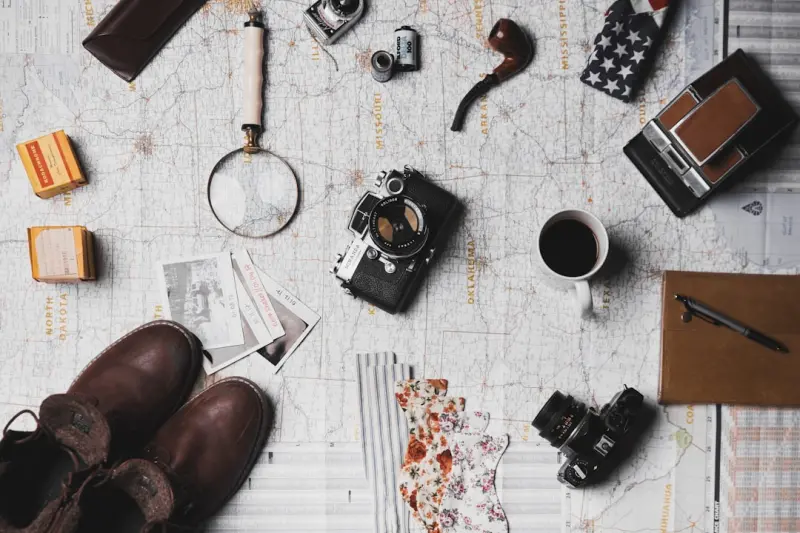
Why Travel Isn’t Just a Break—it’s a Branding Expedition
When I first booked a spontaneous train ride through the Swiss Alps, I wasn’t thinking about ROI, LinkedIn updates, or the next big pitch. I was craving fresh air, a change of scenery, and a good story to tell around the dinner table. Yet, as the landscape unfolded outside my window, I realized that every mile I traveled was silently rewriting a chapter of my professional narrative.
Travel, at its core, is storytelling in motion. It’s a series of moments that, when curated wisely, become the building blocks of a personal brand that feels authentic, memorable, and, most importantly, strategically valuable.
The Myth of the “Just Vacation” Mindset
Most of us compartmentalize “vacation” and “career.” The former is a sanctuary for rest; the latter is a battlefield of deliverables and metrics. This binary thinking is a relic of the old 9‑to‑5 playbook, and it limits the multiplicative power of our experiences.
- Visibility vs. Authenticity: Social media makes it easy to showcase a sunset, but true branding thrives on the why behind the image.
- Passive vs. Active Learning: Watching a city from a hotel window is passive; engaging with local entrepreneurs or artisans is active, and it leaves a traceable imprint on your skill set.
- Short‑Term Bliss vs. Long‑Term Leverage: A week in Bali feels good, but a week spent collaborating on a community project can become a case study you reference for months.
In other words, every travel decision is a fork in the road—one that can either keep you on the well‑trodden path of “just a break,” or steer you toward a deliberate branding expedition.
Mapping Your Personal Brand Journey
Before you set foot on a new continent, ask yourself three foundational questions:
- What narrative am I currently telling? Look at your LinkedIn headline, your portfolio, and the stories you share in meetings. Are they aligned with your aspirations?
- What gaps exist? Identify the skills, experiences, or cultural insights that could make your story richer.
- How can travel fill those gaps? Choose destinations, activities, and connections that directly address those voids.
Think of your itinerary as a brand blueprint. Each stop isn’t just a place on a map; it’s a strategic waypoint designed to amplify a specific facet of your professional identity.
Case Study: Turning a Food Market Visit into a Thought‑Leadership Piece
A few months ago I landed in Osaka for a conference on supply‑chain resilience. After the keynote, I wandered into Kuromon Ichiba, a bustling market known for its fresh seafood and street food. Instead of merely snapping photos for Instagram, I struck up a conversation with a vendor who sourced his fish directly from local fishermen using a cooperative model.
That brief exchange sparked a three‑part LinkedIn series on “Decentralized Procurement in the Age of Climate Uncertainty,” where I paired the vendor’s insights with data from the conference. The series garnered over 15,000 views, sparked meaningful discussions, and landed me an invitation to speak at a regional logistics summit.
The lesson? Even the most ordinary travel moments can be transformed into high‑impact content when you approach them with a branding lens.
Leveraging Local Communities for Credibility
One of the most underutilized resources for personal branding is the local community. While many travelers skim the surface—checking off famous landmarks—those who dig deeper build credibility that no glossy brochure can offer.
Here’s a practical framework to embed yourself in a community without feeling like an outsider:
- Identify a micro‑ecosystem: Look for niche meet‑ups, co‑working spaces, or industry‑specific workshops. In Lisbon, for example, the “Tech & Tarts” brunch group gathers developers and pastry chefs for cross‑disciplinary brainstorming.
- Offer reciprocal value: Bring something to the table—perhaps a quick workshop on data visualization, or a short “design sprint” session. Reciprocity builds trust faster than any business card.
- Document the exchange: Capture short video clips, write reflective notes, and later translate these into blog posts, podcasts, or even case studies.
By positioning yourself as a contributor rather than a consumer, you’ll organically become part of the local narrative—and that narrative will, in turn, become part of yours.
Travel‑Driven Skill Acquisition: Beyond the Typical “Skill‑Based Travel” Angle
While our recent post Beyond Tourist Trails: Crafting Meaningful Journeys Through Skill‑Based Travel explored purposeful learning on the road, let’s dig deeper into a subtle, yet potent, skill set: cultural agility. This isn’t just learning a language or mastering a local dish; it’s about developing the instinct to read social cues, adapt communication styles, and negotiate across cultural boundaries.
Consider the following three “cultural agility drills” you can practice on any trip:
- Micro‑interview a local: Spend five minutes interviewing a resident about their daily routine. Listen for values, pain points, and the vocabulary they use.
- Participate in a local “ritual”: Whether it’s a tea ceremony in Japan or a Friday market barter in Marrakech, immersing yourself in tradition sharpens your empathy engine.
- Translate a local problem into a universal framework: Take a challenge you hear about (e.g., traffic congestion) and map it onto a familiar business model (e.g., supply‑chain bottleneck). This exercise builds the mental muscle to pivot between contexts.
These drills turn your trip into a living laboratory, feeding your brand narrative with real‑world evidence of adaptability—a trait that senior leaders prize.
Showcasing Your Journey Without the “Travel Influencer” Cliché
There’s a fine line between authentic storytelling and the over‑polished aesthetic of travel influencers. To keep your brand genuine, follow these three guidelines:
- Prioritize depth over breadth: Instead of a carousel of ten photos, share one compelling image paired with a detailed anecdote that ties back to a professional insight.
- Use a “reflection loop”: After each major travel experience, write a short reflection that connects the experience to a current project or goal. Publish these reflections as LinkedIn posts or in a newsletter.
- Invite dialogue: End your posts with open‑ended questions that encourage peers to share their own experiences, turning a one‑way broadcast into a two‑way conversation.
By focusing on the narrative substance rather than visual flash, you’ll attract an audience that values insight over spectacle.
Data‑Driven Storytelling: Turning Travel Metrics into Brand Assets
We live in an age where data can amplify storytelling. While you might not have a full analytics suite on a backpacking trip, you can still collect simple metrics that lend credibility to your brand narrative.
Try tracking the following during a week‑long travel sprint:
| Metric | What It Reveals |
|---|---|
| Number of local contacts made | Network expansion potential |
| Hours spent in collaborative spaces | Commitment to knowledge exchange |
| Ideas generated per day | Creative output in new environments |
| Languages practiced | Cross‑cultural communication skill |
When you later present these numbers in a slide deck or a blog post, they transform anecdotal experiences into quantifiable achievements—exactly the kind of proof points senior executives love to see.
Integrating Technology without Losing the Human Touch
Our own The Quiet Strategist: How Generative AI Is Redefining Market Intelligence for B2B SaaS piece highlighted AI’s role in augmenting insight. The same principle applies to travel branding:
- AI‑curated itineraries: Use generative AI to build itineraries that align with your branding goals—e.g., “schedule three meet‑ups with fintech founders in Berlin.”
- Real‑time translation: Tools like Whisper or DeepL let you engage deeper in conversations, reducing language barriers instantly.
- Content‑generation assistants: Prompt an AI to draft a first‑person narrative of your day, then edit for your unique voice—saving time while preserving authenticity.
The key is to let technology be the amplifier, not the author of your story.
Turning Travel Moments into Portfolio Pieces
Every trip can produce a tangible artifact for your professional portfolio:
- Case studies: Document a problem you observed abroad and propose a solution—perfect for consulting or product roles.
- Design mock‑ups: Sketch a user experience inspired by a local app or physical interface you encountered.
- Video interviews: Capture short clips of local experts and edit them into a mini‑documentary that showcases your interviewing skills.
These artifacts demonstrate initiative, creativity, and the ability to translate global insights into actionable outcomes—qualities that recruiters and clients alike value.
Balancing Rest and Brand Building
Even the most diligent personal branding expedition needs downtime. Rest isn’t a weakness; it’s a strategic reset that fuels creativity. Here’s a simple rhythm to follow:
- Morning immersion: Spend the first hour of the day engaging with locals—coffee chats, market strolls, or language practice.
- Midday creation: Dedicate two hours to drafting content, updating LinkedIn, or recording audio notes.
- Evening reflection: Write a brief journal entry that ties the day’s experiences to your brand objectives.
- Nightly recharge: Unplug, read a novel, or practice a non‑digital hobby. The mental space you create here fuels the next day’s insight.
This rhythm ensures you’re consistently feeding your brand pipeline without burning out.
From Solo Adventures to Collaborative Brand Campaigns
While solo travel offers introspection, collaborative trips can amplify reach. Consider organizing a “brand‑building retreat” with a small group of peers who share similar professional goals. The structure could look like this:
- Day 1 – Story Mapping: Each participant outlines their personal brand narrative and identifies travel‑related gaps.
- Day 2 – Immersion: Jointly attend a local workshop, cultural event, or industry meetup.
- Day 3 – Content Sprint: Work together to produce a series of micro‑content pieces (videos, blog snippets, social posts) that capture the shared experience.
- Day 4 – Cross‑Promotion: Launch the content across each participant’s channels, multiplying reach.
Such retreats turn personal journeys into collective amplification engines, turning the whole experience into a scalable branding asset.
Measuring the ROI of Your Branding Expedition
Quantifying the impact of travel on personal brand equity can feel abstract, but with a few key metrics you can create a clear ROI picture:
- Engagement uplift: Track likes, comments, and shares on travel‑related posts versus baseline content.
- Network growth: Count new LinkedIn connections or inbound messages from people you met abroad.
- Opportunity generation: Log any speaking invitations, consulting requests, or collaborations that directly reference your travel content.
- Skill acquisition: Document new competencies (e.g., basic conversational Japanese) and tie them to project outcomes.
When you review these metrics quarterly, you’ll see a tangible correlation between travel experiences and career momentum.
Putting It All Together: Your First Branding Expedition Blueprint
Ready to turn your next trip into a strategic branding venture? Follow this concise checklist:
- Define your branding goal: E.g., “Showcase expertise in sustainable supply chains.”
- Select a destination aligned with that goal: A city known for green logistics hubs.
- Map three high‑value touchpoints: Local industry conference, a sustainability‑focused coworking space, and a community garden project.
- Prepare tech tools: AI itinerary planner, translation app, content‑creation templates.
- Execute with intention: Engage, create, reflect—using the rhythms outlined above.
- Harvest and amplify: Turn notes into a LinkedIn carousel, a short video series, or a case study PDF.
- Measure outcomes: Track engagement, connections, and any new opportunities that arise.
Repeat this cycle, and you’ll find your personal brand evolving from a static resume to a living, breathing narrative that travels with you wherever you go.
Final Thought: Your Brand Is a Journey, Not a Destination
Just as a traveler never truly reaches the “end” of exploration, your personal brand is a continual expedition. Each passport stamp, each conversation, each quiet moment of reflection adds a new layer to the story you tell the world.
Next time you book a flight, think beyond the destination. Ask yourself: What chapter of my professional story will this trip write? And then go out there and make it unforgettable.

Jody Henderson is a passionate freelance writer, driven by a love for storytelling and a keen eye for detail. With a versatile skillset, she crafts compelling content across a variety of niches, from engaging blog posts to informative articles and persuasive marketing copy.
Related Posts
The Uncharted Allure of Neighborhood Bazaars: Turning Every Alley into an Adventure
Explore the hidden world of neighborhood bazaars, where sensory immersion, local economies, and spon... Read More
Culinary Time Travel: Tasting History on the Road
Discover a fresh travel angle that treats food as a time machine—learn to map historic dishes, pac... Read More
Travel as a Decision Lab: Sharpen Your Judgment
Travel forces rapid, real‑world decisions that sharpen judgment. By treating trips as mobile labs,... Read More
Top Posts
Audio Sanctuaries: How Curated Soundscapes Can Rewire Your Stress Response
Discover the power of curated soundscapes as a portable mental health tool. Learn practical steps to build an audio sanctuary, the science behind sound and stre...Read More
Creating a Cozy Home Office: Tips for Remote Workers
Learn how to create a cozy home office that supports your success as a remote worker. Get tips on designing a comfortable and productive workspace....Read More

The Hidden Power of Workplace Communities: Building Career Resilience from Within
Explore why workplace communities are the secret engine of career growth and learn practical steps to build your own supportive professional network....Read More
Garden Desks: How My Outdoor Workspace Became the Hottest Home & Garden Trend of 2024
Jimmy Damon shares his personal journey building a garden desk, revealing how this outdoor workspace boosts health, sustainability, and productivity—making it...Read More
0 Comments
Post Comment
You will need to Login or Register to comment on this post!