

Why Unplanned Adventures Make the Best Stories
There’s a certain magic that lives in the space between a meticulously booked itinerary and the sudden impulse to turn left at the next crossroads. I’ve spent a decade hopping between continents, chasing deadlines, and ticking boxes on glossy travel guides. Over time, I learned that the most unforgettable moments arrive not when a schedule tells me where to be, but when I let the road decide.
The Myth of the Perfect Itinerary
Travel agencies and influencers love the “perfect 7‑day itinerary” – a neatly ordered list of landmarks, restaurants, and photo‑ops. It feels safe, it feels polished, and it sells well on social media. Yet this formula often strips away the raw, unscripted pulse of a place. When you spend a day in exactly the same way every tourist does, you become a spectator rather than a participant.
Think about the last time you followed a guidebook step‑by‑step. Did you ever find yourself humming the same tourist anthem as the crowd? Or, more importantly, did you ever discover a hidden alleyway where a street musician was improvising a melody no one else heard? The answer is usually “no.” That’s why I’ve started to reframe travel as a series of open‑ended possibilities rather than a checklist.
Preparing for Serendipity
Unplanned travel doesn’t mean you’re completely unprepared. It means you equip yourself with tools that keep you flexible while still safe. Below are the essentials I keep in my carry‑on, each chosen to empower spontaneous decisions:
- Lightweight, modular packing system – a set of compressible pouches that can be added or removed on the fly.
- Multi‑currency wallet – a slim, RFID‑protected card that holds cash in the local currency, a backup card, and a few emergency notes.
- Offline map app with custom pins – I download a region’s map and pre‑mark a few “maybe” spots. When I’m ready, I just tap and go.
- Portable power bank with solar input – because an empty battery is the fastest way to feel trapped in a foreign city.
- Compact notebook – my secret weapon for scribbling down a street name, a sketch, or a quick thought before it evaporates.
How AI Can Be Your Travel Sidekick (Without Stealing the Adventure)
In a world where AI is becoming your brain’s second pair of hands, it’s tempting to let algorithms do all the heavy lifting. I use AI, but I keep it in a supportive role. For example, I ask a language model to suggest “off‑the‑beaten‑path cafés in Porto” and then wander there on a whim. The AI gives me a shortlist, but the choice of which street to explore next, or whether to linger at a sidewalk market, remains entirely my call.
Another favorite trick is to ask the model for “conversation starters in Japanese” before a trip to Kyoto. I’m never caught off‑guard, yet I still feel like I’m discovering the language organically as I converse with locals.
Remember: technology should amplify curiosity, not replace it. The goal is to keep the decision‑making process in your hands, with AI offering a gentle nudge when you’re stuck.
The Power of “Micro‑Detours”
One of my favorite practices is to set a timer for every 2–3 hours of travel and ask myself: “What’s one thing I could explore within a 10‑minute walk that I haven’t seen yet?” This simple habit has led me to:
- A tiny rooftop garden in Barcelona where locals grow herbs in recycled bottles.
- A forgotten jazz club in New Orleans that only opens for a single set each night.
- A centuries‑old library in Sarajevo that houses handwritten manuscripts you can’t find online.
These micro‑detours create a chain reaction of discoveries. One unexpected doorway often opens onto another, turning a short stroll into a half‑day adventure.
Balancing Comfort and Discomfort
Travel thrives on a delicate dance between ease and challenge. If you’re always in a five‑star hotel with room service, you’ll miss the gritty charm of a local market. Conversely, if you live out of a backpack for months without any rest, you risk burnout.
My sweet spot is a “comfort‑flex” approach: I book a comfortable base every few nights – a boutique guesthouse or a well‑reviewed Airbnb – then spend the days exploring the surrounding neighborhoods on foot. When a spontaneous invitation pops up (maybe a friend I met at a hostel wants to show me a hidden waterfall), I’m ready to say “yes” without feeling like I’m abandoning my base.
Food: The Ultimate Cultural Bridge
One of the most rewarding aspects of unplanned travel is the cuisine you stumble upon. Instead of reserving a table at the most popular restaurant, I ask locals for “the place where they eat lunch at 2 p.m.” The result is often a tiny street stall serving dishes that have been perfected over generations.
Last spring, I found myself in a narrow alley in Oaxaca, guided only by the scent of roasting chilies. I sat on a wooden bench, shared a plate of tlayudas with a group of artisans, and learned how they harvest corn using ancient methods. That night, I wrote a short story about the experience, and it became the centerpiece of my next blog series.
Digital Minimalism on the Road
Being constantly connected can dilute the spontaneity that makes travel magical. I’ve experimented with a “digital sunset” each day – turning off all non‑essential notifications after sunset. This practice encourages deeper immersion in the environment, whether you’re listening to street musicians or watching a sunset over the Mekong.
For those who need to stay online for work, consider setting up a “focus window” of two hours in the morning. After that, you’re free to explore without the tug of incoming emails. The goal isn’t to abandon technology but to give it a schedule that respects your travel rhythm.
Storytelling: Turning Random Encounters into Narrative Gold
Every unplanned moment is a seed for a story. I keep a tiny notebook (or a notes app with a simple “travel” tag) to capture fleeting impressions: the sound of a distant drum, the pattern of a woven tapestry, a phrase someone said in a language you don’t speak.
When I return home, I sift through these fragments and weave them into a narrative that captures the essence of the journey. This process is akin to co‑writing with machines – the AI helps shape the structure, but the heart belongs to the human experience.
Case Study: A Week Without a Plan in the Scottish Highlands
Last year I decided to test my philosophy in a place that’s both rugged and remote. I booked a modest cottage in the Highlands and gave myself a bare minimum of plans: “Arrive, explore, return.” Within the first day, a local farmer invited me to join a sheep‑herding demonstration. I spent the afternoon learning the ancient “crofting” techniques, and that evening we shared a hearty stew made from fresh lamb.
The next morning, a rainstorm forced me to seek shelter in an old stone church. Inside, I discovered a community of artists who held impromptu poetry readings. I joined, recited a short piece I’d written about the rain, and was invited to a midnight hike the following night.
That hike, under a sky so clear the Milky Way felt like a painted ceiling, became the highlight of the trip. I didn’t schedule it; it emerged from a conversation in a damp hallway. By the end of the week, I’d collected more stories than I ever would have on a tightly scripted tour.
Practical Tips for the “Let‑It‑Flow” Traveler
- Start with a loose anchor – a base location or a few must‑see landmarks, then let the days fill in.
- Carry a “question card” – a small card with prompts like “Where do locals eat?” or “What’s the most interesting thing happening nearby?” Hand it to strangers or ask a bartender.
- Embrace language gaps – use gestures, smile, and a translation app sparingly. The effort itself builds connection.
- Stay open to change – if a weather forecast predicts rain, consider indoor alternatives like museums, cooking classes, or local markets.
- Document lightly – take one photo per day, then write a paragraph. This forces you to focus on the experience, not the image.
When Unplanned Meets Sustainable Travel
While the main thrust of this article is about spontaneity, it dovetails nicely with responsible travel practices. By avoiding rigid itineraries, you reduce the need for pre‑booked tours that often churn out mass‑tourism footprints. You’re more likely to support small, family‑run businesses that rely on word‑of‑mouth and local traffic.
Moreover, an unplanned approach encourages the use of rain barrels and greywater concepts when you stay longer in one place. Even if you’re only there for a few days, you can ask hosts about their water‑saving practices and perhaps contribute a tip or two.
Final Thoughts: The Freedom of Not Knowing
Travel is, at its core, a dialogue between you and the world. The more you script the conversation, the less room there is for surprise. By embracing unplanned adventures, you hand the dialogue back to the moment, letting curiosity lead the way.
So the next time you book a flight, pack a bag, and feel the itch to plan every detail, pause. Take a deep breath, close your eyes, and ask yourself: “What would happen if I just followed the next sign, the next friendly smile, the next unexpected invitation?” The answer, as I’ve discovered, is always a story worth telling.

Jody Henderson is a passionate freelance writer, driven by a love for storytelling and a keen eye for detail. With a versatile skillset, she crafts compelling content across a variety of niches, from engaging blog posts to informative articles and persuasive marketing copy.
Related Posts
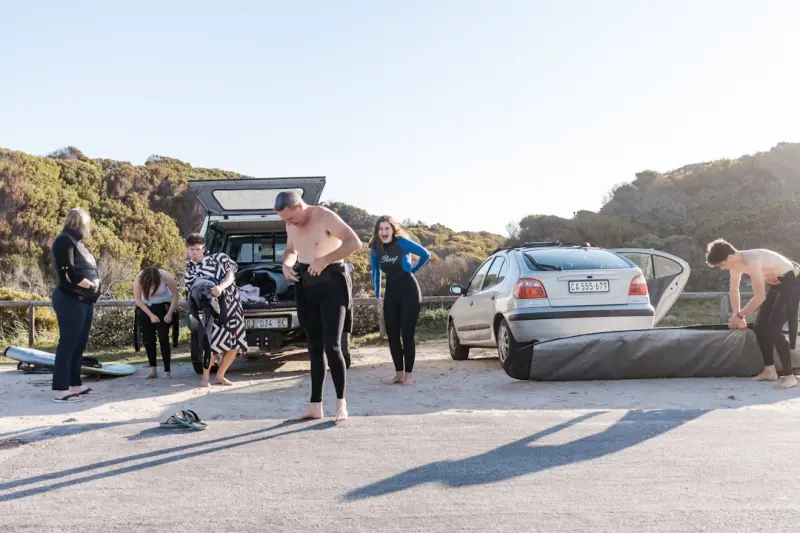
Mobile Basecamps: Turning Every Trip into a Productive Playground
Discover the blueprint for a mobile basecamp that lets you work efficiently, explore authentically, ... Read More

The Traveler’s Narrative Playground: Crafting Stories on the Move
Travel isn’t just about sights; it’s a living manuscript. Learn to use a simple narrative toolki... Read More

How Jet Lag Can Supercharge Your Creativity and Decision‑Making
Jet lag isn’t just a hassle; it’s a brain‑reset that can spark fresh ideas. Learn how to use t... Read More
Top Posts

Pet‑Friendly Home Design: Style Meets Function
Learn how to blend durability, comfort, and style in a pet‑friendly home with smart fabrics, clever storage, and minimalist design tricks....Read More
Cultivating Productivity: How My Garden Desk Transformed Home Life
A personal journey reveals how blending work with nature creates a harmonious, productive home environment—learn the design tips, tech tricks, and wellness be...Read More

Plug‑In Power: DIY Smart Energy Hacks for Every Home
A step‑by‑step guide to creating a DIY energy audit, using smart plugs, lighting, and simple insulation hacks to slash home electricity costs while boosting...Read More

How to Craft an Outdoor Reading Sanctuary That Invites Calm and Creativity
Discover how to transform a simple outdoor space into a dedicated reading sanctuary, blending comfortable furniture, strategic lighting, soothing plants, and se...Read More
0 Comments
Post Comment
You will need to Login or Register to comment on this post!