
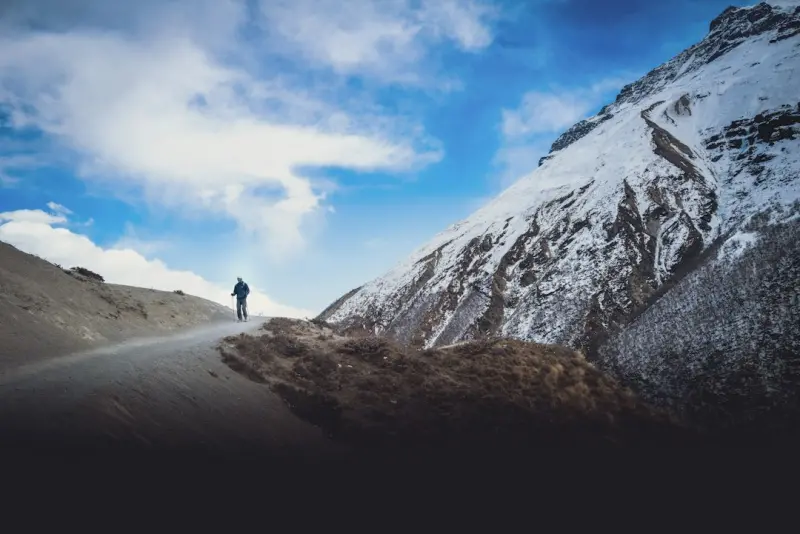
There’s a quiet revolution happening on winding forest paths and high‑altitude ridgelines that most travelers never notice: the way solo trail adventures silently rewire our brains. While glossy Instagram feeds often showcase sunrise panoramas or luxury lodges, the deeper story is about how stepping off the beaten road with just a pack can sharpen cognition, deepen emotional resilience, and unlock problem‑solving skills that translate straight to the boardroom.
Why the Solo Trail Is a Unique Cognitive Playground
When you hike alone, you’re forced into a state of active mindfulness. Every step becomes a decision point: should you follow the faint trail markers, detour around a sudden rockslide, or push through a sudden fog? This constant micro‑decision‑making engages the prefrontal cortex—the brain region responsible for planning, focus, and complex problem solving.
Research on “cognitive mapping” shows that navigating unfamiliar terrain boosts spatial memory and improves the brain’s ability to form mental models. In other words, the mental map you build on a mountain ridge becomes a template for tackling abstract challenges at work.
The Science Behind the Boost
Three neurochemical processes kick in during a solo hike:
- Elevated dopamine – The anticipation of reaching a summit releases dopamine, which enhances motivation and reinforces learning.
- Increased norepinephrine – Physical exertion raises norepinephrine levels, sharpening attention and improving the ability to filter out irrelevant information.
- Endorphin surge – The “runner’s high” isn’t limited to runners; trekkers feel a natural high that reduces stress hormones and promotes a sense of well‑being.
Combined, these chemicals create a neurochemical cocktail that makes the brain more adaptable—a crucial asset in fast‑changing business environments.
From Trail to Office: Translating Skills
Here are the concrete ways solo trail experiences manifest as workplace superpowers:
- Strategic foresight – Anticipating weather changes teaches you to read subtle signals and act proactively.
- Resource optimization – Packing light forces you to prioritize essentials, mirroring the need to allocate limited budgets wisely.
- Resilience under uncertainty – Navigating without a guide builds confidence in ambiguous situations, a trait prized by CEOs.
If you’re curious about how similar “stress‑to‑creativity” alchemy works in everyday life, check out Playful Curiosity: Rewire Stress into Creativity. The same principles that turn trail stress into mental stamina also fuel innovative thinking back at the desk.
Designing Your Solo Trail Experience
To maximize the brain benefits, approach your hike with intention. Below is a step‑by‑step framework that turns a simple weekend trek into a structured cognitive training session.
- Set a learning objective – Before you leave, decide what mental skill you want to hone. Is it patience, quick decision‑making, or perhaps the ability to stay calm under pressure?
- Choose a variable terrain – Pick a trail with diverse features: steep climbs, flat valleys, and occasional water crossings. Variety forces the brain to constantly adapt.
- Limit external aids – Resist the urge to rely on GPS for every turn. Use a topographic map and compass to engage your spatial reasoning.
- Schedule reflection points – Every hour, pause, breathe, and mentally review the choices you made. This meta‑cognitive step solidifies learning.
- Document insights – Upon return, write down three concrete takeaways and brainstorm how each can be applied to a current work challenge.
Gear That Supports Cognitive Growth
While the trail itself does the heavy lifting, the right gear can reduce friction and keep mental bandwidth focused on learning, not on fixing equipment.
- Lightweight navigation tools – A compact map case and a reliable compass keep your hands free for note‑taking or sketching route options.
- Multi‑purpose clothing – Layers that adapt to temperature swings prevent physical discomfort, which can distract from mental tasks.
- Portable journaling kit – A small notebook and a waterproof pen allow you to capture insights without pulling out a phone.
Mindful Moments: Turning Sensory Input into Insight
The natural world bombards you with sensory data—rustling leaves, distant bird calls, the scent of pine. Learning to process these inputs without overload is a skill you can cultivate. The practice mirrors techniques discussed in Turning Your Home into a Sensory Sanctuary, where controlled environments help train focus. On the trail, you can:
- Identify three distinct sounds every half hour and note how they affect your mood.
- Observe color changes in the foliage as the sun moves, using them as mental anchors for time perception.
- Practice deep breathing at natural landmarks, linking physical locations to calmness triggers.
Solo Hiking as a Leadership Lab
Leaders often talk about “walking the talk.” Solo hiking takes this literally. When you lead yourself through uncertainty, you model the behavior you expect from teams. Here’s how to translate that into leadership practices:
- Transparency – Share your trail plan with a colleague before you go. This mirrors open communication about project roadmaps.
- Accountability – Set a personal deadline for reaching a waypoint and hold yourself to it, reinforcing personal responsibility.
- Empathy – Notice moments of self‑doubt on the trail and practice self‑compassion. That empathy extends to supporting team members facing challenges.
Integrating Trail Insights into Corporate Culture
After a successful solo trek, bring the experience back to the office:
- Storytelling Session – Host a short “Trail Talk” where you share the map, decisions made, and lessons learned.
- Team Exercise – Use a simplified version of the trail’s decision‑making process in a workshop to practice rapid problem‑solving.
- Policy Suggestion – Propose a “Nature‑Break” initiative encouraging employees to take short, solo walks for mental resets.
When the whole team sees how personal adventure translates into professional advantage, the culture shifts toward continuous learning and resilience.
Potential Pitfalls and How to Avoid Them
Even the most rewarding solo hikes can backfire if not approached wisely. Common missteps include:
- Over‑packing – Carrying unnecessary gear adds physical strain and mental clutter.
- Ignoring safety protocols – Skipping a weather check or emergency plan can turn a learning experience into a crisis.
- Failure to debrief – Without reflecting on the experience, the brain can’t consolidate the lessons.
Mitigate these risks by preparing a concise checklist, consulting local trail reports, and scheduling a debrief within 24 hours of returning.
Case Study: From Mountain Pass to Boardroom Pitch
Consider Maya, a product manager who spent a solo weekend hiking the Appalachian Trail. She set a learning objective to improve rapid prioritization. By the time she reached a steep incline, she had to decide whether to push forward or rest, balancing time constraints against energy levels. Back at work, Maya applied the same quick‑assessment framework to a product launch, cutting down decision time by 30% and delivering a successful market entry.
Maya’s story underscores the tangible ROI of solo trail training—enhanced efficiency, sharper focus, and a confidence boost that resonates throughout an organization.
Conclusion: Embrace the Solo Trail as a Strategic Asset
Solo trail adventures are more than personal retreats; they’re low‑cost, high‑impact brain gyms. By deliberately designing hikes that challenge decision‑making, sensory processing, and emotional regulation, you cultivate a mental toolkit that drives innovation, leadership, and resilience. So next time you’re tempted to book a resort getaway, consider swapping the pool for a single‑track path. Your brain—and your career—will thank you.

Jim Pearse, a seasoned freelance writer, brings a wealth of knowledge and passion to the world of home and garden. From the intricacies of landscaping to the nuances of interior design, Jim delves into every aspect of creating comfortable, beautiful, and functional living spaces.
Related Posts
Beyond the Checklist: Turning Travel Into a Personal Innovation Playground
Explore how treating each journey as an experiment can boost creativity, develop new habits, and tur... Read More

The Kitchen Compass: How Community Cooking Redefines the Travel Experience
Travel isn’t just about sights; it’s about shared meals. Learn how joining community kitchens ca... Read More

Passport to Flavor: How Food‑First Travel Transforms Your Worldview
Food‑first travel uses cuisine as a cultural guide, turning each bite into a lesson in history, su... Read More
Top Posts

Designing Digital Boundaries: A Modern Blueprint for Mental Calm
In a world of constant notifications, setting intentional digital boundaries is essential for mental well‑being. This guide offers actionable micro‑moves, c...Read More

Playful Creativity: A Simple Antidote to Burnout
A practical guide to using playful creativity as a daily mental health boost, with actionable steps, science-backed benefits, and ways to embed it into remote a...Read More

Seasonal Outdoor Living Room: A Flexible Garden Sanctuary
Learn how to design a garden that functions like a living room, with modular foundations, seasonal plantings, weather‑ready textiles, and low‑tech touches t...Read More

Why Garden Desks Are the Secret Weapon for Career Growth
Explore why garden desks are reshaping employment, enhancing creativity, and accelerating career advancement—all from the comfort of your own backyard....Read More
0 Comments
Post Comment
You will need to Login or Register to comment on this post!