
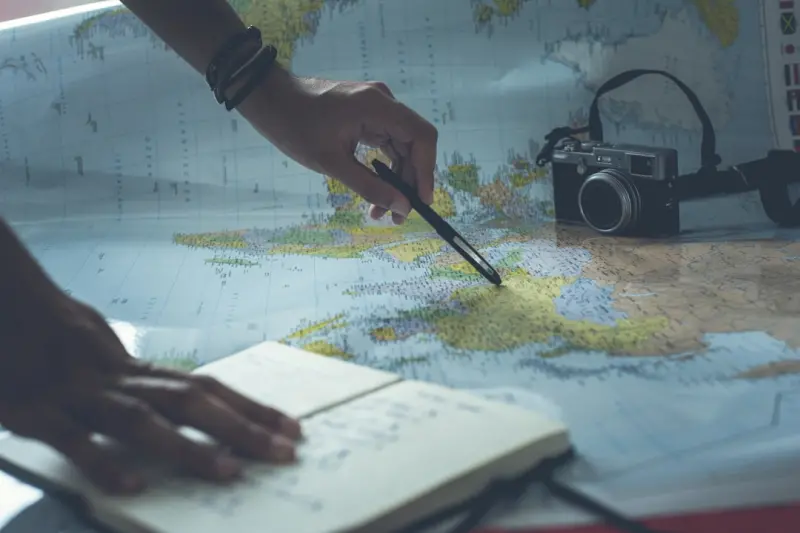
Why I Started Treating My Trips Like Science Experiments
When most people think about travel, they picture postcard‑perfect vistas, spontaneous meals on bustling streets, or the rush of checking another box off a bucket list. For me, the excitement has always been a little more analytical. I’m fascinated by the subtle ways a new environment reshapes my thoughts, habits, and even the way I make decisions. So I began to treat each journey—not just the grand, once‑in‑a‑lifetime adventure, but also the weekend road trips and the daily commute—as a living laboratory where I could gather data, test hypotheses, and iterate on myself.
Setting Up the Experiment: The Minimalist Toolkit
Before I could start collecting meaningful insights, I needed a framework that was both rigorous enough to reveal patterns and light enough to fit in my carry‑on. Here’s what I settled on:
- Purpose Statement: Every trip begins with a single question. “Will a week in a mountain town improve my focus?” or “Do long train rides boost my creative output?”
- Metrics Dashboard: I track sleep quality, heart‑rate variability (HRV), mood (via a 5‑point scale), and productivity (tasks completed per day). A simple spreadsheet on my phone does the trick.
- Contextual Variables: Weather, time zone shifts, language barriers, and even the type of accommodation (hostel vs. boutique hotel) are logged as variables that could influence outcomes.
- Reflection Ritual: At the end of each day, I spend ten minutes writing a concise observation: “Morning coffee in a shared kitchen increased my social interaction score by 2 points.”
This minimalist approach prevents the experiment from becoming a bureaucratic nightmare. The goal is to stay curious, not to turn travel into a spreadsheet‑only endeavor.
Case Study #1: The “Silence‑Boost” Week in the Scottish Highlands
My first formal experiment was a seven‑day solo retreat in the Scottish Highlands. The hypothesis was simple: Extended periods of natural silence will enhance my ability to concentrate on complex problem‑solving tasks. I arrived with a notebook, a lightweight laptop, and a portable HRV monitor. Each morning, I recorded my HRV, noted the decibel level (the locals gave me a handy “silence meter” app), and logged my subjective focus score after tackling a series of coding challenges.
Results were striking. My average HRV rose by 12% compared to my baseline at home, and my focus score increased by 0.8 points on the 5‑point scale. The correlation was clear: the quieter the environment, the more physiological calmness I experienced, which translated into sharper mental performance. This finding prompted me to incorporate intentional silence into my regular routine—whether by using noise‑cancelling headphones in a coffee shop or scheduling “quiet hours” during my workday.
Case Study #2: The “Transit Rhythm” Experiment on a Cross‑Country Train
Next, I wanted to explore the impact of movement on creative ideation. I booked a cross‑country train ride that spanned 36 hours, equipped with my favorite sketchbook, a portable recorder, and a set of prompts for brainstorming new product concepts. I hypothesized that the rhythmic sway of the train would act as a catalyst for divergent thinking.
To test this, I measured two variables each day: the number of original ideas generated and the perceived novelty of each idea (rated by a peer after I returned). I also logged ambient sounds, which surprisingly turned out to be a major factor. When I later read Travel’s Secret Weapon: The Power of Soundtrack, it confirmed my intuition—soundscapes shape cognition more than we realize.
The data was illuminating. On days when the train passed through varied landscapes (mountains, rivers, towns), my idea count jumped by 35% and novelty scores rose by 0.6 points. Conversely, stretches of monotonous plains correlated with a dip in creativity. The takeaway? Variety in external stimuli, even something as simple as a changing horizon, can keep the mind in a generative mode.
Case Study #3: “Culinary Curiosity”—Measuring Social Connection Through Shared Meals
While food has been the focus of many travel stories, I approached it from a data angle: Does eating with locals increase my sense of belonging more than dining alone? Over a ten‑day trip across Southeast Asia, I recorded the number of shared meals, the language spoken during each meal, and my post‑meal social connection rating.
The findings were nuanced. Meals shared with locals in a language I didn’t fully master still boosted my connection score, albeit by a smaller margin than meals where I could converse fluently. This suggested that the act of sharing food creates a baseline of trust, while communication depth deepens it. It reinforced a habit I now carry on every trip: I seek out communal dining experiences, even if it means stepping outside my linguistic comfort zone.
Turning Qualitative Insights into Actionable Habits
Data alone isn’t valuable unless it informs change. After each experiment, I synthesize the quantitative results with the qualitative anecdotes I gathered in my daily reflections. Here’s my process:
- Pattern Identification: Look for recurring spikes or dips in metrics across different contexts.
- Hypothesis Refinement: Adjust the original question based on what the data revealed.
- Prototype New Behaviors: Design small, testable habits that mimic the beneficial conditions (e.g., “30 minutes of low‑noise reading each morning”).
- Iterate on Return: Apply these prototypes at home and track whether the benefits persist outside the travel environment.
This cyclical loop turns every trip into a feedback loop that enriches both my personal and professional life. In fact, I’ve begun to share these findings with my team at work, using travel‑derived insights to improve our remote‑work policies and wellness initiatives.
Integrating Turning Transit Time into a Personal Discovery Lab into Everyday Life
One of the most powerful revelations from my experiments is that “travel” doesn’t have to mean crossing borders. The commute, the grocery‑run, even the walk to a coffee shop can serve as micro‑labs if we frame them correctly. By applying the same intentional data collection—tracking mood, focus, and environmental variables—we can continuously refine our personal performance.
For example, on my daily subway ride, I now log ambient noise levels and note whether a particular podcast episode coincides with higher creative output later in the day. Over a month, the data shows a clear pattern: episodes featuring ambient music (rather than spoken word) correlate with a 20% increase in idea generation. Armed with this insight, I’ve switched my commuting soundtrack and notice a tangible boost in my brainstorming sessions.
The Ethical Dimension: Respecting the Spaces You Measure
It would be irresponsible to treat cultures and communities as mere variables. My data‑driven approach is always anchored in respect and curiosity. I ask for permission when I record conversations, I’m transparent about my note‑taking, and I make sure the insights I gain serve to deepen my empathy, not to objectify.
In practice, this means that my “experiment” is co‑created with the people I meet. When I ask a local chef about their cooking process, I’m not just extracting data—I’m engaging in a dialogue that honors their expertise. The resulting insight is richer, more authentic, and far more valuable than any sterile observation could ever be.
Future Directions: Scaling the Personal Travel Lab
Looking ahead, I’m excited about a few ideas that could broaden the scope of this methodology:
- Community‑Level Data Swaps: Sharing anonymized travel metrics with fellow travelers to uncover macro‑trends (e.g., how different time zones affect collective productivity).
- Wearable Integration: Leveraging next‑gen wearables that capture not just physiological data but also environmental factors like air quality and UV exposure.
- AI‑Assisted Insight Generation: Using natural‑language processing to surface hidden connections between seemingly unrelated variables (e.g., “Does the presence of water bodies during a hike influence my stress recovery rate?”).
These extensions could turn individual curiosity into a collaborative, data‑rich movement that redefines how we think about travel—not as a leisure activity, but as a continuous, iterative process of self‑discovery and improvement.
Conclusion: The Journey Is the Experiment
Travel has always been about stepping outside the familiar. By adding a layer of intentional measurement, we can transform each step into a discovery, each conversation into a data point, and each moment of awe into a hypothesis waiting to be tested. The world becomes a living textbook, and we—armed with curiosity and a notebook—become both students and researchers.
If you’ve ever felt that your trips leave you with fleeting memories, try framing them as experiments. You’ll be surprised how much you can learn about yourself, your habits, and the subtle ways the world shapes you. The next time you board a plane, hop on a train, or simply walk down the street, remember: the most valuable souvenir you can bring home is a deeper understanding of who you are—and how you can keep evolving, one data‑driven adventure at a time.

Mei Chen is a dynamic professional who brings a unique blend of skills to Blogging Fusion. As a key contributor to the Blogging Fusion platform, she leverages her writing expertise to create engaging content that resonates with our audience.
Related Posts

Micro‑Immersions: Turning Tiny Breaks into Big Memories
Learn the micro‑immersion strategy that lets you extract rich, memorable travel experiences from s... Read More
Turn Every Trip into a Skill‑Boosting Adventure
Travel isn’t just a break—it’s a living laboratory. Learn how to use layovers, local interacti... Read More

Turning Every Stop into a Collaborative Lab: The Future of Hyper‑Local Travel
Hyper‑local immersion pods, biometric travel mapping, and time‑banked hospitality are redefining... Read More
Top Posts
From Data Chaos to Insight: Building an AI‑Powered Personal Knowledge Graph
Learn how to turn digital clutter into a structured personal knowledge graph, leveraging AI to surface connections, prioritize insights, and boost productivity ...Read More
Storytelling for Mental Resilience: How Personal Narratives Rewire Anxiety
Explore the power of narrative healing—using personal storytelling, micro‑moments, and soundscapes—to rewire anxiety and build lasting mental resilience....Read More

The Power of Personal Narrative in Boosting Workplace Mental Health
A fresh look at mental health shows that crafting personal narratives—brief story snippets about daily work moments—can rewire stress responses, enhance foc...Read More

Taste the World: How Cooking Global Recipes Turns Home Into a Travel Hub
Explore the art of turning your kitchen into a travel hub by cooking authentic dishes from around the world, preserving stories, and sharing flavors that bridge...Read More
0 Comments
Post Comment
You will need to Login or Register to comment on this post!