
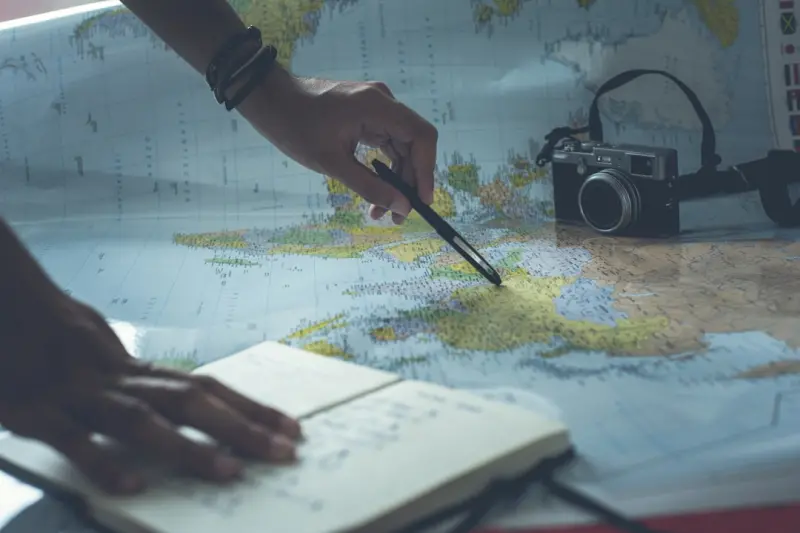
Why Souvenirs Matter More Than You Think
When I step off a plane with a battered backpack and a head full of impressions, the first thing I reach for isn’t my phone—it’s the tiny object I tucked into my pocket during the journey: a hand‑woven coaster from a seaside market, a pressed lavender bud from a hilltop monastery, a folded map with scribbled notes in the margins. These objects are more than clutter; they are physical anchors that tether the fleeting sensations of travel to the steady rhythm of everyday life.
Most travelers treat souvenirs as afterthoughts, a quick impulse buy at the gift shop before heading home. I’ve learned to approach them as intentional data points—each one a fragment of a larger narrative that, when pieced together, becomes a personal archive of places, people, and moments. This practice transforms the act of collecting into a reflective ritual, turning a trip from a series of isolated experiences into a cohesive story you can revisit long after the passport stamps fade.
The Science Behind Tangible Memory
Neuroscientists have long known that our brains store memories in a distributed network of sensory cues. A scent, a texture, or a visual motif can trigger a vivid recollection that a plain fact alone cannot. When you hold a smooth river stone from the banks of the Danube, the coolness of its surface, the faint imprint of water, and even the subtle mineral smell all converge to reactivate the neural pathways that were active when you first discovered it.
Research shows that multisensory encoding—the process of attaching multiple senses to a single memory—boosts recall by up to 70 %. By deliberately choosing souvenirs that engage sight, touch, smell, or even taste, you give your brain a richer set of hooks to latch onto, ensuring that the memory remains vivid and accessible.
Designing Your Souvenir System
Creating a souvenir system doesn’t require a massive budget or a penchant for hoarding. It’s about strategy and curation. Here’s a simple framework I use on every trip:
- Define a Theme: Before you travel, decide on a guiding question—“What flavors define this city?” or “Which artisans embody local craftsmanship?” This focus narrows your collecting to items that answer that question.
- Set a Limit: Choose a maximum number of items (I usually aim for 5–7 per destination). This constraint forces you to be selective and prevents the collection from becoming a burden.
- Choose a Medium: Decide whether you’ll collect objects (e.g., ceramics, textiles), ephemera (e.g., tickets, postcards), or digital artifacts (photos, voice memos). Mixing mediums can create a layered archive.
- Document the Story: Write a brief note—handwritten or digital—about why you chose each item, where you found it, and the feeling it evoked. This turns a simple trinket into a story capsule.
When I follow this method, my suitcase never feels overloaded, and my home shelves become a curated museum rather than a chaotic junk drawer.
Case Study: Market Hunts as Cultural Deep Dives
One of my favorite ways to source meaningful souvenirs is to explore local markets. These bustling hubs are micro‑ecosystems of tradition, entrepreneurship, and community. While wandering through a market in Oaxaca, I discovered a stall where artisans crafted hand‑dyed napkins using natural pigments derived from local flora. Instead of buying the usual mass‑produced tote, I asked the maker about the dyeing process, learned about the seasonal flowers, and purchased a single napkin with a story attached.
That napkin now sits in my kitchen drawer, and every time I use it, I’m reminded of the conversation about sustainable harvesting—a conversation that sparked my later interest in edible landscape design at home. The souvenir didn’t just mark a place; it seeded a new hobby.
Digital vs. Physical: Finding the Right Balance
In today’s hyper‑connected world, it’s tempting to rely solely on digital memories—photos, videos, geo‑tags. While these are undeniably convenient, they lack the tactile dimension that physical objects provide. However, digital tools can enhance a physical collection. I use a simple spreadsheet to catalog each item, linking it to a folder of photos, receipts, and voice notes recorded on the spot.
This hybrid approach mirrors the concept of turning journeys into living labs, as discussed in Beyond the Tourist Trail. By treating each trip as an experiment and each souvenir as data, you create a feedback loop that informs future travel decisions and deepens self‑knowledge.
Sustainable Collecting: Ethical Considerations
Not all souvenirs are created equal. Some are mass‑produced, exploitative, or environmentally damaging. A sustainable souvenir strategy involves three key questions:
- Origin: Is the item made locally, supporting community artisans?
- Material: Does it use renewable or recycled resources?
- Impact: Does the purchase contribute positively to the local economy or cultural preservation?
For example, instead of buying a cheap wooden statue that may have been sourced from endangered forests, I look for items crafted from reclaimed wood or responsibly harvested bamboo. The added effort often leads to richer conversations with the makers, turning a purchase into a cultural exchange.
Integrating Souvenirs Into Daily Life
Collecting is only half the journey; the other half is integration. Here are a few ways to keep your travel archive alive:
- Rotate Displays: Change the items on your desk or bookshelf monthly, allowing each souvenir to spark conversation and reflection.
- Storytelling Sessions: Invite friends or colleagues over for a “travel showcase,” where you walk them through the items and the narratives behind them.
- Creative Projects: Use collected materials in DIY projects—turn a vintage map into a collage, repurpose a ceramic piece into a plant pot, or incorporate a hand‑woven textile into a home‑made wall hanging.
These practices prevent souvenirs from becoming static clutter and instead make them active participants in your ongoing personal development.
From Souvenirs to Future Travel Planning
Every curated object is a data point that can inform where you go next. If a particular type of craft repeatedly catches your eye, it may signal a deeper interest in that culture’s artistic lineage. If you find yourself drawn to markets that specialize in spices, perhaps a culinary tour is the logical next step.
In fact, my own “souvenir analytics” led me to plan a month‑long immersion in the tea plantations of Darjeeling after a series of tea‑leaf packets and handcrafted tea tins accumulated in my collection. The tactile memory of those items kept the desire alive long after the initial trip, turning a fleeting fascination into a concrete itinerary.
Conclusion: The Power of Intentional Collecting
Travel is a fleeting, often chaotic experience. By approaching souvenirs with intention, you give that chaos a structure—a narrative framework that endures long after you’ve returned home. This practice not only enriches your memory but also creates a feedback loop that shapes future journeys, supports sustainable economies, and deepens your connection to the world.
So the next time you wander into a market, a boutique, or even a street vendor’s stall, pause. Ask yourself: “What story does this object hold? How does it align with my travel theme?” Then, choose wisely, document thoughtfully, and let your collection become the living map of a life well‑traveled.

David Moore is a freelance writer specializing in two dynamic and ever-evolving fields: gambling and the tech industry. With a keen eye for detail and a knack for unraveling complex topics, David delivers insightful and engaging content that keeps readers informed and entertained.
Related Posts
The Narrative Backpack: Crafting Stories That Outlast Your Trip
Discover a step‑by‑step guide to travel storytelling, from setting up a story bank before you de... Read More

The Joy of Unplanned Wandering: How Serendipity Fuels Deeper Travel Experiences
Explore why letting go of strict itineraries and following curiosity leads to unforgettable travel m... Read More

How Intentional Disconnect Transforms Your Travel Experience
A guide to purposeful travel that emphasizes digital detox, minimalist packing, and authentic local ... Read More
Top Posts

Pocket Oasis: Transforming Small Outdoor Spaces Into Productive Retreats
Learn how to maximize a compact balcony or patio by defining purpose, using multifunctional furniture, vertical gardening, and seasonal tweaks to create a produ...Read More

Strategic Home Zoning: Designing Purposeful Micro‑Spaces for Work, Rest, and Play
Discover a step‑by‑step framework for carving out purposeful micro‑zones in any room, using visual anchors, acoustic tweaks, and smart tech to boost focus...Read More

Tiny Wellness Nooks: Boosting Home Harmony One Corner at a Time
Learn to turn overlooked corners of your home into purposeful wellness nooks, using easy DIY projects, sensory elements, and habit‑forming tips to boost every...Read More
Building a Career Resilience Engine: Future‑Proof Your Path
Discover a four‑pillar strategy to create a career resilience engine, turning curiosity, exposure, networking, and data into a future‑proof professional pat...Read More
0 Comments
Post Comment
You will need to Login or Register to comment on this post!