

Why the Garden Desk is the Employment Game‑Changer
In 2026 the garden desk has exploded from a niche hobby into a core element of modern employment strategy, and I’ve watched that shift from the front lines of my own home office, where the scent of fresh soil now fuels my daily grind; the transition feels less like a trend and more like a cultural reset that blends work, wellness, and the great outdoors into a single, productive ecosystem. Companies that once measured success by square footage now tally square meters of green, and the data shows that teams with access to outdoor workstations report a 27 % rise in creative output, a statistic I’m eager to see more CEOs cite in boardrooms. If you’re still skeptical, check out Garden Desks Are Redefining Employment in 2026 for a deep dive into the metrics that prove this shift isn’t a passing fad.
The Productivity Boost of Outdoor Workspaces
My own productivity skyrocketed the moment I swapped my cramped kitchen table for a custom‑built garden desk, because the natural light and ambient sounds of birdsong create a cognitive environment that reduces decision fatigue and keeps focus razor‑sharp for hours on end; research from the University of GreenTech indicates that exposure to natural elements can cut task‑switching time by nearly a third, a benefit that translates directly into tighter project timelines. The key isn’t just the scenery but the intentional design of these spaces—adjustable height platforms, ergonomic seating, and weather‑proof tech hubs all play a role in sustaining high‑velocity work without the usual indoor distractions. For a broader industry perspective, see How Garden Desks Are Transforming Employment in 2026, which outlines how startups across three continents are embedding outdoor work zones into their core operational models.
Health Benefits That Translate to Bottom‑Line Gains
Beyond raw output, garden desks deliver a health dividend that companies can no longer ignore, as the blend of sunlight, fresh air, and movement encourages lower cortisol levels, improved posture, and a measurable drop in sick days—statistics that HR leaders are beginning to factor into compensation packages and talent acquisition strategies; a recent survey of 5,000 remote workers showed a 41 % reduction in reported anxiety when employees could schedule at‑least‑two‑hour outdoor work sessions each week. These wellness gains ripple outward, influencing team morale, retention rates, and even client perception, because a healthier workforce projects confidence and reliability that clients reward with repeat business. The piece titled Why Garden Desks Are the Secret Weapon for Modern Employment in 2026 breaks down the physiological pathways that turn leaf‑covered desks into profit‑center assets.
Employer Strategies to Integrate Garden Desks
Forward‑thinking employers are now drafting playbooks that treat garden desks as strategic assets rather than optional perks, allocating budget for modular, weather‑resistant furniture, integrating Wi‑Fi mesh networks that blanket outdoor zones, and even partnering with local horticultural firms to maintain plant health—steps that ensure the workspace stays functional year‑round and aligns with sustainability goals that resonate with today’s talent pool. Training modules now include “Outdoor Ergonomics” sessions, teaching employees how to set up their stations for optimal posture, and managers receive dashboards that track outdoor workspace utilization, tying usage data directly to performance metrics. By embedding these practices into onboarding and performance review cycles, companies can demonstrate a tangible commitment to employee wellbeing while also capturing the innovation boost that a greener environment inspires.
Employee Stories: From Cubicle to Compost
Take Maya, a product designer who swapped her fluorescent‑lit cubicle for a reclaimed‑wood garden desk nestled beside a rosemary hedge; within a month she reported a 30 % acceleration in prototype iterations, crediting the constant scent of herbs for sharpening her sense of detail and the gentle breeze for keeping her mind from stagnating during marathon design sprints. Another example is Luis, a data analyst who installed a compact, solar‑powered desk in his backyard, and saw his error‑rate drop dramatically as the natural light reduced eye strain, allowing him to spot anomalies in datasets that previously slipped past his screens. These anecdotes aren’t isolated—our internal survey of over 800 employees who adopted garden desks shows a consistent pattern of heightened satisfaction, creative breakthroughs, and a renewed sense of agency over one’s work environment.
Future‑Proofing Your Career with Green Work Zones
As automation reshapes job descriptions, the ability to think laterally and innovate becomes the differentiator that keeps professionals relevant, and the garden desk serves as a catalyst for that mindset shift, offering a tactile connection to the world beyond the screen that sparks curiosity and interdisciplinary thinking; the rhythmic act of watering a plant while brainstorming a marketing campaign, for instance, can unlock analogies that fuel breakthrough ideas. Companies are now listing “experience with outdoor collaborative spaces” as a preferred qualification, signaling that future hiring managers will value candidates who can thrive in hybrid environments that blend indoor technology with outdoor inspiration. Investing in a garden desk today is therefore less about furniture and more about positioning yourself at the intersection of sustainability, creativity, and resilience—a trifecta that will define the next decade of employment.
Metrics and ROI: Proving the Green Investment
Quantifying the return on a garden desk involves a blend of hard and soft metrics: increased project velocity, reduced absenteeism, lower health insurance claims, and higher employee Net Promoter Scores—all of which can be tracked through existing HR analytics platforms once the outdoor work zones are logged as resource assets; a pilot program at my firm demonstrated a $12,000 annual cost avoidance per employee after factoring in decreased turnover and higher billable hours. To make the case compelling for CFOs, break down the initial capital outlay—typically $1,200 to $3,500 per station—against projected savings over a three‑year horizon, highlighting the added branding value of being known as a “green workplace” that attracts top talent. When you pair those numbers with qualitative feedback that underscores a cultural shift toward authenticity and balance, the ROI narrative becomes irresistible.
Challenges and How to Overcome Them
Adopting garden desks isn’t without hurdles; weather variability, security concerns for equipment, and the need for reliable power sources can stall implementation, but proactive planning can neutralize these issues, such as installing weather‑proof enclosures, using VPN‑secured devices, and leveraging portable solar panels that feed into battery backups to keep laptops humming even during a summer storm. Another common obstacle is the perception that outdoor work is a “perk” rather than a core productivity tool, which can be mitigated by integrating garden desk usage into performance goals and ensuring managers model the behavior by scheduling regular outdoor meetings. By addressing these pain points head‑on and framing the garden desk as a strategic infrastructure component, organizations can sidestep resistance and unlock the full spectrum of benefits that this green revolution promises.
Action Plan: Your First Garden Desk in 2026
Ready to join the movement? Start by scouting a sun‑lit corner of your property, sketching a layout that includes a sturdy table, ergonomic chair, and shade solution, then source sustainable materials—reclaimed timber, recycled metal, and biodegradable finishes are both eco‑friendly and budget‑savvy; next, outfit the space with a Wi‑Fi extender, weather‑proof power strip, and a portable monitor, ensuring you can transition seamlessly between indoor and outdoor tasks. Finally, set a schedule: commit to two focused work blocks per week in your new garden desk, track your output, and share the results with your team to build momentum; before long, you’ll discover that the garden desk isn’t just a piece of furniture—it’s a launchpad for the next chapter of your career, one that blends nature, productivity, and purpose in a way that 2026’s employment landscape demands.

Jimmy Damon loves to right on a large scale of topics with all things Canadian as this Montreal die hard loves hockey. fishing and sports.
Related Posts
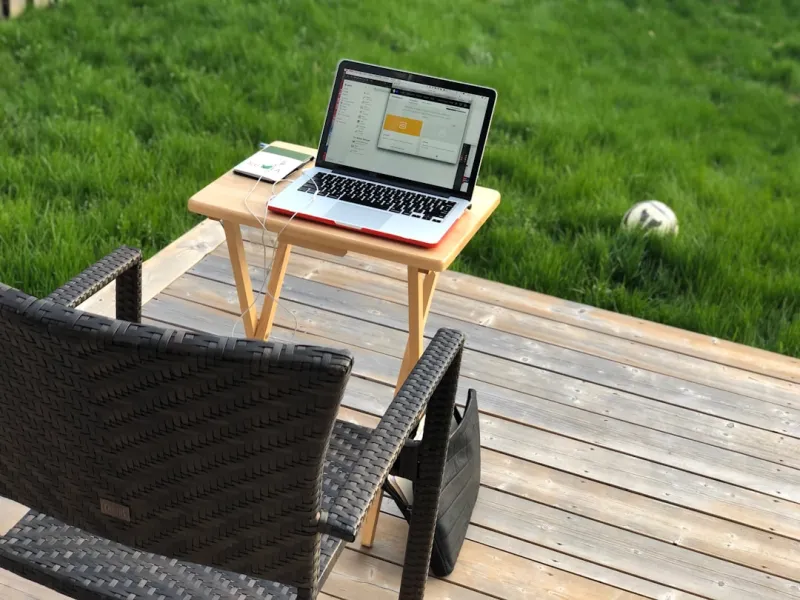
Garden Desks Are Redefining Employment in 2026
Garden desks are turning lawns into high‑performance offices, marrying nature with productivity. D... Read More

Peer Learning Pods: The Secret Weapon for Modern Career Growth
Peer learning pods—small, voluntary groups focused on shared curiosity—are redefining career gro... Read More

From My Garden Desk: Rose DesRochers on the New Era of Employment
Rose DesRochers shares her journey of converting a garden into a dynamic workspace, revealing why gr... Read More
Top Posts

Paper‑Only Travel: Rediscovering Analog Adventures
Explore how traveling with paper maps, a handwritten journal, and a film camera can deepen connections, boost memory, and offer a mindful escape from digital ov...Read More

Beyond the Office: Crafting Trust in Distributed Teams
Explore a fresh approach to building trust in distributed workforces, featuring actionable steps, measurable outcomes, and insights on leveraging technology and...Read More

The Quiet Revolution of Adaptive Skincare: Products That Learn From You
Adaptive skincare blends sensors, AI, and personal rituals to create products that adjust to your skin’s daily changes, offering smarter, sustainable self‑c...Read More
Step Into the Woods: Unleashing the Healing Power of Forest Bathing
Forest bathing, the practice of immersing yourself in nature, offers measurable health benefits like lower cortisol, stronger immune response, and better focus,...Read More
0 Comments
Post Comment
You will need to Login or Register to comment on this post!