
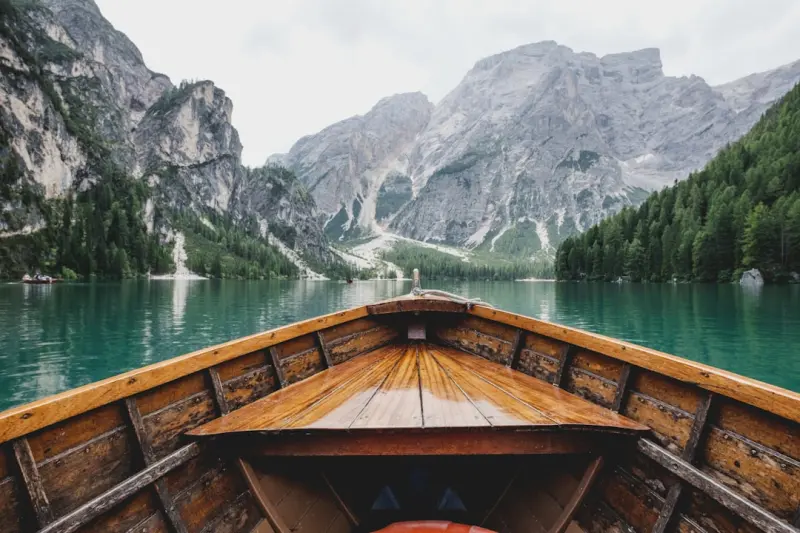
Why Every Professional Needs a Personal Travel Playbook
When I first booked a last‑minute flight to a remote mountain town, I didn’t think I was crafting a roadmap for my career. I was simply chasing a sunrise and a decent cup of coffee. Yet, as the train rattled through valleys and I stared at a map that felt more like a puzzle, a pattern emerged: the decisions I made on the road were the same kind of strategic moves I’m asked to make in boardrooms. That realization sparked the idea of a travel playbook—a living document that turns wanderlust into a competitive advantage.
The Core Principle: Treat Travel Like a Lab
Most of us treat vacations as an escape, a break from the daily grind. I propose flipping that script. Think of each trip as an experiment, a controlled environment where you can test hypotheses about yourself, your work style, and your creative process. In the same way a scientist records observations, you’ll log insights, failures, and “aha!” moments. Over time, this data set becomes a personal intelligence hub that you can draw from when faced with complex problems at work.
Step 1 – Define Your Travel Objectives (Beyond Sightseeing)
Before you even open a travel app, ask yourself three questions:
- What skill do I want to stretch? Maybe it’s rapid decision‑making, cross‑cultural communication, or improvisational thinking.
- Which mental model do I want to challenge? If you’re a data‑driven strategist, consider a trip that forces you to rely on intuition.
- What emotional state am I aiming to experience? Confidence, humility, curiosity—each state rewires your brain in subtle ways.
By attaching a clear learning intent to your itinerary, you turn a leisure trip into a purposeful venture. The objective isn’t to collect postcards; it’s to collect data points that feed back into your professional life.
Step 2 – Curate Environments That Nudge Your Brain
Our surroundings shape how we think. A bustling market in Marrakech triggers sensory overload, while a silent monastery in the Japanese Alps forces introspection. Choose locations that deliberately push you out of your comfort zone.
For instance, I once spent a weekend in a co‑living space in Lisbon that housed digital nomads from five continents. The constant exchange of ideas sparked an impromptu brainstorming session that later inspired a product feature I’m still proud of. The point isn’t to be exotic for its own sake; it’s to select places that align with the mental state you want to cultivate.
Step 3 – Adopt a Structured Day‑Dreaming Routine on the Road
While wandering cobblestone streets, I often let my mind drift—only to bring it back with intention. This practice mirrors the insights from The Secret Power of Structured Daydreaming for Mental Resilience. By setting a 10‑minute “day‑dream window” each day, I let subconscious connections surface, then immediately journal them. The result? A steady stream of ideas that feel both novel and grounded in reality.
Here’s a quick framework I use:
- Find a quiet spot (a café, a park bench, a train carriage).
- Set a timer for 8–12 minutes.
- Focus on a problem you’ve been wrestling with, but don’t force solutions.
- When the timer goes off, write down everything that surfaced—no filtering.
This simple ritual transforms idle moments into a fertile incubator for innovation.
Step 4 – Leverage Solo Adventures for Cognitive Gains
There’s a distinct cognitive boost that comes from navigating unfamiliar terrain alone. As highlighted in The Unexpected Brain Boost of Solo Trail Adventures, solo travel engages the prefrontal cortex, sharpening problem‑solving and memory consolidation. When you’re the sole decision‑maker—choosing routes, negotiating with locals, adjusting plans on the fly—you’re essentially training your executive function in a low‑stakes environment.
My favorite solo experiment was a three‑day hike through the Patagonian steppe with just a backpack and a paper map. Each night, I reflected on the day’s choices, noting which heuristics served me well and which led to dead ends. Those reflections later translated into a more efficient decision‑making framework that I introduced to my product team.
Step 5 – Document, Review, Iterate
After each trip, set aside a debrief session. Pull out your travel journal, photos, receipts, and any digital notes. Ask yourself:
- Which moments sparked the strongest insights?
- What patterns emerged across different locations?
- How can I translate these patterns into actionable work habits?
Store this information in a dedicated “Travel Playbook” folder—digital or analog. Over time, you’ll notice clusters: perhaps mountain retreats consistently improve focus, while urban hustle boosts idea generation. These clusters become your personal data-driven guide for future travel planning.
Step 6 – Share the Playbook (And Grow Your Network)
One of the most underestimated benefits of a travel playbook is its ability to become a conversation catalyst. When you share a concise, data‑backed story about how a night spent in a Thai night market reshaped a product roadmap, you instantly position yourself as a thought leader. Colleagues and peers begin to see travel not as a frivolous expense but as a strategic investment.
Moreover, this sharing opens doors to collaborations. I recently co‑hosted a webinar with a fellow traveler who used a similar playbook to improve cross‑functional alignment in a fintech startup. The synergy was immediate, and we both walked away with fresh perspectives for our own companies.
Designing the Playbook: Tools and Templates
Below is a lightweight template that you can copy and customize. Feel free to adapt it to your preferred medium—Google Docs, Notion, a physical notebook, or even a voice‑memo app.
Travel Playbook Entry
Date & Location:
Objective (Skill/Model/Emotion):
Key Experiences (Bullet points):
Day‑Dream Insights (Timestamped):
Solo Decision Highlights:
Immediate Takeaways (What can be applied tomorrow?):
Long‑Term Reflections (After 30 days):
Next Destination (Based on insights):
Consistency is more important than perfection. Even a brief entry after a short weekend getaway can yield valuable data points when aggregated over months.
Travel Playbooks vs. Traditional Professional Development
Corporate training programs often deliver knowledge in a top‑down fashion: webinars, workshops, certifications. While these have merit, they rarely engage the whole person—mind, body, and environment. A travel playbook, by contrast, is inherently holistic. It forces you to:
- Adapt to physical discomfort (jet lag, language barriers).
- Navigate social ambiguity (cultural etiquette, unfamiliar norms).
- Manage uncertainty (changing itineraries, unexpected weather).
This triad of challenges mirrors the complexity of modern business problems, making the insights you harvest more robust and transferable.
Addressing Common Objections
“I can’t afford to travel.” – Travel doesn’t have to mean intercontinental flights. A day trip to a neighboring town, a weekend stay at a nearby B&B, or even a virtual immersion (e.g., language exchange) can serve as a micro‑experiment.
“My manager won’t approve travel time.” – Frame the request as a professional development initiative. Present a brief proposal linking the travel objective to a measurable business outcome (e.g., “I’ll return with three actionable ideas to streamline our onboarding process”).
“I’m not a natural explorer.” – Start with low‑stakes activities: guided tours where you’re still a participant, but you keep a notebook to capture moments that feel out of the ordinary.
Case Study: From a Coffee Shop in Buenos Aires to a Product Pivot
Six months ago, I spent a week in Buenos Aires, deliberately immersing myself in the city’s café culture. My objective was to understand how spontaneous social interactions fuel creativity. I set a daily “conversation challenge” to chat with a stranger for at least five minutes, documenting the topics that emerged.
One afternoon, I struck up a conversation with a local app developer who explained how Argentine users favored “micro‑rewards” for completing mundane tasks—tiny digital nudges that felt rewarding. This insight sparked the idea to incorporate a micro‑reward system into our SaaS platform’s onboarding flow. After a rapid prototype and A/B test, we saw a 12% lift in user activation, directly traceable to that café‑side chat.
This example underscores how a purposeful travel playbook can translate a fleeting cultural observation into quantifiable business value.
Future‑Proofing Your Career with Travel Literacy
In an increasingly remote‑first world, the ability to thrive in diverse environments is becoming a core competency. Companies are seeking employees who can:
- Adapt quickly to new cultural contexts.
- Harvest insights from unstructured experiences.
- Communicate those insights in compelling, data‑driven narratives.
A well‑maintained travel playbook is a tangible artifact that showcases exactly those skills. It’s a living résumé that goes beyond bullet points, offering recruiters and leaders a glimpse into how you turn curiosity into concrete outcomes.
Final Thoughts: Make Travel an Intentional Habit
If you’ve ever felt that your best ideas come while you’re on a train, standing in line, or watching a sunset, you already know the power of travel‑induced inspiration. The missing piece is intentionality. By treating each journey as a strategic experiment and recording the results in a dedicated playbook, you turn random inspiration into repeatable advantage.
Start small, stay consistent, and watch as the borders between “vacation” and “professional growth” dissolve. Your next breakthrough might just be a bus ticket away.

Shawn DesRochers is a certified Microsoft technician and Programmer with 30+ year's experience. He has written many reviews on computer related products, software, and SEO related topics. When he's not writing reviews he can be found at one of the Oldest Directories Online Blogging Fusion Business Directory which he is the CEO of.
Related Posts
Pop‑Up Passports: Co‑Creating Travel Moments on the Fly
Learn how the “pop‑up passport” approach transforms trips into co‑created experiences, using... Read More

Turning Transit into a Creativity Lab: How Journeys Fuel Innovation
Learn to treat every commute and vacation as a creativity lab, using micro‑experiments, gamified i... Read More
The Art of Unplugged Adventures: Reclaiming Travel in a Hyper‑Connected World
Lauren Miller shares her personal journey of traveling without a smartphone, offering practical step... Read More
Top Posts

Turning Virtual Communities into a Career Launchpad
Learn to leverage virtual communities as a powerful career tool, turning everyday online interactions into real‑world professional opportunities....Read More

The Hidden Power of Everyday Home Tweaks: Boost Comfort, Save Money, and Reduce Stress
Learn how tiny, often overlooked adjustments—like optimizing entryways, passive cooling, acoustic fixes, and micro‑rituals—can transform your home into a ...Read More

Unlocking Your Backyard’s Hidden Microclimates for a Thriving Garden
Learn to identify and harness the subtle sun, shade, wind, and moisture zones in your yard, matching plants to each micro‑climate for a vibrant, low‑mainten...Read More

Peer Mentorship: The Underrated Engine of Career Growth
Explore the power of peer mentorship as a catalyst for career advancement, offering actionable tips to build mutually beneficial relationships and measurable su...Read More
0 Comments
Post Comment
You will need to Login or Register to comment on this post!