
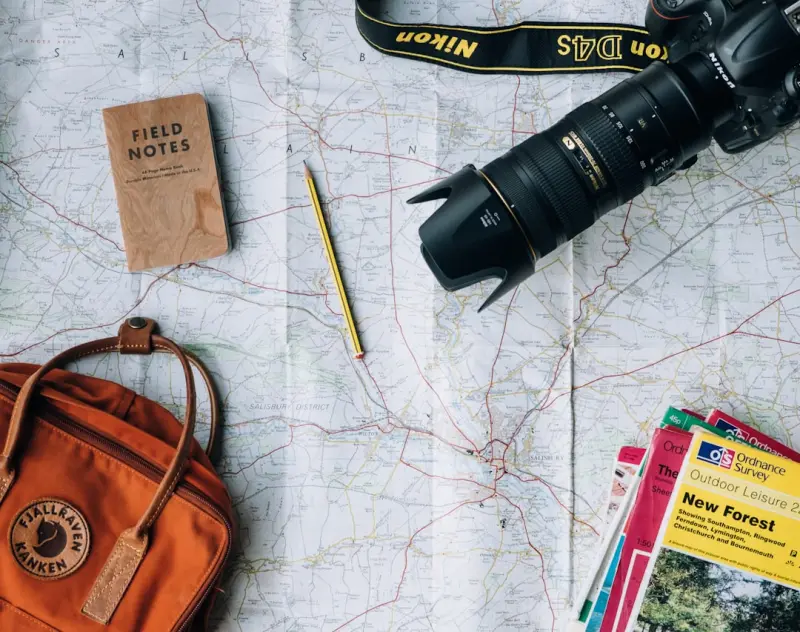
Travel has always been a passport to new sights, flavors, and friendships. Yet for many of us who spend our days glued to screens and deadlines, the true power of travel remains under‑leveraged. It isn’t just about ticking off landmarks or snapping the perfect sunset selfie; it’s about turning every journey into a hands‑on laboratory where ideas are tested, habits are reshaped, and personal innovation thrives.
Re‑imagining the Trip as an Experiment
When I first swapped my office chair for a rickety hostel bunk in Lisbon, I approached the experience with a scientist’s curiosity. I asked myself: What variables can I manipulate? What hypotheses can I test? The result was a travel itinerary that felt less like a vacation and more like a series of deliberate experiments—each designed to reveal something new about how I think, work, and create.
The core of this approach is simple: treat every destination as a case study. Instead of letting a city dictate the rhythm of your days, you set the parameters. Want to see how a morning jog along the Tagus affects your focus? Schedule it. Curious whether a week of working from a co‑working space in Chiang Mai can boost your productivity? Commit to it. By framing travel as a series of purposeful trials, you gain measurable insights that translate back into everyday life.
Building a “Travel‑First” Skill Set
One of the most rewarding side effects of this mindset is the natural expansion of your skill repertoire. While many travelers pick up a foreign language phrasebook or a camera, I started cataloguing the soft skills that surfaced when I was out of my comfort zone: rapid adaptability, cross‑cultural communication, and even improvisational problem‑solving.
These aren’t abstract concepts; they’re tangible capabilities you can stack and refine. Think of each trip as a new layer added to a personal career mosaic. One journey might sharpen your negotiation skills as you haggle in bustling markets, while another could deepen your empathy through volunteer work in remote villages. Over time, you’ll notice patterns—certain environments trigger specific strengths, and you can deliberately seek those settings to accelerate growth.
Designing a Sensory‑Rich Learning Loop
Our brains are wired to learn through sensory input. The smell of fresh basil in a Tuscan garden, the rhythm of a bustling Tokyo subway, the tactile feel of a handcrafted pottery wheel—all these experiences fire neural pathways that textbooks can’t reach. To harness this, I created a “sensory notebook” on the road, a small journal where I recorded not just what I saw, but what I heard, tasted, and felt.
Each entry ends with a reflection prompt: “What surprised me?” “Which habit felt natural here?” “How can I translate this sensation into my work?” By consistently looping observation into reflection, the travel experience becomes a feedback system—much like a startup iterating on user data, but far more visceral.
The Power of “Flavor Mapping” in Cultural Immersion
Food is perhaps the most immediate conduit to a culture’s history, climate, and values. Rather than sampling the usual tourist plates, I started building a personal flavor atlas. Each dish is plotted on a map, annotated with the story behind it, the cooking technique, and the emotions it evoked.
This practice does more than broaden your palate; it sharpens your ability to decode complex systems. When you recognize how a region’s geography influences its cuisine, you develop a mental model for understanding other systemic relationships—be it supply chains, market dynamics, or user behavior. The next time you sit in a boardroom discussing a product launch, you’ll instinctively consider the “ingredients” that shape customer preferences.
Creating Portable Productivity Rituals
One fear many professionals have about extended travel is the perceived loss of productivity. I tackled this by distilling my work habits into portable rituals that could be performed anywhere—from a mountain lodge to a beachfront café.
- Morning Mind‑Map: A 10‑minute sketch of the day’s priorities on a cheap notebook.
- Ambient Sound Cue: A short playlist of local ambient noises that signals the brain it’s time to focus.
- Evening Review: A quick bullet‑point recap of wins, obstacles, and insights before the day ends.
These rituals act as anchors, allowing you to transition smoothly between exploration and execution. Over time, you’ll notice that the novelty of a new environment actually fuels creative bursts, rather than hindering output.
Travel‑Driven Innovation Sessions
During a month‑long stay in Medellín, I turned the city’s vibrant street art scene into a live brainstorming workshop. I gathered three locals—a muralist, a tech startup founder, and a community organizer—and asked each to reinterpret a challenge I was facing at work. The muralist sketched a visual metaphor, the founder proposed a tech‑enabled solution, and the organizer highlighted social impact considerations.
This spontaneous “innovation jam” produced a prototype that later evolved into a feature for our product. The lesson? When you place yourself in an environment rich with diverse expertise, the cross‑pollination of ideas accelerates dramatically. Make it a habit to schedule at least one collaborative session with locals on each long‑term trip.
Balancing Immersion with Reflection
It’s easy to get swept up in the whirlwind of new experiences, but without deliberate reflection, the lessons can evaporate. I schedule “anchor days”—moments where I pause travel activities, find a quiet spot (a café, a park bench, or even a hostel lounge), and synthesize the week’s takeaways.
During these sessions, I answer three questions:
- What new habit emerged organically?
- Which assumptions about my work were challenged?
- How can I embed this insight into my daily routine back home?
Documenting these reflections creates a personal knowledge base that grows with each journey, turning fleeting moments into lasting strategic assets.
Travel as a Sustainable Growth Engine
Beyond personal development, this approach aligns with broader sustainability goals. By integrating purposeful learning into travel, you reduce the risk of “tourist fatigue” and ensure each trip delivers measurable returns—whether that’s a new skill, a fresh perspective, or a prototype idea. Companies can even embed this methodology into employee development programs, turning corporate travel budgets into high‑impact learning investments.
Getting Started: Your First Innovation Trip
If you’re ready to transform your next adventure into a personal innovation playground, start small:
- Define a Core Question: What specific skill or insight do you want to explore?
- Choose a Destination That Stimulates That Question: Look for places where the environment naturally encourages the behavior you’re studying.
- Pack a Minimal Toolkit: A notebook, a voice recorder, and a reliable laptop or tablet.
- Schedule One “Experiment” Per Day: Whether it’s a new language practice, a local workshop, or a walk with a specific purpose.
- Reflect Daily: Use the anchor day routine to capture learnings.
Remember, the goal isn’t to become a perpetual traveler but to embed a mindset of continuous experimentation wherever you go. The world is a vast, ever‑changing lab—treat it as such, and you’ll return home not just with souvenirs, but with a richer, more adaptable version of yourself.

Amanda is a passionate writer exploring a kaleidoscope of topics from lifestyle to travel and everything in between.
Related Posts
Flavor Trails: Turning Every Meal Abroad into a Cultural Compass
Exploring travel through food offers a direct line to a culture’s history, community, and health. ... Read More

Travel Sprints: Turning Mini‑Escapes into High‑Impact Growth Sessions
Learn how to treat short getaways as design sprints, using AI planning, minimalist packing, and micr... Read More

Wanderlabs: Turning Every Trip into a Personal Growth Experiment
Treat each journey as a lab by setting simple hypotheses, tracking micro‑habits, and using local s... Read More
Top Posts
Why Portfolio Careers Are the New Normal for Modern Professionals
Portfolio careers combine multiple short‑term gigs, freelance projects, and internal assignments into a single, flexible professional identity. This article e...Read More
AI‑Powered Innovation Sprints: From Idea to Impact in Hours
An AI‑powered innovation sprint condenses weeks of brainstorming into a single, high‑energy session, using prompt engineering, real‑time data scoring, and...Read More

Beyond the Airport: Crafting Meaningful Micro‑Journeys in a Connected World
Micro‑journeys offer a fresh travel mindset that prioritizes depth, sustainability, and personal growth through short, intentional trips. Learn how to design,...Read More

Unlocking the Power of Employee Referral Networks for Career Growth
Learn why employee referral networks are the hidden catalyst for modern job seekers, how they benefit both candidates and employers, and practical steps to crea...Read More
0 Comments
Post Comment
You will need to Login or Register to comment on this post!