
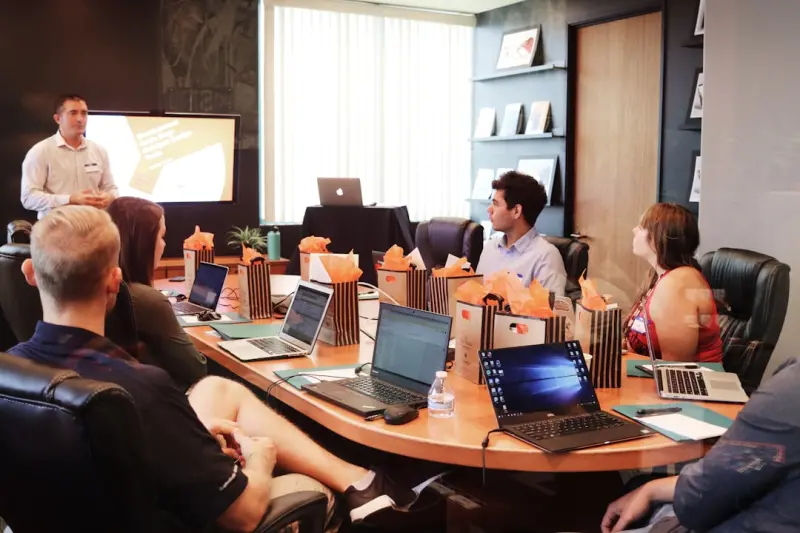
Why “Work‑From‑Anywhere” Isn’t the Endgame—It’s the Launchpad for a New Employment Paradigm
When I first started consulting for tech firms a decade ago, “remote work” was a buzzword whispered in conference rooms, something that happened only when a developer’s spouse moved overseas. Fast forward to today, and the phrase “work‑from‑anywhere” feels almost quaint—most organizations have already made it a baseline expectation rather than a perk.
But here’s the kicker: the real transformation isn’t just about where we sit (or don’t sit) with a laptop. It’s about a deeper, structural shift in how companies think about talent, commitment, and value. In this piece, I’ll walk you through three interlocking forces that are turning the work‑from‑anywhere model into the launchpad for a brand‑new employment ecosystem—one that prizes autonomy, continuous skill evolution, and a shared sense of purpose.
The First Force: Decoupling Role Identity from Physical Location
Historically, a job title was tightly bound to a physical office. “San Francisco software engineer” meant you were expected to be on the 30th floor, coffee in hand, collaborating in real time. This tether created a set of hidden costs: commuting stress, talent‑pool constraints, and a one‑size‑fits‑all culture that rarely accommodated personal rhythms.
When companies finally let employees pick their own zip code, they also unlock a hidden reserve of cognitive bandwidth. People who no longer waste two hours a day on a commute can redirect that energy into deep work, mentorship, or creative brainstorming. Moreover, the geographic diversity of teams introduces fresh perspectives that were once siloed by region.
But the shift isn’t automatic. It requires a re‑imagining of the “role” itself. Instead of defining a position by “where you sit,” define it by outcome metrics and skill contributions. This is where the concept of a dynamic talent ecosystem becomes essential. In such an ecosystem, job descriptions evolve in real time, reflecting emerging market demands and employee growth trajectories.
The Second Force: Empowering Employees to Curate Their Own Skill Pathways
In the old model, career ladders looked like a rigid staircase. You entered as an analyst, earned a promotion to senior analyst, then to manager—each step pre‑determined by seniority and tenure. Today’s talent is hungry for something more fluid, a skill stack that adapts to rapid market changes.
Enter the practice of skill stacking. While the phrase might sound familiar, the implementation is anything but. Companies need platforms that let employees map out desired competencies, find micro‑learning modules, and apply those skills on live projects—all without waiting for the annual review cycle.
One practical approach is to embed “learning sprints” into quarterly OKRs. For instance, a product designer could allocate 15% of their sprint to mastering a new prototyping tool, then immediately pilot it on a low‑risk feature. This creates a feedback loop where skill acquisition translates directly into business impact.
For a deeper dive on how to design these loops, check out skill stacking strategies. The key takeaway? When employees see a clear, self‑directed path to relevance, they become champions of their own growth, reducing turnover and fostering a culture of continuous innovation.
The Third Force: Aligning Purpose with Autonomy
Purpose has become the new currency in talent markets. It’s no longer enough to offer a competitive salary or flexible hours; candidates ask, “What difference will I make?” When employees have the freedom to choose where—and how—they work, they also demand a clearer connection between daily tasks and the organization’s broader mission.
To meet this expectation, leaders must weave purpose into the very fabric of project assignments. Instead of assigning a developer to a “backend ticket #342,” frame the work as “building the data backbone that powers our sustainability dashboard, helping customers reduce carbon footprints.” This subtle shift transforms routine tasks into mission‑driven actions, increasing engagement and intrinsic motivation.
Another lever is the “impact portfolio.” Encourage teams to maintain a living document that tracks not just deliverables, but the tangible outcomes—customer stories, revenue uplift, social impact—stemming from their work. When employees can point to a concrete result linked to a higher purpose, the psychological contract between them and the employer deepens.
Designing the New Employment Playbook
Putting these forces together yields a playbook that any forward‑thinking organization can adopt:
- Redefine roles by outcomes, not location. Use OKRs and KPIs that focus on deliverables and value creation.
- Build a modular learning infrastructure. Offer on‑demand courses, peer‑to‑peer workshops, and project‑based learning that aligns with strategic priorities.
- Empower employees to design their own growth maps. Provide tools for skill inventory, gap analysis, and self‑selected learning paths.
- Integrate purpose into every workflow. Translate project briefs into mission‑centric narratives.
- Measure impact beyond traditional metrics. Track employee‑reported purpose alignment, skill acquisition speed, and retention tied to autonomy.
When these elements are in sync, the organization transforms from a static hierarchy into a living talent organism—one that adapts, learns, and thrives regardless of geography.
Addressing Common Concerns
“Will remote work dilute company culture?” Culture is not a physical artifact; it’s a set of shared values and rituals. By deliberately crafting virtual rituals—such as weekly “storytelling lunches” where teams share the purpose behind recent wins—you preserve the connective tissue that binds dispersed teams.
“How do we ensure accountability without a central office?” Transparency is the antidote. Adopt shared dashboards that surface progress in real time, and encourage a norm of “open status updates” where team members articulate what they’re working on, challenges faced, and next steps. This creates a self‑policing environment that replaces the need for physical oversight.
“What about career progression when everyone is on a different continent?” Standardize progression criteria around competency mastery and impact, not tenure or office presence. Create “skill badges” that signal readiness for higher‑impact roles, and pair them with mentorship circles that span time zones.
Future Outlook: From Flexibility to Strategic Agility
Flexibility was once a defensive maneuver—a way to keep talent during a crisis. Today, it’s a strategic lever that propels organizations into a realm of agility previously reserved for startups. By decoupling work from place, empowering autonomous skill development, and embedding purpose into the everyday, companies unlock a talent engine that can pivot with market tides, innovate faster, and retain top performers who crave autonomy.
In my consulting work, I’ve seen a striking pattern: teams that adopt this triad of autonomy, skill stacking, and purpose consistently outperform their peers on both revenue growth and employee satisfaction metrics. The data is clear—when employees feel trusted, equipped, and aligned with a greater mission, they deliver results that far exceed the sum of their individual contributions.
If you’re a leader reading this, ask yourself: Are we merely offering remote work as a checkbox, or are we redesigning the employment contract for the 21st‑century worker? The answer will define whether your organization rides the wave of transformation or watches it pass by.
Take the first step today. Map out a pilot program that rewrites a single role’s description around outcomes, introduces a micro‑learning sprint, and frames the work’s impact in purpose terms. Measure the results, iterate, and scale. The future of employment isn’t a distant horizon—it’s a series of intentional, incremental experiments that, together, reshape the very notion of work.

David Moore is a freelance writer specializing in two dynamic and ever-evolving fields: gambling and the tech industry. With a keen eye for detail and a knack for unraveling complex topics, David delivers insightful and engaging content that keeps readers informed and entertained.
Related Posts
From My Garden Desk: Jimmy Damon’s Vision for the Future of Employment
Jimmy Damon reveals why turning your garden into a home office boosts productivity, mental health, a... Read More

Why Garden Desks Are Redefining the Modern Employee Experience
Discover why garden desks are the new catalyst for career growth and employee satisfaction, turning ... Read More
The Four‑Day Workweek: Boosting Productivity, Well‑Being, and Career Growth
A four‑day workweek isn’t just a perk; it’s a strategic tool that lifts productivity, enhances... Read More
Top Posts

Micro-Reflection: Tiny Check-Ins for Big Mental Gains
A five‑minute micro‑reflection habit can transform your mental health by providing quick emotional check‑ins, reducing stress, and enhancing focus—learn...Read More

The Garden Desk Revolution: How Outdoor Workspaces Redefine Home Life
Explore the rise of garden desks, their impact on productivity and home life, and simple steps to create your own outdoor workspace oasis....Read More

Ambient Soundscapes: Tuning Your Brain for Calm and Creativity
Discover how intentional ambient sound can improve focus, lower stress, and foster creativity, offering a low‑cost, science‑backed tool for mental health in...Read More

Building a Portfolio Career Inside Your Company
Learn to create a dynamic portfolio career inside your company, balancing varied projects, visibility, and well‑being for lasting professional success....Read More
0 Comments
Post Comment
You will need to Login or Register to comment on this post!