

Imagine a workplace where curiosity isn’t a fleeting spark but a constantly fed furnace. A place where the moment a question pops up—whether it’s about a client’s hidden pain point, a new market signal, or a better way to automate a routine task—an intelligent partner surfaces the right context, the latest research, and even a few bold hypotheses. This isn’t a distant sci‑fi fantasy; it’s the emerging reality of AI‑driven curiosity engines.
Why Curiosity Matters More Than Ever
In fast‑moving B2B environments, the ability to ask the right question quickly often outranks raw data volume. Teams that nurture a culture of relentless inquiry tend to surface opportunities before competitors even notice a gap. Yet, curiosity is fragile. It can be drowned out by meeting overload, inbox noise, and the ever‑present pressure to “deliver now.” Traditional knowledge bases are static, searchable only when someone already knows the exact keyword to type.
Enter AI. When designed as a curiosity catalyst rather than a simple search tool, AI can act as a mental “sidekick” that nudges you toward deeper exploration exactly when you need it.
From Passive Search to Active Exploration
Most of us are accustomed to typing a query into a search bar and waiting for results. The interaction is reactive: the problem comes first, the answer follows. A curiosity‑centric AI flips this script. It watches the flow of work—emails, chat threads, project updates—and proactively surfaces related concepts, emerging trends, or contradictory viewpoints that you might never have thought to look for.
Think of it as an ever‑present brainstorming partner that never tires. It can surface a recent case study while you draft a proposal, or highlight a new regulation as you review a contract. The key is subtlety: the AI offers nudges, not interruptions, ensuring that the workflow remains smooth.
The Engine Under the Hood: Generative Prompting
At the core of this capability lies generative prompting. Instead of merely retrieving documents, the system generates fresh content—summaries, analogies, scenario simulations—tailored to your current context. For example, if you’re brainstorming a new product feature, the AI can instantly sketch three divergent use‑case narratives, each anchored in real‑world data points.
These prompts aren’t static either. They evolve as the system learns your preferences, the language of your industry, and the style of decision‑making you favor. Over weeks, the AI builds a nuanced model of “what kind of curiosity you thrive on.”
Embedding AI into Everyday Workflows
To make curiosity a habit, the AI must sit where the work happens:
- Email assistants: As you read a client request, the AI suggests a brief market snapshot, a competitor analysis, or a relevant success story—all without you leaving the inbox.
- Chat integrations: In a Slack channel discussing a sales strategy, a subtle message appears: “Did you know that similar firms saw a 12% lift after adopting X approach? Here’s a quick rundown.”
- Document editors: While drafting a whitepaper, the AI flags emerging terminology, offers a concise definition, or proposes a visual metaphor that could make the argument more compelling.
These integrations rely on secure, organization‑wide data pipelines, ensuring that the AI respects privacy while still accessing the knowledge you need.
Real‑World Example: Turning Data Into a Curiosity Engine
Consider a product team at a mid‑size SaaS company that struggled to keep up with rapid regulatory changes across regions. They deployed an AI layer that monitored official government feeds, industry newsletters, and internal compliance logs. Whenever a product manager opened a feature spec, the AI displayed a sidebar with a personal knowledge graph of relevant compliance clauses, past audit findings, and even suggested mitigation steps.
The result? The team reduced time spent on compliance research by 40% and caught a potential GDPR conflict before it reached the development stage, saving weeks of rework.
Another Angle: AI as a Bridge Builder for Cross‑Functional Insight
When departments speak different “languages,” opportunities slip through the cracks. An AI curiosity engine can translate jargon on the fly, surfacing insights from marketing that are relevant to engineering, and vice versa. This mirrors the principles outlined in cross‑functional AI innovation, but with a sharper focus on the moment‑to‑moment question‑asking cycle rather than long‑term strategic alignment.
By surfacing a marketing trend in an engineering sprint planning meeting, the AI prompts the team to consider a feature that addresses a newly identified user need—something that would have otherwise required a separate meeting.
Getting Started: A Pragmatic Playbook
- Identify high‑friction moments: Map out where teams frequently hit knowledge gaps (e.g., proposal drafting, sprint reviews).
- Choose a platform: Whether it’s an existing collaboration suite or a custom‑built plugin, ensure the AI can hook into the tools your team already uses.
- Curate seed data: Feed the AI with internal knowledge bases, past project retrospectives, and external industry feeds.
- Define prompting rules: Set thresholds for when the AI should nudge (e.g., after a certain number of similar queries, or when a document exceeds a length threshold).
- Iterate with feedback loops: Let users thumbs‑up or down suggestions to refine the AI’s relevance model.
Start small—perhaps with a single team’s Slack channel—measure impact, then scale. The goal isn’t to replace human insight but to amplify it, freeing mental bandwidth for deeper, more strategic thinking.
The Human Touch: Why AI Can’t Do It Alone
Even the most sophisticated curiosity engine is a tool, not a thinker. Humans must still validate hypotheses, bring emotional intelligence to stakeholder conversations, and decide which nudges to act upon. The AI’s value lies in surfacing possibilities that would otherwise remain hidden, not in dictating the final direction.
Leaders can nurture this partnership by celebrating moments when the AI’s suggestion led to a breakthrough, reinforcing the culture of “ask‑first, explore‑later.” Over time, curiosity becomes a measurable KPI, tied to innovation velocity and customer satisfaction.
Conclusion: Turning Curiosity Into Competitive Advantage
In an era where information overload can paralyze decision‑making, AI offers a path to reclaim the spark of curiosity. By embedding generative prompting into the very fabric of daily workflows, organizations transform every question into a launchpad for insight. The result is a workforce that doesn’t just react to change—it anticipates, experiments, and continuously re‑imagines what’s possible.
Curiosity, once a rare trait, can become a scalable capability. The AI curiosity engine is the catalyst that turns fleeting wonder into a strategic asset—one prompt at a time.

Lauren Miller is a true outdoors enthusiast who has found her passion in the trades. When she's not working hard on the job, you can find her writing, camping, fishing, and exploring all that nature has to offer. A dedicated partner to her wife Beth, Lauren loves nothing more than spending quality time together and experiencing the great outdoors side by side.
Related Posts

Beyond Automation: Turning Generative AI Into a Strategic Forecast Engine
Explore the next evolution of generative AI: moving beyond automation to become a strategic forecast... Read More
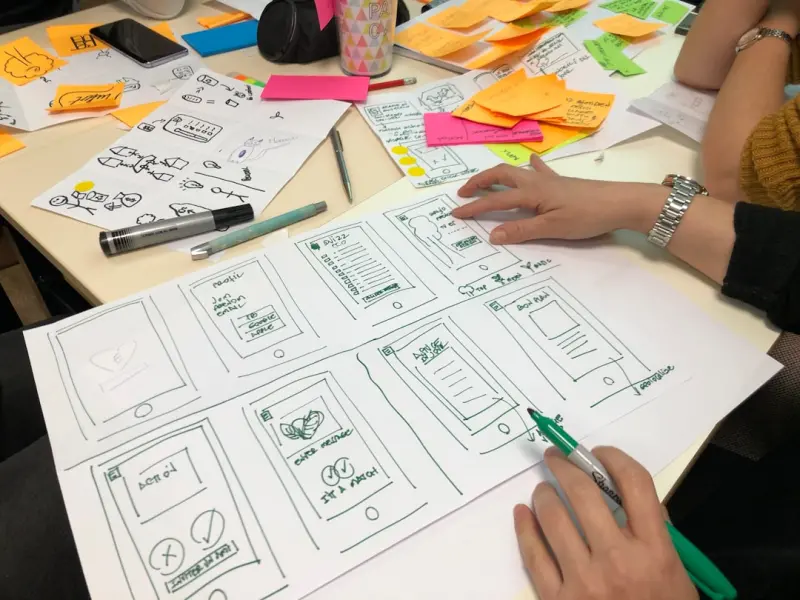
From Code to Canvas: How Generative AI is Redefining Creative Collaboration in the Enterprise
Generative AI is shifting from a tool to a collaborative partner, enabling faster ideation, cross‑... Read More
AI as a Creative Partner: Redefining How We Make Art
Explore the untapped potential of AI as a collaborator, not a tool—learn how generative models ins... Read More
Top Posts

Transform Your Living Space into a Sensory Sanctuary Without Breaking the Bank
Learn how to turn ordinary rooms into calming, energizing sanctuaries using simple lighting, scent, texture, and organization tricks that won’t strain your bu...Read More

From My Garden Desk: Rose DesRochers on the New Era of Employment
Rose DesRochers shares her journey turning a backyard garden into a thriving home office, offering actionable tips and data‑driven insights for the next gener...Read More

Micro‑Movement Mastery: Tiny Actions, Big Health Gains
Micro‑movement transforms everyday moments into health‑boosting opportunities. Learn practical ways to weave tiny, intentional motions into home, work, and ...Read More

Recharging Your Body’s Bio‑Circuit: Light, Motion, and Sound for Everyday Resilience
Discover a practical framework that blends daylight exposure, micro‑movement habits, and soothing soundscapes to enhance cellular vitality, improve sleep, and...Read More
0 Comments
Post Comment
You will need to Login or Register to comment on this post!