

Why the Journey Beats the Destination (and How to Make It Work for You)
When I first booked a spontaneous train ride across the country, I wasn’t looking for a postcard‑perfect vista. I was chasing something far more elusive: a break from the endless loop of meetings, emails, and the subtle hum of office‑air‑conditioning that has become my daily soundtrack. That moment of stepping onto a platform, watching the landscape unfurl, and feeling the rhythm of a new city pulse through my veins reminded me that travel isn’t just an escape—it’s a strategic reset button.
Most of us treat travel as a luxury, a once‑a‑year reward for hitting a KPI or surviving a quarterly sprint. But what if we re‑imagined travel as a design sprint for our lives? A focused, time‑boxed experiment where the goal isn’t just relaxation, but insight, creativity, and a fresh set of mental tools that we can bring back to our desks. In the pages that follow, I’ll walk you through the mindset, the practical steps, and the tiny habits that turn even a long‑weekend getaway into a high‑impact catalyst for personal and professional growth.
Designing a Travel Sprint: Your Playbook
Think of a traditional design sprint: five days of problem definition, sketching, prototyping, and testing. Replace the problem with “What new perspective can I uncover?” and the prototype with “A short, intentional trip.” The sprint framework gives you a clear structure, ensuring you don’t waste precious vacation days wandering aimlessly.
- Day 0 – Define Your Intent: Write a single sentence that captures what you hope to learn. Example: “I want to discover how remote work hubs foster spontaneous collaboration.”
- Day 1 – Research & Map: Use online forums, local event calendars, and even strategic AI co‑pilot for travel planning tools to map out activities that align with your intent.
- Day 2 – Pack Light, Pack Smart: Adopt a minimalist packing mindset (more on that below) so you spend less time lugging gear and more time soaking in experiences.
- Days 3‑4 – Immerse & Iterate: Dive into the local scene, journal daily, and adjust your plan based on what resonates.
- Day 5 – Synthesize & Share: Draft a quick debrief for yourself—a bullet‑point list of insights, habits to adopt, and next steps when you return.
This playbook compresses the wanderlust into a manageable, purpose‑driven format, turning a “vacation” into a measurable growth opportunity.
Harnessing AI as Your Trip Co‑Pilot
Remember the last time you tried to plan a weekend in a city you’ve never visited? You probably opened three tabs, skimmed a travel blog, and still ended up at the same generic tourist spots. Modern AI can be that silent, data‑driven teammate that cuts through the noise.
By feeding an AI model your intent (e.g., “Find coworking spaces with a strong community vibe in Lisbon”) and constraints (budget, time, transport preferences), you get a curated itinerary that feels hand‑crafted. The strategic AI co‑pilot for travel planning not only suggests where to go but also predicts peak crowd times, local weather shifts, and even suggests off‑beat cafés where you might strike up a conversation with a local entrepreneur.
Here’s a quick workflow I use:
- Define the core question (e.g., “Where can I learn about sustainable design while on a weekend trip?”).
- Enter parameters into a chat‑based AI tool, specifying budget, travel mode, and any accessibility needs.
- Ask the AI to rank options by “potential for serendipitous learning.”
- Export the itinerary to your calendar and set location‑based reminders.
What used to take hours now takes minutes, and you walk away with a roadmap that feels both adventurous and purposeful.
Micro‑Travel: The Power of Mini‑Escapes
Not everyone can afford a week‑long retreat in a remote mountain lodge, and that’s okay. Micro‑travel—short, focused trips lasting anywhere from a day to three nights—has become the secret weapon for busy professionals. These bite‑sized adventures are easier to schedule, cost less, and still deliver the dopamine boost that larger trips promise.
Consider the “Friday‑to‑Monday” formula: you leave after work on Thursday, spend a night in a nearby town, and return Sunday night, ready to hit Monday refreshed. The key is to choose a destination within a 2‑3 hour travel radius—think a historic district, a nature reserve, or a neighboring city’s culinary quarter. By limiting travel time, you maximize immersion.
Micro‑travel also encourages you to experiment. One weekend you might focus on “urban art walks,” the next on “farm‑to‑table experiences.” Because the commitment is small, you can afford to be more daring, trying out new transport modes (bicycle, regional train, even a short ferry ride) and staying in unconventional accommodations like boutique hostels or community‑run houses.
Travel‑Friendly Spaces: Packing Light with Smart Hacks
There’s an art to packing that mirrors the discipline of decluttering a workspace. The goal isn’t to fit everything you own into a suitcase; it’s to bring only what fuels your experience. Borrow a page from interior designers: treat your bag as a micro‑studio, optimizing each compartment for function and flow.
Here are three hacks that have transformed my packing routine:
- Modular Cubes: Use small, zip‑top cubes for categories—one for electronics, one for toiletries, one for clothing. This mimics the smart light & space hacks for urban living principle of zoning spaces for specific tasks.
- Dual‑Purpose Gear: A scarf that doubles as a blanket, a reusable water bottle that collapses when empty, or a travel pillow that can be used as a lumbar support for laptop work.
- Roll, Don’t Fold: Rolling reduces creases and frees up space, allowing you to slip a slim travel guide or journal into the seam.
By treating your luggage like a well‑designed room, you reduce mental clutter and free up headspace for the real adventure: the people, places, and ideas you’ll encounter.
Turning Transit Time into Creative Fuel
Long train rides, ferry crossings, or even airport layovers often feel like wasted time. I’ve learned to repurpose these interludes into mini‑workshops for my brain. Here’s my go‑to toolkit:
- Audio Journaling: A small voice recorder (or smartphone app) lets you capture fleeting thoughts, observations, or snippets of conversations that spark ideas.
- Curated Playlists: I create playlists that blend ambient sounds from the destination (waves, market chatter) with instrumental tracks that keep me in a flow state.
- Micro‑Reading: Short essays, industry briefs, or poetry collections that fit into a 20‑minute window—perfect for a train ride between stations.
These habits turn what could be a productivity black hole into a fertile ground for inspiration. When you arrive, you often feel you’ve already taken a few steps forward on your creative journey.
Cultural Immersion in Bite‑Size Moments
Immersion doesn’t require a month‑long stay in a foreign country. Even a handful of intentional interactions can shift your perspective. Here’s how I make the most of each encounter:
- Ask a Local for a “Secret” Spot: Instead of the guidebook’s top ten, request a place only residents know. This often leads to hidden cafés, community gardens, or artisan workshops.
- Participate, Don’t Observe: Join a cooking class, a dance lesson, or a neighborhood clean‑up. Physical involvement deepens memory encoding.
- Capture Sensory Details: Instead of a photo of a monument, note the scent of fresh‑baked bread, the texture of cobblestones, or the rhythm of a street performer’s drum. These sensory cues anchor the experience in your brain.
When you return, these vivid recollections become conversation starters, fresh lenses for problem‑solving, and a personal reservoir of inspiration that fuels both work and life.
Sustaining the Momentum When You Return
A common pitfall is the post‑trip slump: the feeling that the spark of adventure fizzles once you’re back at your desk. To prevent this, I employ a simple three‑step re‑integration ritual:
- De‑brief Document: Within 24 hours, write a concise summary of the top three insights you gained. Keep it under 200 words.
- Apply One Insight: Choose one actionable idea—perhaps a new workflow, a design principle, or a communication habit—and implement it within the next week.
- Share the Story: Present a short “travel insights” slide in a team meeting. The act of teaching reinforces learning and spreads the benefit across the organization.
By turning travel into a repeatable learning loop, you ensure that each trip, no matter how short, adds lasting value to your professional toolkit.
Conclusion: Travel as a Continuous Design Process
Travel doesn’t have to be a rare, extravagant event. When you frame it as a series of intentional sprints, equipped with AI‑enhanced planning, minimalist packing, and micro‑learning habits, you transform every getaway into a catalyst for growth. The next time you glance at your calendar, ask yourself: “What small journey can I schedule this month that will stretch my thinking?” The answer might just be a two‑hour train ride, a weekend in a neighboring town, or even a day‑long hike. Pack light, stay curious, and let the road be your laboratory.

Armed with a degree in English Literature, Jill’s journey into the digital space wasn't just a career move; it was a natural extension of her lifelong love affair with storytelling. While some writers view search engine optimization (SEO) as a rigid constraint, Jill sees it as a creative puzzle. She understands the delicate art of balancing the algorithmic demands of search engines with the human desire for resonance, emotion, and value. To Jill, keywords aren't just targets to hit; they are the breadcrumbs that lead eager readers straight to the answers they’ve been searching for.
Related Posts

Turn Your Layovers Into Mini‑Adventures: A Fresh Playbook for the Modern Traveler
Learn to reframe airport layovers as intentional micro‑adventures using a curated toolkit, AI‑dr... Read More

Micro‑Immersions: Turning Tiny Breaks into Big Memories
Learn the micro‑immersion strategy that lets you extract rich, memorable travel experiences from s... Read More
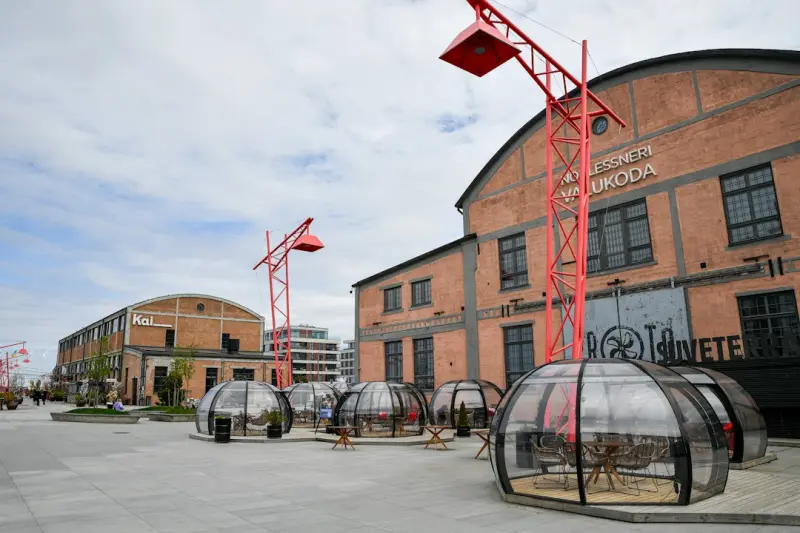
Pop‑Up Co‑Living Pods: Rethinking City Travel for Shared Living Experiences
Pop‑up co‑living pods turn vacant city spaces into vibrant, short‑term homes where travelers s... Read More
Top Posts

Transform Your Small Balcony into a Year‑Round Green Retreat
Discover practical steps to convert a modest balcony into a vibrant, year‑round green sanctuary using modular planters, seasonal plant swaps, sustainable prac...Read More

Seasonal Home Refresh: Simple Swaps to Energize Every Room
Learn how to revitalize your space with textile changes, lighting tricks, scent strategies, and smart storage—simple steps for a fresh, seasonal home vibe....Read More

Passive Comfort: How to Let Your Home Regulate Itself Naturally
Discover practical, low‑tech ways to harness sunlight, thermal mass, insulation, and natural ventilation, turning your home into a self‑regulating sanctuary...Read More

Micro‑Organizing: Transform Small Spaces with Multi‑Purpose Design
Learn how tiny, intentional changes—like layered lighting, adaptable furniture, and vertical storage—can revitalize your home into a dynamic, inviting sanct...Read More
0 Comments
Post Comment
You will need to Login or Register to comment on this post!