

Why Your Next Creative Partner Should Be an Algorithm
When I first stumbled upon a generative‑AI tool that could spin a haiku in under a second, I felt like a kid who’d just discovered a secret shortcut in a video game. The thrill wasn’t just that the machine could write poetry; it was that it handed me back a piece of my own imagination, refracted through a different lens. Since then, I’ve been on a quest to understand how AI can move from being a novelty to becoming a reliable, day‑to‑day creative confidante.
The Myth of the “AI‑Only” Creator
There’s a lingering myth that if you lean on AI, you’re surrendering authenticity. The reality is more nuanced. AI is a mirror, not a mask. It reflects the data it’s trained on, which often includes the collective output of millions of human creators. When you feed it a prompt, you’re essentially asking the mirror to show you a version of yourself you might have missed.
In practice, the best outcomes happen when the human mind stays in the driver’s seat while the AI handles the heavy lifting of pattern recognition, synthesis, and rapid iteration. Think of it as a brainstorming buddy that never sleeps, never judges, and can produce 100 variations of a concept in the time it takes you to brew a cup of chai.
From Prompt Crafting to Creative Flow
If you’ve ever read prompt crafting as a skill, you already know the foundation: clarity, context, and constraints. The difference now is that we can use those refined prompts not just to retrieve information but to spark whole creative arcs. A well‑crafted prompt can coax an AI into generating a brand story, a UI mock‑up description, or even a plot twist for your next short film.
My own routine involves a three‑step dance:
- Seed: I jot down the core idea in a single sentence.
- Expand: I ask the AI for five alternate angles on that seed.
- Refine: I pick the most resonant angle and ask for deeper detail—tone, pacing, visual cues.
This loop, repeated a few times, transforms a vague spark into a polished outline ready for human polishing.
Integrating AI with Your Personal Knowledge Base
One of the biggest roadblocks to sustained creativity is the loss of context. Ideas are fleeting; the moment you forget the nuance, the concept dilutes. That’s where a personal knowledge base powered by AI becomes a game‑changer. By feeding the AI a curated repository of your past projects, research notes, and even favorite quotes, you give it a personalized “brain” to draw from.
The process looks like this:
- Archive your finished work and annotate key takeaways.
- Tag each entry with themes, emotions, or target audiences.
- Allow the AI to query this corpus when you request new ideas, ensuring each suggestion is anchored in your own style and history.
The result? An AI that doesn’t feel like a generic chatbot but a well‑read colleague who already knows the stories you care about.
AI‑Enhanced Empathy: The Missing Ingredient in Creative Work
Creative work isn’t just about aesthetics; it’s about resonance. Empathy fuels that resonance. Recent research shows that AI models trained on large‑scale sentiment data can surface emotional cues you might overlook. When you ask an AI to “rewrite this product description for a tech‑savvy millennial who values sustainability,” it can suggest phrasing that subtly nudges the reader’s values, aligning tone with audience psyche.
In my own projects, I’ve started using AI to generate empathy maps for fictional personas. I feed the AI demographic data, purchase history, and even social media snippets, then ask it to summarize the persona’s fears, aspirations, and daily frustrations. The output often surfaces angles I’d never considered, like focusing on “time‑saving” rather than “cost‑saving,” which can be a decisive pivot in a campaign.
Guardrails: Keeping the AI in Check
No tool is perfect, and AI is no exception. The biggest risk is over‑reliance on the algorithmic “comfort zone,” which can inadvertently reinforce bias or homogenize output. To combat this, I employ a three‑layer guardrail system:
- Diverse Prompting: I deliberately vary my prompts—changing tone, audience, and constraints—to force the AI out of familiar patterns.
- Human Review Loop: Every AI‑generated piece is passed through a quick human audit for tone, factual accuracy, and cultural sensitivity.
- Feedback Loop: I feed the AI corrected versions back into the system, teaching it my preferences over time.
These steps ensure the AI remains a catalyst rather than a dictator.
Case Study: Turning a Marketing Brief into a Multi‑Channel Campaign in One Afternoon
Last month, a client approached me with a thin brief: “We need a fresh campaign for our new plant‑based protein bar.” Normally, this would involve weeks of research, mood‑board creation, copywriting, and cross‑functional alignment. Here’s how I leveraged AI to compress the timeline:
- Insight Extraction: I fed the AI recent market reports and consumer sentiment data. Within minutes, it highlighted three emerging trends: “flexitarian lifestyles,” “micro‑protein dosing,” and “eco‑packaging narratives.”
- Concept Generation: Using a single prompt—“Generate five campaign concepts that blend flexitarian lifestyle with eco‑packaging,”—the AI produced five distinct storylines, each with a tagline, visual cue, and social media hook.
- Copy Drafting: I selected the most compelling concept and asked the AI to draft three versions of the primary ad copy for Instagram, email, and in‑store signage, each tuned to platform‑specific character limits and tone.
- Iteration: I tweaked the prompts based on client feedback, and the AI quickly regenerated revised assets.
The entire cycle—from brief to ready‑to‑launch assets—took under three hours, freeing up the team to focus on production and distribution.
Building a Habit: The AI Creativity Sprint
Consistency beats occasional bursts. I’ve adopted a daily “AI Creativity Sprint” that takes 15 minutes:
- Pick a lingering challenge (e.g., “How can I make onboarding more playful?”).
- Write a concise prompt and feed it to the AI.
- Review the top three outputs, highlight any sparks, and jot down a next action.
Over weeks, this habit builds a library of raw ideas that can be refined later. It also trains your brain to think in “prompt‑first” terms, sharpening your ability to ask the right questions—an essential skill in any AI‑augmented workflow.
Future Glimpse: AI as a Personal Muse, Not Just a Tool
Looking ahead, the line between tool and collaborator will blur. Imagine a scenario where your AI companion anticipates a creative block, nudges you with a relevant anecdote from your own knowledge base, or even suggests a melody that matches the emotional cadence of your current draft. That’s not science fiction; it’s the next logical step in integrating personal data, real‑time context, and generative capabilities.
When this vision becomes reality, the role of the creator shifts from “originator” to “orchestrator.” The creator’s job will be to set the thematic direction, choose the right emotional chords, and curate the final output—while the AI handles the heavy lifting of variation, synthesis, and rapid prototyping.
Practical Steps to Get Started Today
If you’re intrigued but unsure where to begin, here’s a simple roadmap:
- Choose a Platform: Start with a user‑friendly generative AI service that offers both text and visual capabilities.
- Set Up a Knowledge Base: Use a note‑taking app that supports tagging and export. Begin importing past work and relevant research.
- Learn Prompt Crafting: Spend an hour reading about prompt structure; the concepts are transferable across tools.
- Schedule a Sprint: Block 15 minutes daily for a quick AI‑driven idea dump.
- Iterate with Feedback: Treat each AI output as a draft, not a final product. Refine, test, and feed corrections back.
Within a week, you’ll notice a subtle shift: ideas that once required a deep dive now surface with a few keystrokes, freeing mental bandwidth for higher‑order thinking.
Conclusion: Embrace the Partnership, Not the Replacement
The creative economy is evolving, and the tools that amplify our human faculties are becoming indispensable. AI is not a threat to originality; it’s an amplifier of curiosity. By treating the algorithm as a trusted muse—one that learns from your past, respects your voice, and pushes you toward new horizons—you unlock a velocity of creation that feels both effortless and exhilarating. The future of creativity isn’t about who can out‑think the machine; it’s about who can best choreograph the dance between intuition and algorithm.

Sanji Patel has dedicated 25 years to the SEO industry. As an expert SEO consultant for news publishers, he emphasizes providing both technical and editorial SEO services to news publishers worldwide. He frequently speaks at conferences and events globally and offers annual guest lectures at local universities.
Related Posts
AI‑Powered Storycraft: Turning Data into Business Narrative Gold
Learn how to use AI for storytelling: turn complex metrics into engaging narratives that inspire sta... Read More
AI Knowledge Graphs: Turning Data Into Strategic Insight
AI‑powered knowledge graphs transform scattered data into a living map of product, customer, and m... Read More
From Data to Delight: How Generative AI is Rethinking Customer Experience
Generative AI is changing the customer experience game by creating personalized, context‑aware int... Read More
Top Posts

Why the No‑Mow Lawn Is the Next Big Thing for Sustainable Homeowners
A no‑mow lawn swaps high‑maintenance grass for resilient groundcovers, offering eco‑friendly, water‑saving, and aesthetically pleasing yards that requir...Read More

Smart Skincare for the Modern Professional: Harnessing Tech to Elevate Personal Care
Explore how smart devices, AI insights, and personalized data can turn everyday skincare into a proactive, productivity‑boosting habit for busy professionals....Read More
Upcycled Garden Art: Turning Trash into Outdoor Treasure
Explore how to transform discarded household objects into beautiful, eco‑friendly garden pieces. From bottle waterfalls to pallet herb gardens, learn step‑b...Read More
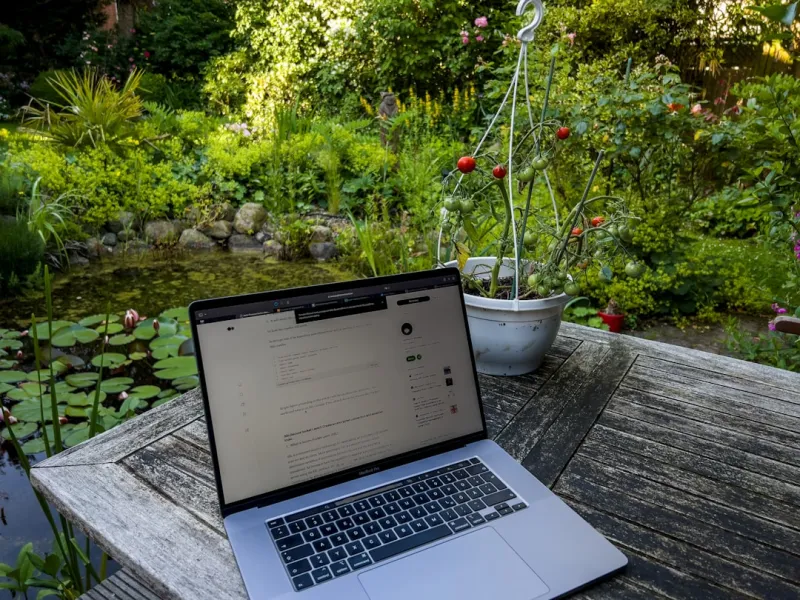
Why Garden Desks Are the New Career Catalyst
A garden desk isn’t just a pretty setup; it’s a strategic career tool that enhances focus, reduces burnout, and opens doors to new professional opportunitie...Read More
0 Comments
Post Comment
You will need to Login or Register to comment on this post!