
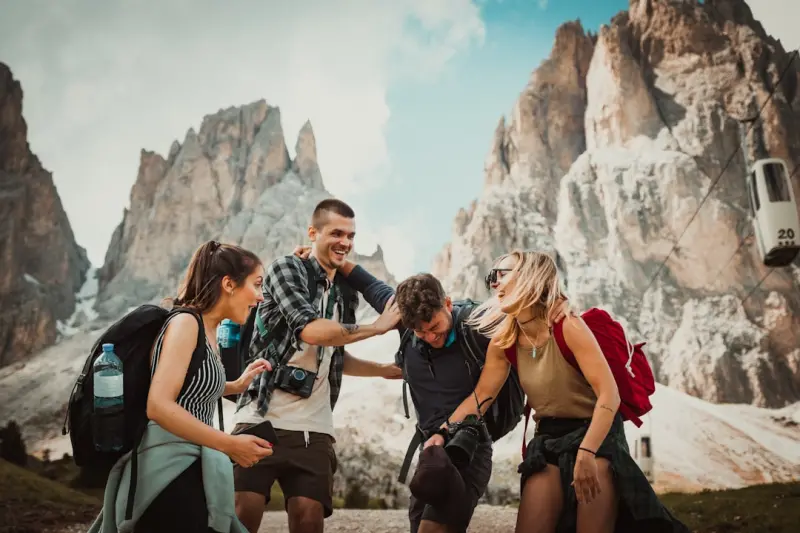
Why Traveling with All Five Senses Changes Everything
When most people think about travel, the mental image is often a glossy Instagram carousel: a sun‑kissed beach, a towering skyline, a plate of exotic food. The brain instantly catalogs the visual highlights, the “must‑see” moments, and the itinerary becomes a checklist of sights. But what if you could flip that script? What if you deliberately invited sight, sound, smell, taste, and touch to co‑author your adventure? This is the premise of sensory travel—a practice that transforms a trip from a series of pretty pictures into a fully embodied experience.
The Science Behind Multi‑Sensory Exploration
Neuroscience tells us that memories are strongest when multiple sensory pathways fire together. The hippocampus, the brain’s memory hub, binds visual, auditory, olfactory, gustatory, and tactile information into a cohesive narrative. When you only rely on sight, you’re creating a thin slice of recollection that fades quickly. When you add the aroma of a bustling market, the texture of a weathered stone wall, the rhythm of distant drums, the taste of a freshly squeezed citrus, and the warmth of a sunrise on your skin, you’re building a multi‑layered memory that sticks.
Research from the University of California shows that olfactory cues can trigger emotional memories up to ten times more effectively than visual cues alone. That’s why a whiff of jasmine in a Moroccan souk can instantly transport you back to that moment years later, while a photo of the same market may feel flat.
Preparing Your Sensory Toolkit
Before you even step onto a plane, consider the following items as part of your sensory arsenal:
- Soundscape Recorder: A compact digital recorder (or even a high‑quality smartphone app) lets you capture ambient noises—street musicians, temple bells, waves crashing against a cliff. These audio snippets become a personal soundtrack you can replay on return trips.
- Portable Aroma Kit: Small vials of essential oils or fragrance strips allow you to match scents you encounter with a familiar reference point. When you’re in a spice market, you can rub a dash of cumin oil on your wrist to intensify the experience.
- Texture Journal: A small notebook with fabric swatches glued onto the pages. As you explore, you can attach a piece of felt from a market stall, a leaf from a rainforest, or a scrap of bark from an ancient tree.
- Flavor Log: A pocket‑sized culinary diary where you note not just the dish but the ingredients, preparation method, and the sensation on your palate.
- Sun & Wind Tracker: A simple weather app combined with a note about how the wind feels—cool, salty, desert‑dry—helps you recall the atmospheric context.
Embedding Sensory Moments Into Your Itinerary
Most travel itineraries focus on “must‑see” landmarks. To make space for sensory immersion, re‑frame your schedule around experiences rather than locations.
Instead of “Visit the Eiffel Tower at 9 am,” try “Spend 30 minutes on the Champ de Mars at sunrise, listening for the city’s early murmurs and feeling the cool morning air on your skin.” This subtle shift invites you to notice the ambient soundtrack of the city waking up, the subtle scent of fresh pastries drifting from nearby bakeries, and the tactile contrast between the stone bench and the dew‑kissed grass.
Here’s a quick template to redesign a day:
- Morning Arrival: Choose a sensory focal point—maybe the sound of a local choir or the aroma of fresh coffee.
- Mid‑Day Exploration: Engage two senses actively. Taste a street‑food specialty while touching handcrafted textiles.
- Evening Reflection: Record the ambient sounds and write a brief entry describing the day’s dominant scents and textures.
Case Study: A Sensory Journey Through Kyoto
To illustrate the power of this approach, let’s walk through a week in Kyoto, Japan, using a sensory lens.
- Day 1 – Arrival: Instead of heading straight to your hotel, walk to the nearest konbini (convenience store). Open the door and inhale the comforting blend of instant ramen broth, fresh fruit, and polished plastic. Record the hum of the refrigerator and the distant chatter of commuters.
- Day 2 – Temples & Gardens: At Kinkaku‑ji (the Golden Pavilion), pause on the stone pathway. Feel the smoothness of the moss under your shoes, listen to the gentle splash of a koi pond, and savor a matcha tea ceremony where you can note the grassy note of the tea and the lingering after‑taste of roasted sesame.
- Day 3 – Market Exploration: Nishiki Market is a sensory feast. Touch the rough skins of fresh fish, hear the vendor’s call, and taste a bite of takoyaki while noting the subtle heat of the takoyaki grill’s oil on your fingertips.
- Day 4 – Night Walk: Take a twilight stroll through Gion. The lantern light creates a warm amber glow; the soft rustle of silk kimonos brushes against your own coat; the distant taiko drum beats echo through the narrow lanes.
- Day 5 – Mountain Retreat: Head to the foothills of Mt. Hiei. The cool pine scent, the crunch of fallen needles beneath your boots, and the distant call of a Japanese bush warbler become a meditative soundscape that you capture on your recorder.
When you return home, replay the audio recordings while flipping through your texture journal. The memories resurface with vivid clarity, far beyond what a photo album alone could provide.
Integrating Sensory Travel with Digital Tools
While the core of sensory travel is analog—your skin, nose, tongue, ears, and eyes—digital tools can amplify the experience. For example, you can use the Build Your Own Travel Playbook framework to map sensory goals alongside logistical details. Set a “scent objective” for each day: “Find a local spice market and note three new aromas.”
Another powerful tactic is to sync your audio recordings with location tags. Apps like Geotag Audio embed GPS coordinates into each sound file, allowing you to replay a beach’s surf while visualizing the exact spot on a map.
Travel as a Sensory Reset for the Modern Professional
In today’s hyper‑connected world, many of us suffer from sensory overload—constant notifications, bright screens, artificial lighting. By deliberately slowing down and focusing on each sense, you give your nervous system a chance to reset. The result is not just a richer travel memory but also a mental reset that can boost creativity and resilience back at work.
Consider this: after a week of sensory immersion, you might notice heightened mindful attention when reading emails, a stronger ability to detect subtle cues during meetings, and an overall reduction in stress. The practice of consciously attending to your environment trains the brain to stay present, a skill that translates directly to professional productivity.
Practical Tips for the First Time Sensory Traveler
- Start Small: You don’t need to overhaul your entire trip. Choose one day or even one location to practice full sensory engagement.
- Stay Curious: Ask locals “What’s the most fragrant thing in this area?” or “Where can I hear the best live music?” Their answers often point you toward hidden sensory gems.
- Limit Digital Distractions: Turn off non‑essential notifications. A brief period of digital silence lets your senses sharpen.
- Reflect Daily: End each day with a five‑minute review of your sensory notes. This reinforces memory and helps you spot patterns for future trips.
Bridging Sensory Travel with Broader Trends
Travel bloggers and industry leaders are increasingly talking about “experiential travel” and “slow travel.” Sensory travel fits neatly within these conversations, but it distinguishes itself by making the five senses the explicit framework rather than a vague notion of “being present.” When you align your sensory practice with emerging trends, you also open doors to collaborations with boutique hotels, local artisans, and wellness retreats that are eager to showcase their multi‑sensory offerings.
For instance, a boutique hotel might curate a “scented welcome” by diffusing local botanicals in the lobby. By highlighting that in your travel narrative, you not only add depth to your story but also provide valuable exposure for the partner.
Connecting Sensory Travel to Personal Growth
Every sense is a gateway to emotion. The smell of rain on dry earth (petrichor) can evoke nostalgia; the texture of a centuries‑old stone wall can spark awe. By systematically engaging these pathways, you cultivate an emotional intelligence that extends beyond the vacation. You become more attuned to subtle cues in everyday life, from a colleague’s tone of voice to the atmosphere in a meeting room.
Moreover, documenting these experiences—through sketches, sound bites, scent notes—creates a personal archive. Years later, you can revisit the archive and find not just memories but also insights into how you’ve evolved. It becomes a living diary of personal transformation.
Wrapping Up: Make Your Next Trip a Sensory Expedition
Travel is already a catalyst for growth; adding a sensory dimension turns it into a catalyst for lasting change. By deliberately tuning in to sight, sound, smell, taste, and touch, you forge memories that are richer, more resilient, and deeply personal. Your next adventure doesn’t have to be a race to capture the perfect photo; it can be a deliberate, immersive journey that engages every part of you.
Ready to try? Start with a simple step: on your next flight, close your eyes for a moment and notice the hum of the engines, the faint scent of the cabin’s upholstery, the texture of your seat. That tiny pause is the seed of a sensory habit that will blossom into unforgettable travel experiences.
If you’re looking for inspiration on how to structure these adventures, check out the Travel as a Creativity Engine post, which explores how new environments spark fresh ideas—a perfect complement to the sensory approach.
Happy traveling, and may your senses lead you to places you never imagined.

Robert Mathews is a professional content marketer and freelancer for many SEO agencies. In his spare time he likes to play video games, get outdoors and enjoy time with his family and friends .
Related Posts
Culinary Cartography: Mapping the World Through Street Food
Travel becomes richer when food leads the way. This guide shows how to design a culinary-first itine... Read More
Rail Revival: Why Trains Are the New Frontier for Conscious Travelers
Discover how rail travel blends sustainability, community, and mindful experiences, turning the jour... Read More
How Travel Turns You Into a Real‑World Skill Lab
Travel isn’t just about sights; it’s a living laboratory where you can learn languages, solve pr... Read More
Top Posts
Why My Garden Desk Is the Secret Weapon for Modern Employment
A personal journey shows how swapping a cubicle for a garden desk transforms productivity, well‑being, and company culture, making it the ultimate employment ...Read More
When the Journey Becomes the Destination: Embracing the Slow Train Experience
Step aboard a slow train and let the landscape unfold, turning every mile into a meditation, a story, and a chance to truly feel the pulse of places you pass....Read More
How Your Office Space Shapes Your Gut: Uncovering the Hidden Microbiome Connections
Your workplace environment does more than affect productivity—it silently influences your gut microbiome. Discover science‑backed strategies to improve air ...Read More
Why Garden Desks Are the New Catalyst for Career Growth
Explore the rise of garden desks as a game‑changing trend that enhances well‑being, sparks creativity, and positions professionals for long‑term success i...Read More
0 Comments
Post Comment
You will need to Login or Register to comment on this post!