
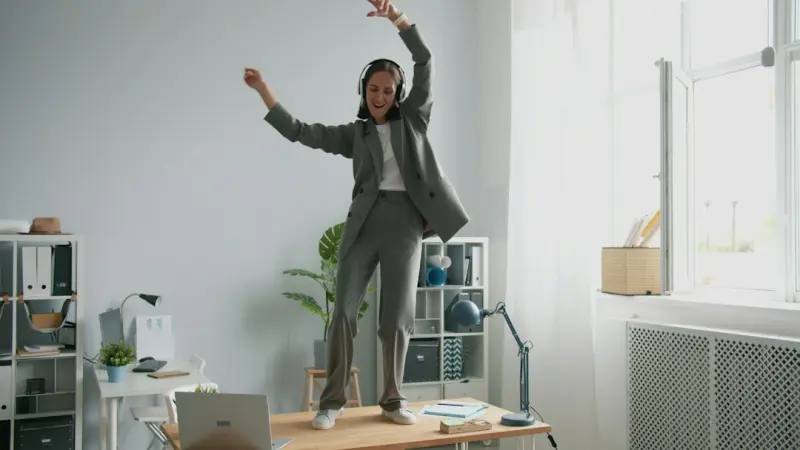
Ever feel like your desk is a hostage situation? You sit, you stare, you type, and somewhere between the endless emails and the next Zoom call, you wonder why your back aches, your eyes glaze, and your brain feels like mush. I’ve been there—sipping lukewarm coffee, scrolling through “productivity hacks” that promise miracles but deliver…well, more scrolling.
Why the Tiny Doesn’t Have to Be Trivial
Science loves big numbers: 10,000 steps, 8‑hour sleep, 2,000‑calorie diets. But the truth is, health is a mosaic of tiny actions that compound over time. Think of your body as a sophisticated orchestra; a single misplaced note can throw the whole piece off‑key. Yet, most of us spend our days ignoring the subtle rhythms that keep the music alive.
Micro‑movements—those deliberate, brief bouts of motion you can fit between “I’ll get back to you in a sec”—are the unsung heroes of workplace wellness. They’re not a new fad; they’re a physiological fact. Every time you flex a muscle, you send a flood of blood, oxygen, and neuro‑chemicals to that area, waking up dormant pathways and resetting fatigue.
The Physiology of a Micro‑Movement
When you stand up and stretch, muscle spindles fire, notifying your brain that the body is active. This triggers a cascade:
- Increased blood flow: Fresh oxygen and nutrients rush to muscles and the brain, sharpening cognition.
- Neurotransmitter boost: Dopamine and serotonin get a gentle nudge, improving mood and focus.
- Lymphatic drainage: Tiny shifts help the lymph system clear metabolic waste, reducing inflammation.
- Postural reset: Even a 10‑second wall slide can recalibrate your spine, easing chronic tension.
All this happens in under a minute. The key is consistency, not intensity.
Three Core Categories of Desk Micro‑Movements
To make the concept stick, I’ve grouped micro‑movements into three families you can deploy without leaving your chair (or your sanity).
1. Circulation Catalysts
These are quick, rhythmic actions that kick blood back toward the heart.
- Seated ankle pumps: Flex and point each foot for 30 seconds. It’s like a foot‑massage on autopilot.
- Desk‑top marching: Lift each knee a few inches, alternating for 45 seconds. Your calves will thank you.
- Wrist waves: Rotate wrists clockwise, then counter‑clockwise, 10 reps each. This helps prevent carpal tunnel strain.
2. Neural Wake‑Ups
These movements stimulate the nervous system, sharpening focus.
- Neck “chin tucks”: Gently pull your chin toward your chest, hold three seconds, release. Repeat 8‑10 times.
- Shoulder shrugs: Lift shoulders to ears, hold, then roll them back. A 20‑second session can reset tension.
- Eye palming: Rub palms together, cover eyes for 10 seconds, then open. It relaxes the ciliary muscles and reduces digital eye strain.
3. Posture Re‑Aligners
These are subtle but powerful tricks for keeping your spine in a neutral, pain‑free position.
- Seated cat‑cow: Sit tall, inhale to arch (cow), exhale to round (cat). Do 6 cycles.
- Desk‑edge hip flexor stretch: Place one foot on the desk, gently tilt pelvis forward, hold 15 seconds each side.
- Core activation “brace”: Pull belly button toward spine, engage core for 10 seconds, release. This trains the deep abdominal muscles without a crunch.
Integrating Micro‑Movements Into Your Workflow
Now that you have a menu, the challenge is making it a habit. Here’s a practical, low‑tech framework I use (and love to share with my team):
- Anchor to existing rituals: Pair a micro‑movement with a habitual cue—e.g., “after I finish a meeting, I’ll do ankle pumps.”
- Set micro‑reminders: Use a timer or a simple sticky note on your monitor. The goal is a gentle nudge, not a disruptive alarm.
- Track tiny wins: A one‑column spreadsheet titled “Micro‑Moves Log” can be surprisingly motivating. Each checkmark reinforces the behavior.
- Blend with environment tech: If your office already has smart lighting that mimics natural daylight, sync your movement breaks with light transitions. The shift from cool to warm tones can cue your brain that it’s time to move.
- Pair with breathwork: Even a single deep inhale‑exhale cycle after a stretch amplifies oxygen delivery. I love the short, guided sessions outlined in Breathe Better, Work Smarter for a seamless flow.
Micro‑Movement Myths Debunked
Myth 1: “I need a gym to stay healthy.”False. A 10‑minute brisk walk beats a 60‑minute treadmill session when consistency is the metric.
Myth 2: “If I’m sitting, any movement is pointless.”Wrong. Even static stretching activates proprioceptors that inform your nervous system that you’re not frozen.
Myth 3: “I’ll lose productivity by taking breaks.”Inaccurate. Studies show that brief, purposeful movement improves focus by up to 30% after the break, reducing overall task time.
Real‑World Success Stories
At the tech startup I consulted for last quarter, we introduced a “5‑Minute Micro‑Move Sprint” twice a day. Within three weeks, HR reported:
- 12% drop in reported back pain incidents.
- 18% increase in self‑rated energy levels during afternoon meetings.
- 7% boost in overall productivity metrics (measured by completed story points).
These numbers aren’t magic; they’re the result of a tiny habit chain that turned a sedentary culture into a kinetic one.
Design Your Personal Micro‑Movement Toolkit
Grab a notepad (or your favorite note‑taking app) and answer these prompts:
- Which part of my body feels the most tension after a typical workday?
- What existing office habit can I pair with a movement? (e.g., “after I close an email”)
- What micro‑movement will address that tension? (Pick one from each category above.)
- How will I remind myself? (Timer, app notification, coworker cue)
- When will I review my progress? (Weekly, monthly?)
When you fill out this mini‑plan, you’ve essentially built a personalized health protocol that fits into the cracks of your schedule.
Beyond the Desk: Extending Micro‑Movement Philosophy
While this post zeroes in on the office chair, the principle scales to any sedentary setting—think long flights, car commutes, even binge‑watch sessions. The same ankle pumps can be done in a cramped airplane seat; the neck tucks are perfect during a Netflix pause.
And for those who love data, consider logging your micro‑move frequency alongside your productivity metrics. You might discover a direct correlation between movement and output—proof that wellness is not a “nice‑to‑have” but a performance driver.
Wrapping Up: Tiny Actions, Grand Impact
If you’ve made it this far, congratulations—you’ve already performed a mental stretch! The next step is to translate that curiosity into motion. Pick one micro‑movement, set a reminder, and give yourself a minute tomorrow. Then, watch as that minute ripples into better focus, fewer aches, and a brighter mood.
Remember, health isn’t a marathon you run once a year; it’s a series of micro‑steps you take every day. And in the grand tapestry of your professional life, those micro‑steps might just be the threads that keep everything from unraveling.

Miranda Murphy: Experienced freelance writer with a decade of storytelling expertise. Let's create something amazing together!
Related Posts

Biofeedback Wearables: Your Real‑Time Stress Coach
Learn how to use biofeedback wearables as a real‑time stress coach, interpreting heart‑rate vari... Read More

Finding Flow: Everyday Rhythm for Better Health
Explore the science of internal rhythms and learn practical strategies to align your daily cadence w... Read More

Let the Sun In: Light Exposure as a Daily Health Hack
Natural light is a powerful, free tool for strengthening immunity, improving mood, and enhancing sle... Read More
Top Posts
Quiet Corners: Mastering Home Acoustics for Focus and Calm
Learn how to assess, treat, and maintain the acoustic environment in your home with simple DIY projects, smart tech solutions, and seasonal tips, turning noisy ...Read More

Beyond the Tourist Trail: Turning Journeys into Living Labs
Discover a framework for turning travel into a living laboratory of personal and professional growth, with practical tools, habit tracking, and skill swaps....Read More

AI as Your Personal Memory Curator: Turning Everyday Moments into a Living Archive
Explore how AI transforms chaotic photo and note collections into a cohesive, secure memory archive, helping you recall, reflect, and grow....Read More
Budget-Friendly Acoustic Upgrades for a Peaceful Home Office
Discover practical, low‑cost ways to tame noise in your home office, using rugs, curtains, DIY panels, plants, and smart lighting to create a calmer, more pro...Read More
0 Comments
Post Comment
You will need to Login or Register to comment on this post!