
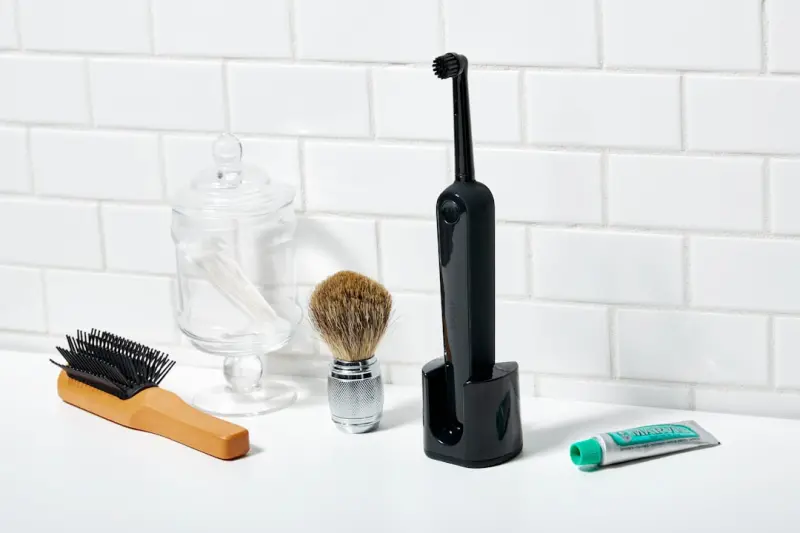
Unlocking the Power of Personal Care for Unstoppable Productivity
When I first started consulting for high‑growth startups, the word that kept resurfacing in boardrooms was efficiency. Teams were obsessed with lean processes, sprint velocity, and data‑driven decision‑making. Yet, the single habit that repeatedly slipped through the cracks was something as simple—and as ancient—as personal care. Not the flashy tech‑laden grooming gadgets that dominate headlines, but the deliberate, ritualistic actions that ground us, sharpen our senses, and prime our brains for peak performance.
In this deep‑dive, I’ll unpack why a thoughtfully engineered personal care routine isn’t a “nice‑to‑have” indulgence but a strategic lever for productivity. We’ll explore the neuroscience behind habit loops, the subtle ways environment shapes our mood, and how to construct a daily regimen that fuels focus, creativity, and resilience—all without turning your bathroom into a startup lab.
The Hidden Neuroscience Behind Everyday Rituals
Our brains are wired to conserve energy. Every time you perform a habit, the basal ganglia—a region responsible for automatic behaviors—stores a neural shortcut. The more you repeat an action, the less cognitive bandwidth it consumes, freeing up mental real estate for complex problem‑solving.
When personal care rituals—like a brief facial cleanse, a mindful breathing pause, or a quick stretch—are performed consistently, they become these low‑cost shortcuts. The result? A cascade of neurotransmitters: dopamine reinforces the habit’s reward loop, while serotonin stabilizes mood. In practice, this means you enter a state of calm alertness that primes you for deep work.
Research from cognitive psychologists shows that micro‑rituals—tiny, repeatable actions lasting under a minute—can reduce cortisol spikes after stressful meetings. The effect is cumulative: a series of micro‑rituals throughout the day can flatten the stress curve, leading to sustained attention and fewer burnout episodes.
From Calm to Creative: How Personal Care Fuels Innovation
Creativity thrives on the interplay between focused attention and divergent thinking. A clear mind can latch onto patterns, while a relaxed body keeps the prefrontal cortex from defaulting to the brain’s “autopilot.” Personal care routines act as a bridge between these two states.
Consider the simple act of splashing cold water on your face. The sudden temperature change activates the sympathetic nervous system just enough to heighten alertness, but not so much that it triggers fight‑or‑flight. This “alert calm” creates the optimal window for brainstorming sessions, where ideas need both vigor and openness.
Another powerful, often overlooked practice is skin‑scent pairing. While I won’t rehash the concepts from The Art of Scent‑Driven Personal Care, the principle remains: pairing a subtle, pleasant aroma with a mental task can form an associative cue. Over time, the scent alone can cue a mental state conducive to creativity, allowing you to “prime” your brain before a design sprint or a code review.
Designing a Personal Care Routine That Works for Knowledge Workers
Below is a framework that translates these insights into actionable steps. Feel free to remix the components to match your lifestyle, but keep the core philosophy: short, repeatable, and sensory‑rich actions that signal your brain to shift gears.
- Morning Reset (5 minutes) – Begin with a lukewarm shower that transitions into a brief burst of cool water on the face. Follow with a gentle facial massage using a natural oil. This sequence wakes up the nervous system while grounding you in the present.
- Pre‑Meeting Micro‑Pause (2 minutes) – Before any high‑stakes call, stand, roll your shoulders, and inhale through the nose for four counts, exhale through the mouth for six. This breathing pattern reduces cortisol and steadies vocal tone.
- Mid‑Day Refresh (3 minutes) – Use a hydrating mist infused with a light citrus note (think bergamot). Spray, close your eyes, and visualize a successful outcome for the next task. The scent cue builds a mental association with confidence.
- Evening Wind‑Down (5 minutes) – Dim the lights, switch to a warm amber lamp, and perform a short facial cleansing ritual followed by a short gratitude journal entry. This signals to your brain that it’s time to transition to rest, improving sleep quality.
Each component is deliberately concise to avoid “analysis paralysis” and to embed the habit into your day without feeling burdensome.
The Role of Environment: Turning Spaces into Productivity Catalysts
We often hear about “digital detox” or “stress‑free sanctuaries.” While those concepts are valuable, they can be taken to an extreme that removes the very tools we need to stay productive. The goal is instead to harmonize your personal care space with your workflow.
Here’s how to achieve that balance:
- Dedicated Care Corner – Carve out a small, uncluttered nook in your home office. A sleek shelf for a ceramic mug, a minimalist brush, and a plant that purifies air can create a visual cue for transition.
- Ambient Soundscapes – Soft, low‑frequency sounds (like a distant rain or gentle wind) have been shown to reduce stress hormones. A portable speaker can deliver these tones during your micro‑pauses.
- Smart Lighting – Use tunable LEDs that mimic natural daylight in the morning and shift to warm hues in the evening. This aligns your circadian rhythm, enhancing alertness when you need it most.
These adjustments don’t require a full‑blown renovation. Small, intentional tweaks—like the ones highlighted in Turn Your Home into a Stress‑Free Sanctuary with Simple Tweaks—can have outsized effects on focus and mood.
Tech‑Lite Enhancements Without Overcomplicating
While the term “smart grooming” conjures images of AI‑driven mirrors, you can benefit from low‑tech tools that still provide data‑driven insights. For example:
- pH‑balanced facial wipes with a built‑in color indicator that shows when your skin’s acidity is out of range, prompting a quick moisturizer adjustment.
- Wearable moisture sensors that vibrate subtly when your skin’s hydration drops below a threshold, reminding you to drink water or apply a serum.
- Digital habit trackers—simple apps that let you log micro‑rituals and view streaks, reinforcing consistency through gamification.
These tools serve as gentle nudges rather than intrusive gadgets, ensuring the focus stays on the ritual, not the device.
Community and Accountability: The Social Side of Personal Care
Humans are social animals, and accountability partners can dramatically improve habit adherence. Consider forming a “Personal Care Cohort” with a few colleagues or friends. The cohort can share:
- Weekly check‑ins on routine compliance.
- Tips on favorite products or sensory triggers.
- Mini‑challenges (e.g., “30‑day hydration streak”).
Research indicates that social reinforcement can increase habit formation speed by up to 30%. Plus, the shared experience builds camaraderie—a subtle boost to team cohesion that often translates into smoother collaborations.
Practical Implementation Blueprint
Ready to embed personal care into your productivity stack? Follow this step‑by‑step rollout:
- Audit Your Current Routine – Spend three days noting every personal care action you already perform, no matter how trivial.
- Select Core Micro‑Rituals – Choose two to three actions that align with the framework above (e.g., morning face splash, pre‑meeting breath).
- Map to Workflows – Pair each ritual with a natural workflow breakpoint (e.g., after checking email, before the first meeting).
- Set Up Physical Cues – Place a sticky note, a scented diffuser, or a small tray in your work area as a reminder.
- Track and Iterate – Use a simple spreadsheet or habit‑tracking app for two weeks. Note any changes in focus, mood, or output quality.
- Scale Gradually – Once the core rituals feel automatic, layer in additional sensory elements (like ambient sound) or expand to evening wind‑down practices.
Remember, the goal isn’t perfection but consistency. Even a 60% adherence rate yields measurable benefits in stress reduction and mental clarity.
Measuring the Impact: From Subjective Feelings to Concrete Metrics
Quantifying the ROI of personal care might seem nebulous, but a few key metrics can illuminate the impact:
- Focus Duration – Track the average length of uninterrupted work blocks before and after implementing the routine.
- Task Completion Rate – Measure the number of tasks completed per sprint cycle.
- Self‑Reported Energy Levels – Use a simple 1‑10 scale in a daily check‑in survey.
- Error Frequency – Log any mistakes or rework required; a decline often correlates with improved mental acuity.
When you overlay these data points with your personal care log, patterns emerge. You may discover, for instance, that the mid‑day refresh aligns with a spike in creative output, prompting you to schedule brainstorming sessions immediately after.
Conclusion: Personal Care as a Competitive Edge
In the relentless pursuit of efficiency, we sometimes overlook the most human lever of performance: how we treat our bodies and senses every day. By institutionalizing brief, sensory‑rich personal care rituals, you create a neurochemical foundation for focus, creativity, and resilience.
Think of personal care not as a luxury but as a strategic asset—one that sharpens your mind, steadies your emotions, and ultimately gives you the edge in the fast‑moving world of modern work. Start small, stay consistent, and watch your productivity curve rise.

Seth Samual is a name that's quickly becoming synonymous with compelling and insightful writing. As a freelance writer, Seth has carved a niche for himself by delivering high-quality content across a diverse range of subjects.
Related Posts
Simplify Your Personal Care for a Radiant Glow
A personal care routine doesn’t need to be complex. Learn how to streamline your steps, focus on t... Read More
The Art of Fragrance Layering: Turning Everyday Routines into Sensory Journeys
Fragrance layering turns routine personal care into a curated scent journey, using base, mid, and to... Read More
The Personal Care Toolkit: Tiny Rituals for Big Confidence
Learn to turn everyday grooming into a mini‑adventure with multisensory tools, sustainable swaps, ... Read More
Top Posts

The Hidden Power of Posture Nudging: How Smart Furniture Can Transform Your Health
Explore the emerging field of posture nudging, where sensor‑enabled furniture gently corrects slouching, integrates with wearables, and supports a holistic he...Read More

Beyond the Guidebook: Designing Travel Experiences That Nourish the Soul
Explore a fresh travel mindset that prioritizes intentional journeys, sustainable practices, and deep local connections, turning every trip into a transformativ...Read More

Why the 48‑Hour City Sprint Is the Future of Business Travel
A 48‑hour city sprint blends focused work with intentional cultural immersion, delivering fresh ideas, valuable contacts, and higher well‑being—making eve...Read More
Reclaiming Mental Space: A Fresh Take on Digital Boundaries
Learn how to set intentional digital limits, create tech‑free zones, and reclaim mental clarity in a hyper‑connected world....Read More
0 Comments
Post Comment
You will need to Login or Register to comment on this post!