
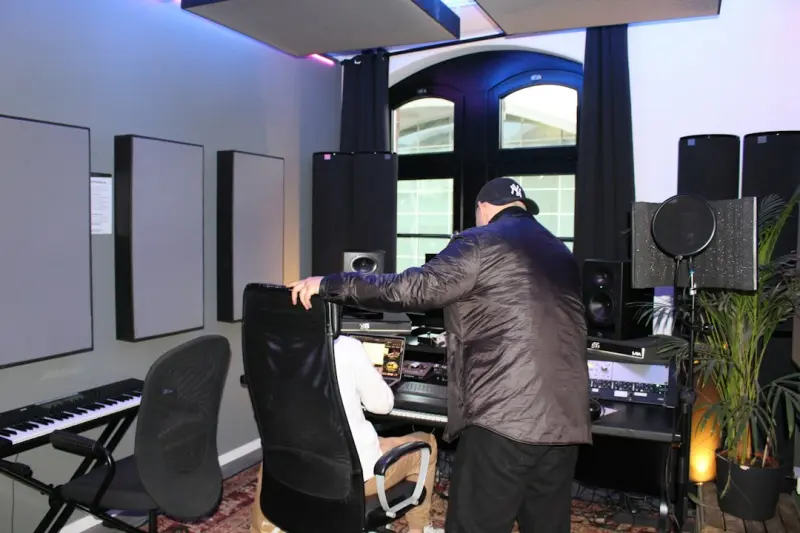
Why Our Ears Deserve a Bigger Role in Personal Care
When most people think about personal care, the first things that come to mind are skin, hair, or perhaps a quick meditation. What if I told you that one of the most powerful, yet under‑utilized, tools for nurturing yourself lives right above your head? Sound has been a silent partner in our daily lives for millennia—think of the calming murmur of a river or the energizing beat of a drum circle. Today, thanks to affordable tech and a deeper understanding of neuro‑audiology, we can deliberately weave sound into our self‑care rituals.
The Science Behind Auditory Stimulation
Our brains are wired to respond to sound in ways that affect heart rate, hormone release, and even gene expression. Rhythmic auditory stimulation can entrain brainwaves, guiding them into states of relaxation (alpha) or heightened focus (beta). Meanwhile, low‑frequency “bass” tones have been shown to release endorphins, the body’s natural painkillers. In short, the right soundtrack can act as a non‑pharmacological catalyst for physiological change.
From Ambient Noise to Intentional Soundscapes
Creating an auditory ritual starts with a simple question: What do I want to feel? The answer determines the genre, tempo, and even the spatial qualities of the sound you’ll use. Below is a quick decision‑tree you can print out and keep on your bathroom mirror.
- Need calm? Choose slow tempos (60‑80 BPM), natural sounds (rain, wind), and soft timbres (flutes, pads).
- Need focus? Opt for steady beats (80‑120 BPM), minimal melodic content, and high‑frequency tones (crystals, chimes).
- Need energy? Go for upbeat rhythms (120‑140 BPM), bright synths, and layered percussive elements.
Integrating Sound into Existing Routines
Below are three everyday personal‑care moments and how a thoughtfully curated soundtrack can amplify them.
Morning Face Wash: The Wake‑Up Playlist
Instead of the default radio chatter, start your day with a rise‑and‑shine playlist that gradually builds in intensity. A 30‑second pre‑ramp of soft ambient tones followed by a gentle crescendo of acoustic guitar can help shift your brain from sleep to alertness without the jolt of caffeine.
Mid‑Day Desk Break: Micro‑Meditation with Binaural Beats
Set a timer for five minutes and cue a binaural beat track tuned to 10 Hz (the alpha range). Put on a pair of comfortable headphones, close your eyes, and let the subtle pulsation guide your breathing. Studies have shown that even a short session can reduce cortisol by up to 15%.
Evening Skincare: The Sonic Spa
While you apply serum or moisturizer, play a low‑frequency soundscape that mimics ocean waves. The hidden science of everyday personal care rituals tells us that tactile sensations combined with matching auditory cues create a stronger memory trace, making the routine feel more rewarding over time.
Technology That Makes Sound Personal Care Easy
We live in an era where a smart speaker can act as a personal sound curator. Many devices now offer “sleep stories,” “focus modes,” and “relaxation loops” that are automatically adjusted based on the time of day and your calendar. For those who love data, smart lighting systems can be synchronized with sound to create a fully immersive environment—warm amber hues paired with a low‑tempo lullaby, for example.
Designing a Custom Auditory Routine: A Step‑by‑Step Guide
- Identify Your Goal: Write down the feeling you want to evoke (calm, focus, joy).
- Choose a Platform: Whether it’s a streaming service, a dedicated meditation app, or a DIY playlist on your phone.
- Curate Your Tracks: Aim for 5‑15 minutes of uninterrupted audio. Avoid sudden volume spikes.
- Set a Cue: Link the audio to a physical trigger—pressing a specific button on your bathroom mirror or turning on a smart plug.
- Test & Iterate: Pay attention to how you feel after each session. Adjust tempo, genre, or volume as needed.
Measuring the Impact: Simple Metrics That Matter
Unlike a skincare product that promises “glowing skin,” auditory self‑care is easy to quantify with everyday tools:
- Heart Rate Variability (HRV): A quick HRV reading before and after a sound session can indicate stress reduction.
- Productivity Scores: Track the number of tasks completed during a work block that began with a focus playlist.
- Sleep Quality: Use a sleep‑tracking app to see if bedtime soundscapes improve REM duration.
Potential Pitfalls and How to Avoid Them
1. Over‑Stimulation—Too many layers of sound can become chaotic. Keep it simple, especially for relaxation.
2. Device Dependency—Relying solely on a speaker can make the ritual fragile. Keep a backup (e.g., a pre‑downloaded MP3) for travel.
3. Ignoring Personal Preference—What calms one person might irritate another. Trust your own response more than “popular” playlists.
Real‑World Examples From the Frontlines
In a boutique wellness studio in Portland, clients now start their facial treatments with a 10‑minute sound bath featuring Tibetan singing bowls. The studio reports a 30% increase in repeat bookings, attributing the lift to the “multi‑sensory” experience. Similarly, a tech startup in Berlin introduced “audio‑first onboarding” for new hires—employees begin their day with a curated “focus” playlist while reviewing their daily tasks, resulting in a measurable boost in early‑day productivity.
Future Trends: The Convergence of Sound, AI, and Personal Care
Imagine an AI that listens to your voice, detects stress markers, and instantly plays a custom soundscape tailored to your current emotional state. While we’re not quite there, early prototypes in the smart grooming space are experimenting with microphones embedded in bathroom mirrors to gauge breathing patterns and adjust both lighting and audio accordingly.
Wrapping Up: Making Sound a Habit, Not a Gimmick
Personal care isn’t just about the products you apply; it’s about the environment you create for yourself. By consciously integrating sound, you unlock a low‑cost, high‑impact lever that can shift mood, sharpen focus, and deepen relaxation. Start small—perhaps a five‑minute “sound‑first” wake‑up tomorrow—and watch how the ripple effects improve everything from your skin’s radiance to your inbox’s zero‑count.

Melanie Wilson, Freelance writer with a flare for everything. I am passionate about topics I write crafting stories and compelling content that connect with audiences. Journeying through the realms of creativity as a freelance creator. #WriterLife #ContentCreator
Related Posts
Why Personal Care Is the Hidden Engine Behind Peak Productivity
A concise guide showing how simple, repeatable personal care rituals can reduce stress, enhance focu... Read More
Biophilic Personal Care: Nature‑Inspired Grooming for the Modern Professional
Discover how integrating natural elements, microbiome‑friendly formulas, and smart lighting into d... Read More
Fermented Skincare: Harnessing the Gut‑Skin Axis for Natural Radiance
Explore the gut‑skin connection and learn simple fermented food recipes, DIY toners, and micro‑g... Read More
Top Posts

How a Personal Knowledge Hub Can Future‑Proof Your Career
A personal knowledge hub turns everyday learning into a career asset. Learn how to set it up, share it strategically, and let it open doors you didn’t know ex...Read More
When AI Becomes Your Strategic Ally: Rethinking Decision‑Making in the Enterprise
AI is moving beyond automation to become a collaborative partner in business. This post explores how executives can harness prompt engineering, ethical guardrai...Read More

Quiet Corners: Simple Hacks to Tame Noise at Home
Learn easy, low‑cost strategies—from door sweeps and heavy curtains to DIY acoustic panels and white‑noise solutions—that help you mute disruptive sound...Read More

Elevate City Living with a Rooftop Herb Garden
Turn your under‑used rooftop into a fragrant herb haven. Learn practical steps, plant picks, and design tricks that bring fresh flavors and calm to urban life...Read More
0 Comments
Post Comment
You will need to Login or Register to comment on this post!