
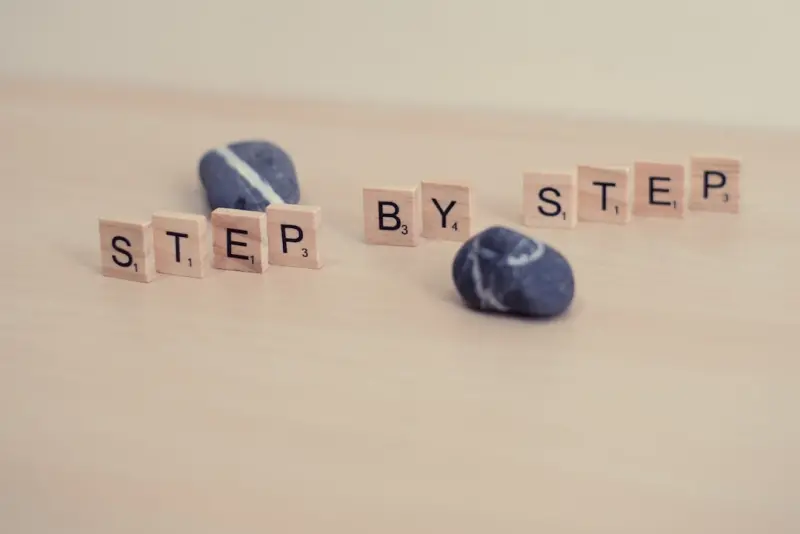
When Setbacks Become Stepping Stones: A Compassionate Approach to Inner Strength
It’s funny how the word “failure” can feel like a scarlet letter in a world that rewards constant achievement. I’ve spent years watching colleagues, friends, and even myself bounce off the same old narrative: “I’m not good enough because I stumbled.” Over time, I realized that the story we tell ourselves after a misstep is far more powerful than the misstep itself. By shifting from self‑criticism to self‑compassion, we can transform every setback into a laboratory for growth, a place where inner strength is forged rather than eroded.
The Hidden Cost of Perfectionism
Perfectionism is the silent thief of mental well‑being. It convinces us that any deviation from an imagined ideal is a personal failure. The physiological response is immediate: cortisol spikes, heart rate accelerates, and the brain’s amygdala lights up, priming us for fight‑or‑flight. When this cycle repeats, the nervous system becomes chronically dysregulated, leading to anxiety, burnout, and a pervasive sense of inadequacy.
Instead of trying to eradicate perfectionism—an impossible goal—we can learn to re‑frame it as a signal that we care deeply about our work and relationships. That caring, when paired with compassionate curiosity, becomes the fuel for a healthier mental landscape.
Step One: Naming the Narrative
Before we can rewrite the story, we must first hear it clearly. I keep a simple “thought log” in my phone. Whenever a negative self‑talk episode surfaces, I pause, type the exact phrase, and note the trigger. The act of externalizing the inner dialogue does two things:
- It detaches the thought from my identity, turning “I’m a failure” into a fleeting mental event.
- It creates a data set that reveals patterns—specific projects, people, or times of day that repeatedly provoke the same story.
With this awareness, I can start to question the story’s validity. Is the evidence truly there, or am I amplifying a single mistake into a global verdict?
Step Two: The Power of Compassionate Curiosity
Compassionate curiosity is the practice of asking gentle, non‑judgmental questions about our own experience. Instead of asking, “Why did I mess up?” I ask, “What was happening for me in that moment?” and “What does this tell me about my current needs?” This shift opens a pathway to self‑understanding that is less threatening and more constructive.
For those who crave a deeper dive into the science behind this mindset, I recommend exploring how purposeful mind wandering can reset emotional circuitry. The research shows that when we allow the brain to drift in a guided way, it strengthens the prefrontal cortex—the very region that governs self‑regulation and empathy.
Step Three: Building a Routine of Mental Check‑Ins
Routines are the scaffolding that hold our mental health together during turbulent times. I’ve adopted a three‑minute “reset ritual” that I perform at the start, middle, and end of each workday. The steps are simple:
- Ground. Feel your feet on the floor, notice three ambient sounds, and take a slow, deliberate breath.
- Observe. Scan your thought log for any recurring negative phrases. Acknowledge them without judgment.
- Intend. Choose one small, actionable step that aligns with a growth mindset—like reaching out for clarification on a confusing task instead of assuming incompetence.
These micro‑habits may seem trivial, but they create a feedback loop that reinforces self‑compassion. If you’re interested in a more structured approach, check out how regular mental check‑ins can shift you from crisis mode to maintenance mode. The article offers templates and timing suggestions that fit any schedule.
Step Four: Redefining Success Through the Lens of Learning
Success is traditionally measured by external outcomes—sales numbers, project completions, accolades. While those metrics matter, they often eclipse the internal metrics that sustain long‑term performance: curiosity, adaptability, and emotional agility. When we redefine success to include “what did I learn?” we remove the binary judgment of win or loss.
One practical method is the “After‑Action Insight” journal. After each project milestone, I answer three prompts:
- What unexpected challenge arose?
- How did I respond, and what could I improve?
- What new skill or perspective did I gain?
This habit not only normalizes setbacks but also celebrates the incremental growth that often goes unnoticed.
Step Five: Leveraging Night‑Time Rituals for Day‑time Resilience
Our brains are not 24/7 machines; they need downtime to consolidate learning and regulate emotion. A consistent night‑time routine can dramatically improve how we process failure the next day. I’ve found that a blend of low‑light reading, gentle stretching, and a brief gratitude reflection creates a mental “reset button.”
If you’re looking for evidence‑based tips, this guide to smarter sleep outlines how specific bedtime habits can enhance memory retention, mood stability, and cognitive flexibility—key ingredients for turning setbacks into stepping stones.
The Role of Community in Normalizing Failure
No one thrives in isolation. Sharing our imperfect moments with trusted peers creates a culture where vulnerability is valued. I host a monthly “Growth Circle” at my company, a safe space where team members share a recent failure and the lesson it birthed. The outcomes are surprisingly powerful:
- Increased psychological safety across the team.
- Reduced stigma around asking for help.
- Accelerated collective learning, as patterns emerge from diverse experiences.
If you’re hesitant to start a formal group, begin with a one‑on‑one coffee chat. The goal is simply to verbalize the experience and hear another’s perspective—both of which reinforce the brain’s neural pathways for empathy and self‑acceptance.
Technology as an Ally, Not a Tyrant
In an age where notifications buzz relentlessly, it’s tempting to let technology dictate our emotional rhythm. However, we can harness digital tools to support the compassionate mindset we’re cultivating. Apps that prompt brief breathing exercises, mood trackers, or even AI‑driven journaling assistants can serve as gentle nudges toward self‑kindness.
Remember, the technology should serve the practice, not replace it. Use reminders to initiate a check‑in, then step away from the screen to actually feel your body and thoughts.
Measuring Progress Without the Pressure of Perfection
Metrics can be a double‑edged sword. To avoid slipping back into perfectionism, I track my growth in qualitative ways:
- Emotional range. Noting moments when I felt calm after a setback.
- Response latency. Observing how quickly I move from a negative thought to a constructive action.
- Relationship quality. Recording instances where I sought or offered help without shame.
These indicators tell a richer story than a simple “completed tasks” count, and they remind us that mental health is a dynamic, evolving journey.
Putting It All Together: A Sample Day
Below is a snapshot of how I weave these principles into an ordinary workday. Feel free to adapt the timings to suit your rhythm.
- 7:00 am – Grounding Breakfast. No phone. I savor each bite, notice the texture, and set an intention: “I’ll approach challenges with curiosity.”
- 9:30 am – First Check‑In. A three‑minute pause: breath, thought‑log scan, and a micro‑goal for the morning.
- 12:00 pm – Lunch Walk. A brief stroll, allowing my mind to wander. I let a recent hiccup replay, then ask myself, “What did this reveal about my process?”
- 3:00 pm – Mid‑Day Reset. Repeat the check‑in ritual, noting any new patterns.
- 5:30 pm – After‑Action Insight. I jot down the three prompts from the insight journal, focusing on the day’s learning.
- 9:00 pm – Night‑Time Ritual. Dim lights, light stretching, gratitude note, and a brief review of tomorrow’s priorities.
By the end of the day, I’ve not only accomplished my tasks but also reinforced a compassionate narrative that treats setbacks as teachers rather than verdicts.
Final Thoughts: Embrace the Imperfect Journey
Our cultures love polished success stories, yet the raw, unfinished drafts are where true transformation happens. By naming our internal narratives, practicing compassionate curiosity, establishing gentle check‑ins, and celebrating learning over flawless outcomes, we lay a foundation for mental resilience that endures beyond any single project or deadline.
So the next time you stumble, pause. Notice the story, ask yourself with kindness, “What does this moment want to teach me?” Then, step forward with the confidence that every misstep is, in fact, a stepping stone toward a more robust, compassionate self.

Armed with a degree in English Literature, Jill’s journey into the digital space wasn't just a career move; it was a natural extension of her lifelong love affair with storytelling. While some writers view search engine optimization (SEO) as a rigid constraint, Jill sees it as a creative puzzle. She understands the delicate art of balancing the algorithmic demands of search engines with the human desire for resonance, emotion, and value. To Jill, keywords aren't just targets to hit; they are the breadcrumbs that lead eager readers straight to the answers they’ve been searching for.
Related Posts

Tiny Mental‑Health Hacks for the Busy Knowledge Worker
Learn how to embed micro‑resilience practices—grounding glances, brief breath work, micro‑move... Read More

Playful Pauses: Boosting Mental Health at Work
Learn how integrating tiny, fun activities—like quick sketches, word games, and micro‑puzzles—... Read More

Playful Mindscapes: Structured Daydreaming as a Mental‑Health Superpower
Structured daydreaming transforms idle mind‑wandering into a purposeful practice that fuels creati... Read More
Top Posts

Smart Water Management: Turning Your Backyard Into an Eco‑Friendly Oasis
Learn how to transform your garden with smart water management—leveraging sensors, weather data, and AI to cut water use, lower bills, and create a thriving, ...Read More

Creating a Backyard Habitat for Native Bees and Butterflies
A step‑by‑step guide to turning any backyard into a thriving haven for native bees, butterflies, and other pollinators, featuring plant choices, nesting sol...Read More

The Garden Desk Revolution: How Outdoor Workspaces Redefine Home Life
Explore the rise of garden desks, their impact on productivity and home life, and simple steps to create your own outdoor workspace oasis....Read More

From Closet Corners to Verdant Havens: Mastering Small-Scale Indoor Gardens
Learn to convert forgotten corners of your home into lush green sanctuaries using simple containers, low‑light foliage, and clever lighting—no green thumb r...Read More
0 Comments
Post Comment
You will need to Login or Register to comment on this post!