

When AI Becomes a Design Partner: Rethinking Product Ideation
There’s a lingering myth in tech circles that artificial intelligence is a cold, calculating force that merely crunches numbers or automates rote tasks. In my experience, the most transformative AI I’ve encountered feels less like a machine and more like a curious teammate—one that asks “what if?” instead of “why?” and nudges us toward ideas we might never have entertained on our own. This isn’t about replacing designers or product managers; it’s about inviting a new collaborator into the creative process and learning to speak its language.
The Shift From Tool to Partner
For decades, we’ve treated AI as a toolbox: a set of APIs, a data‑pipeline, a predictive engine. We’d plug the tool in, press a button, and collect the output. The interaction was transactional, and the results were often predictable. A employee community thrives on shared experience, yet AI has rarely been part of that shared narrative. What changes when we flip the script and start treating AI as a partner?
First, we reframe expectations. Instead of demanding flawless predictions, we ask the model to generate possibilities. We ask it to surface patterns, mash up concepts, and even challenge our assumptions. In this collaborative dance, the AI’s “mistakes” become sparks for human curiosity. It’s a mindset shift that moves us from “What can the AI do for me?” to “What can we co‑create together?”
Building a Conversational Canvas
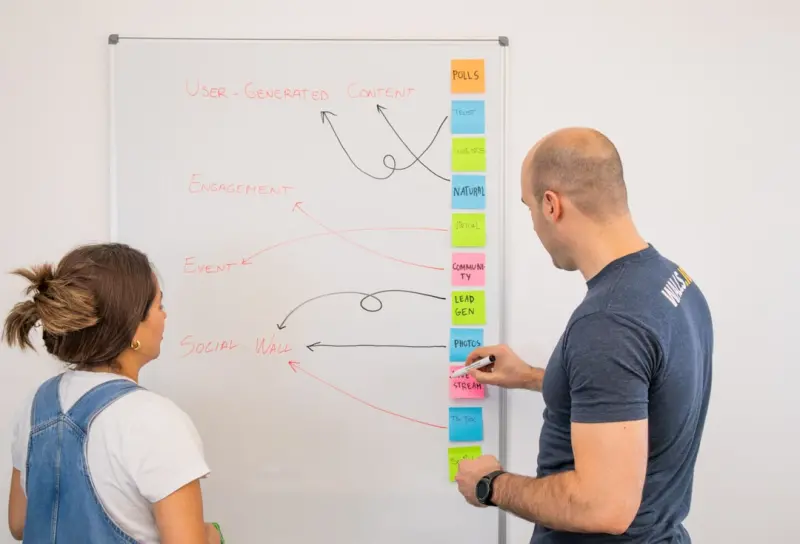
The most effective AI design partners are conversational. They understand prompts, iterate on feedback, and maintain context across multiple exchanges. Think of a design sprint where a sketch is drawn on a whiteboard, then a colleague adds a splash of color, and another refines the typography—all in real time. An AI that can follow that flow acts like a silent co‑author, suggesting alternate color palettes, surfacing emerging trends, or even pointing out accessibility pitfalls you missed.
To achieve this, you need two ingredients: a robust language model trained on design‑relevant data, and a disciplined prompt‑crafting practice. Start with broad, open‑ended prompts like “Explore three ways to visualize user onboarding for a SaaS platform.” The AI will churn out sketches, flow‑charts, or even short mock‑up descriptions. Then, narrow the focus: “Make the third option more mobile‑first and include a micro‑interaction for error handling.” The iterative loop continues until the concept feels both human and machine‑inspired.
Human‑Centred Validation
Even the smartest AI can fall into the trap of echoing its training data. That’s why the human element remains non‑negotiable. Every AI‑generated concept must be vetted against real user insights, brand values, and feasibility constraints. This is where the collaborative spirit shines: you bring empathy, context, and lived experience; the AI brings breadth, speed, and pattern recognition.
In practice, you might run a quick survey on a prototype drafted by the AI, or hold a rapid user interview to test a headline the model suggested. The feedback loop informs the next AI iteration, creating a virtuous cycle of refinement. Over time, the model learns to align more closely with your audience’s tone, the product’s voice, and the organization’s strategic goals.
Designing for Ethical AI Partnerships
Inviting an AI into the creative process also surfaces ethical considerations. Who owns the ideas generated? How do we ensure the model isn’t reproducing bias from its training set? These questions aren’t afterthoughts; they’re part of the partnership contract.
One practical approach is to embed transparency checkpoints. For every AI‑generated suggestion, log the source data or confidence score, and flag any content that appears to replicate existing copyrighted material. This not only protects intellectual property but also gives designers a clear lens into the AI’s reasoning. Moreover, regular audits of the model’s outputs for gender, cultural, and accessibility bias help keep the partnership equitable.
Scaling the Collaboration Across Teams
When AI proves its worth in a single design team, the next challenge is scaling the partnership across the organization. This is where internal knowledge sharing becomes a catalyst. Think about the portfolio careers movement: professionals juggling multiple roles, constantly cross‑pollinating ideas. An AI design partner can act as a unifying thread, capturing insights from diverse teams and offering them back in a distilled, actionable form.
Imagine a product team in Berlin, a marketing squad in São Paulo, and a support group in Bangalore all feeding user pain points into a shared AI hub. The model surfaces common themes, suggests feature refinements, and even drafts localized copy. The result is a cohesive product narrative that feels locally relevant yet globally consistent—a true testament to the power of AI as a collaborative catalyst.
Metrics That Matter
To justify the investment in an AI design partner, you need measurable outcomes. Traditional KPIs like sprint velocity or feature adoption still apply, but you’ll also want to track AI‑specific metrics:
- Idea Generation Rate: Number of unique concepts produced per hour versus a human‑only baseline.
- Iteration Cycle Time: Time from initial prompt to a viable prototype.
- Bias Detection Frequency: Instances of flagged content per 1,000 suggestions.
- User Delight Score: Post‑launch survey results for AI‑influenced features.
When these numbers start trending upward, you’ll have concrete evidence that the AI isn’t just a novelty—it’s a productivity multiplier and a source of creative differentiation.
Future‑Proofing Your Workflow
The AI landscape evolves at breakneck speed. Today’s language model may be supplanted by a multimodal system that can generate not only text and images but also interactive prototypes in real time. To stay ahead, embed flexibility into your workflow:
- Maintain an open‑source repository of prompts and iteration logs so new models can ingest your historical context.
- Invest in upskilling designers on prompt engineering and model interpretability.
- Establish a cross‑functional AI ethics board to oversee bias, privacy, and ownership concerns.
By treating the AI as a living teammate rather than a static tool, you create a culture that welcomes continuous learning and adaptation—exactly the mindset needed for long‑term innovation.
Conclusion: A New Creative Frontier
When AI steps into the role of design partner, the creative process transforms from a solitary sprint into a collaborative marathon. It invites us to ask bolder questions, iterate faster, and challenge our own assumptions. The result isn’t a product that merely functions—it’s an experience that feels thoughtfully crafted, ethically grounded, and unmistakably human, even though a machine helped shape it.
So the next time you sit down for a brainstorming session, consider inviting an AI to the table. Listen to its ideas, question its logic, and together you might just discover the next breakthrough your users didn’t even know they were waiting for.

Miranda Murphy: Experienced freelance writer with a decade of storytelling expertise. Let's create something amazing together!
Related Posts

AI as the Catalyst for Sustainable Business Transformation
Discover how AI can transform sustainability from a lofty ambition into actionable, measurable busin... Read More
AI Mentorship: How Smart Coaches Are Transforming Work
AI mentors blend data‑driven insights with human empathy, scaling personalized guidance, accelerat... Read More

Your AI Decision Coach: Turning Choices into Confidence
Learn how an AI decision coach can ease decision fatigue, tailor suggestions to your life, and blend... Read More
Top Posts

The Quiet Power of Passive Home Design: Boost Comfort Without Major Renovations
Learn how small, intentional tweaks—like optimizing natural light, improving airflow, creating acoustic calm zones, and adopting micro‑movement habits—can...Read More

Design Home Zones That Boost Focus, Relaxation, and Movement
Discover practical, low‑cost methods for zoning your home to support work, relaxation, exercise, and socializing, turning any space into a balanced sanctuary....Read More

Creating a Culture of Psychological Safety for Remote Teams
Learn why psychological safety is essential for remote work, and get actionable steps—rituals, metrics, and leadership training—to build a trust‑rich, hig...Read More

The Secret Power of a Thoughtful Entryway: Turn Your Front Door into a Daily Reset
Discover how to turn a neglected hallway into a purposeful “reset zone” with intentional storage, subtle lighting, sensory cues, and quick weekly routines t...Read More
0 Comments
Post Comment
You will need to Login or Register to comment on this post!