
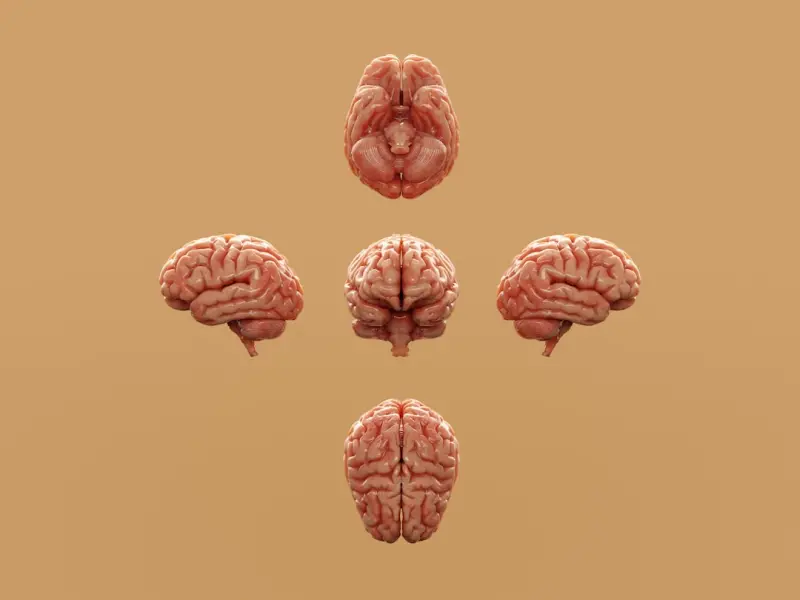
The Rise of Personal Knowledge Graphs
Imagine a digital twin of your mind, a living map that stitches together the articles you skim, the podcasts you replay, and the fleeting ideas that spark during a morning commute—all linked together in a way that mirrors the brain's own associative pathways; this is the promise of an AI‑powered personal knowledge graph, a system that not only stores information but actively curates connections you might never have noticed on your own. By feeding the graph with natural‑language inputs, voice memos, and even visual snippets, the AI learns the nuances of your interests, your professional pivots, and the subtle themes that recur across disparate projects, turning raw data into a coherent narrative that evolves as you do. The result is a personal research assistant that anticipates the next question you’ll ask, surfaces relevant past insights just as you’re drafting a proposal, and quietly nudges you toward deeper synthesis without the endless scrolling that currently dominates knowledge work.
Why Traditional Note‑Taking Falls Short
Traditional note‑taking tools excel at capturing isolated facts, yet they struggle to represent the fluid, non‑linear way our thoughts actually travel; you might jot down a brilliant concept in a notebook, only to lose its relevance months later because it sits on a separate page from the project it could have illuminated. In contrast, a knowledge graph treats each fragment as a node in a web, allowing the AI to surface relationships across time and context, much like a seasoned editor who knows exactly where a misplaced paragraph belongs. This dynamic linking not only saves you from the dreaded “lost‑in‑the‑stack” syndrome but also creates a feedback loop where the system learns your retrieval habits, gradually refining its suggestions to align with the rhythm of your own cognitive processes.
Building Your Graph: The First Steps
Getting started doesn’t require a PhD in data science; most modern platforms let you import existing digital assets—emails, PDFs, calendar entries—while a simple browser extension can capture web snippets with a single click, automatically tagging them with metadata that the AI parses for intent and relevance. As you feed the system, you’ll notice it proposing clusters—perhaps grouping together all the research on sustainable design you’ve bookmarked, or linking a favorite TED talk on storytelling with a recent client brief that demands narrative flair. Over time, these clusters become the scaffolding for more sophisticated queries, enabling you to ask, “What have I learned about circular economies that could inform this new product line?” and receive a curated list of insights drawn from across your digital footprint.
From Retrieval to Insight Generation
The true power of a personal knowledge graph lies in its ability to go beyond retrieval and venture into insight generation, a capability that transforms a static repository into an active collaborator; the AI can identify gaps in your knowledge, suggest complementary sources, and even draft preliminary outlines that weave together the most relevant nodes. For example, when planning a presentation on emerging tech trends, the system might highlight that you’ve amassed data on quantum computing, yet lack a comparative analysis with edge‑AI developments, prompting you to explore that missing piece before you finalize your deck. By continuously surfacing these connective threads, the graph helps you stay ahead of the curve, turning information overload into a strategic advantage.
Integrating with Existing AI Tools
While the knowledge graph is a standalone powerhouse, its true synergy emerges when you integrate it with other AI assistants you already trust; imagine feeding the graph’s curated insights into a language model that drafts emails, or coupling it with a scheduling bot that automatically blocks time for deep work on the most pressing knowledge gaps. This kind of orchestration creates a seamless workflow where the AI decision engine draws on the graph’s contextual awareness to prioritize tasks, and the AI curiosity coach suggests new learning pathways based on the evolving structure of your graph. The result is an ecosystem where each component amplifies the others, turning isolated tools into a cohesive, intelligence‑enhancing suite.
Privacy, Ownership, and Ethical Considerations
Entrusting an AI with the intimate map of your mental landscape raises legitimate concerns about data privacy, ownership, and potential bias; it’s essential to choose platforms that offer end‑to‑end encryption, transparent data policies, and the ability to export your graph in open formats, ensuring you retain full control over your intellectual capital. Moreover, because the AI learns from your inputs, it can inadvertently reinforce existing blind spots if not regularly audited; periodic reviews of the graph’s suggested connections can surface hidden echo chambers, prompting you to inject diverse perspectives and counteract algorithmic drift. By approaching the technology with a critical eye, you can harness its benefits while safeguarding the very personal insights that make the graph valuable.
Real‑World Applications Across Domains
Professionals across fields are already reaping tangible benefits: marketers use knowledge graphs to align campaign themes with consumer sentiment trends, researchers map interdisciplinary citations to uncover novel hypothesis pathways, and creatives build narrative arcs that draw upon a lifetime of artistic influences, all without manually cross‑referencing endless spreadsheets. In the realm of personal development, the graph can serve as a reflective journal, highlighting how your values shift over time and suggesting habits that align with your evolving aspirations. These case studies illustrate that the technology is not a niche experiment but a versatile framework that adapts to the unique demands of any discipline.
Future Horizons: The Collaborative Knowledge Graph
Looking ahead, the next frontier lies in shared knowledge graphs that respect individual privacy while enabling collaborative discovery; think of a team‑wide graph where each member contributes nodes, and the AI intelligently negotiates overlapping concepts to build a collective intelligence that accelerates problem‑solving. Such a system could revolutionize remote teamwork, allowing distributed groups to maintain a unified mental model without the friction of endless meetings or misaligned documentation. As standards for interoperable graph formats mature, we’ll see ecosystems where personal and communal graphs intertwine, fostering a culture of continuous learning that scales from the individual to the organization.
Getting Started Today
To dip your toes into this transformative technology, start by selecting a user‑friendly knowledge‑graph platform, import a handful of recent projects, and set a modest goal—perhaps to uncover three hidden connections that could improve an upcoming presentation. Observe how the AI surfaces patterns you hadn’t considered, experiment with asking it to draft a brief synthesis, and iterate based on the relevance of its suggestions; the learning curve is gentle, yet the payoff grows exponentially as more data flows into the system. By committing a few minutes each day to refine your graph, you’ll soon experience a cognitive extension that feels like an invisible mentor, always ready to illuminate the next insight.

Shawn DesRochers is a certified Microsoft technician and Programmer with 30+ year's experience. He has written many reviews on computer related products, software, and SEO related topics. When he's not writing reviews he can be found at one of the Oldest Directories Online Blogging Fusion Business Directory which he is the CEO of.
Related Posts

Beyond Automation: How AI Becomes a Strategic Partner in Business Innovation
This article reimagines AI as a strategic partner that augments decision‑making, embeds ethical gu... Read More

AI‑Powered Ethical Compass: Steering Corporate Decisions with Purpose
Learn how to embed an AI‑powered ethical compass into decision‑making processes, turning real‑... Read More
Beyond the Hype: How AI Can Safeguard Business Decisions in Uncertain Times
Explore how a disciplined AI partnership can turn intuition into data‑driven insight, reduce risk,... Read More
Top Posts

Ink & Intention: How Journaling Elevates Personal Care
A reflective look at how daily journaling can become the missing link in your personal care routine, turning sensory experiences into lasting insights and foste...Read More

Digital Declutter: Rewiring Your Mind for Calm in a Hyper‑Connected World
Learn how intentional screen‑free pauses, storytelling, and playful creativity can transform chronic digital stress into lasting mental calm and resilience....Read More

Revitalizing Personal Care for the Remote‑Work Era
A fresh personal‑care blueprint for remote workers, blending mindful habits, DIY recipes, and micro‑movements to transform your home office into a nurturing...Read More

Quiet‑Crafting Your Home: Simple Acoustic Hacks for a Calmer Life
Learn easy acoustic upgrades—from plush rugs and DIY panels to smart tech and quiet‑zone habits—that transform any living space into a calm, focused sanct...Read More
0 Comments
Post Comment
You will need to Login or Register to comment on this post!