
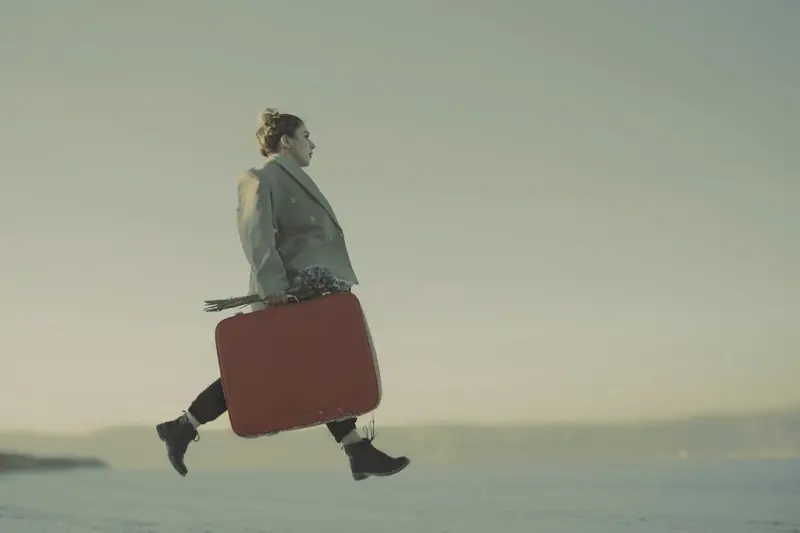
Travel as a Portable Lab: Turning Trips into Real‑World Experiments
When most people think about travel they picture Instagram‑ready vistas, hotel loyalty points, or the inevitable “I need a vacation” mantra. I see it differently. To me, a trip is a controlled experiment—a chance to test hypotheses about productivity, creativity, wellbeing, and even business strategy in a setting that refuses to stay still. It’s the perfect antidote to the echo chamber of the office, and it forces you to answer questions you never thought to ask.
Why Travel Became My Most Effective R&D Lab
In my early career I was obsessed with data. I built dashboards, chased metrics, and tried to prove every decision with a spreadsheet. Yet, the numbers never told the whole story. A client meeting in a bustling market in Marrakech revealed a pattern that no CRM could capture: the subtle shift in tone when a conversation moved from a conference room to a café with street‑side percussion. That moment taught me that the environment itself is a variable—one that can amplify or mute the outcomes I’m trying to measure.
Since then, every journey—whether a three‑hour train ride across the countryside or a two‑week trek through the Andes—has been logged like a lab notebook. I set a hypothesis, gather data, iterate, and then synthesize the findings into actionable insights back at the office. The result? Faster product cycles, sharper creative thinking, and a personal resilience that feels almost scientific.
Designing a Trip Like a Product Sprint
Imagine you’re planning a sprint: you have a goal, a backlog, a timebox, and a definition of “done.” Apply the same framework to a trip.
- Define the hypothesis. “If I limit my luggage to a 30‑liter backpack, my decision fatigue will drop by 20% and I’ll make more focused work decisions.”
- Set a timebox. Choose a clear start and end—maybe a long weekend, a week‑long conference, or a month of remote work from a coastal town.
- Curate the backlog. List experiences you want to test: coworking in a historic library, morning jogs on a riverbank, or daily “no‑screen” evenings.
- Define “done.” It could be a measurable metric (e.g., number of new ideas logged) or a qualitative sign (e.g., feeling more energized after each day).
This structure turns vague wanderlust into a purposeful journey, and it makes it easier to justify the investment to stakeholders who might otherwise see travel as a cost center.
Data Collection on the Road: Journaling, Sensors, and Serendipity
In the lab, we rely on instruments. On the road, my instruments are a combination of analog and digital tools:
- Micro‑journaling. I carry a pocket‑size Moleskine and spend five minutes each evening noting three observations: what worked, what didn’t, and a wild idea that surfaced.
- Ambient sensors. A simple weather app becomes a proxy for mood data; a step counter tracks movement patterns that correlate with creative bursts.
- Voice memos. When inspiration strikes on a train, I record a quick audio note. Later I transcribe them with AI, preserving the raw cadence of the idea.
- Serendipity logs. I give a special section in my journal to “unexpected moments” — a chance conversation with a local, a sudden street performance, a missed connection that forced me onto a new route.
These snippets become the raw data you need to triangulate the impact of your hypothesis. Over time, patterns emerge, and you can start to predict which environments nurture certain types of work.
Turning Transit Time Into Creative Sprints
Most travelers view commute time as wasted. I view it as a built‑in sprint window. The rhythmic hum of a high‑speed train or the gentle sway of a ferry can induce a trance‑like state perfect for deep work. Here’s how I harness it:
- Pre‑load a “focus playlist.” Curated ambient tracks that have proven to drown out ambient chatter without being intrusive.
- Chunk tasks. Break larger work into 20‑minute “micro‑tasks” that fit comfortably into a segment of the journey.
- Leverage the “no‑phone” rule. I disable notifications and rely on a single notebook or a basic markdown editor, which forces me to think linearly.
- Reflect instantly. As soon as the train stops, I spend two minutes noting any insights before the environment changes.
This practice not only maximizes productivity but also reframes travel as a series of intentional work intervals rather than a series of distractions.
Minimalist Packing: The Power of Constraints
Constraints are the hidden engine of creativity. By limiting the physical space you occupy, you also limit the mental clutter you carry. I apply the Unlock Hidden Storage with Modular Hacks for Tight Spaces mindset to my suitcase: each item must serve multiple purposes. A scarf becomes a blanket, a charger doubles as a makeshift tripod, and a single pair of versatile shoes replaces a whole shoe rack.
Beyond the practicality, minimalist packing forces you to make deliberate decisions about what truly matters—both materially and mentally. It creates a feedback loop: the lighter you travel, the more mental bandwidth you have for observation and analysis.
Sustainable Choices: Making Your Footprint Part of the Experiment
In a world where climate concerns dominate, I view sustainable travel not as a checkbox but as a variable in my experiment. I ask questions like: “Does offsetting my carbon emissions improve my sense of responsibility and thus my creative output?” or “Do local, low‑impact accommodations enhance my cultural immersion?”
To answer these, I track a simple metric: the “sustainability score” of each trip, derived from factors such as carbon offset purchases, public transport usage, and waste reduction practices. Early data suggests a positive correlation between higher sustainability scores and increased feelings of purpose, which, in turn, boost creative confidence.
Bringing the Insights Home: The Post‑Trip Integration Ritual
After the plane lands and the suitcase is unpacked, the experiment isn’t over. I run a three‑phase integration ritual:
- Data synthesis. I collate journal entries, sensor logs, and serendipity notes into a single document, highlighting recurring themes.
- Insight extraction. Using a simple “5‑Why” analysis, I drill down to the root cause of each observation—e.g., “Why did I feel more focused after walking on a beach?” → “Because the rhythmic waves acted as a natural white‑noise backdrop.”
- Action planning. I translate each insight into a concrete change back at work—perhaps a new “focus room” with ocean sounds or a weekly “walk‑and‑think” session.
This ritual ensures that the value of travel extends far beyond the trip itself, embedding the lessons into the fabric of daily routines.
Tools and Practices to Keep the Momentum
Keeping the experimental mindset alive requires daily habits. Here are a few that have stuck with me:
- Micro‑Movements & Breathwork. On the road, I practice short movement breaks and breath cycles to reset my nervous system. The Micro‑Movements & Breathwork guide has been a lifesaver during long layovers.
- Digital Mind Gardens. I create a private online board where I pin photos, quotes, and ideas from each trip. It becomes a living repository that fuels future projects.
- Scheduled “reflection sprints.” Every Friday I block an hour to review the week’s travel data, ensuring the insights don’t stagnate.
These practices turn the occasional adventure into a continuous loop of learning, testing, and improvement—exactly what any SaaS leader would champion.
Conclusion: Travel as Ongoing Innovation
Travel isn’t a break from work; it’s a different kind of work—one that forces you to confront variables you can’t control in the office, to test limits you never imagined, and to return with fresh data that can reshape strategies. By treating every journey as a portable lab, you convert time‑away expenses into measurable ROI, you amplify personal growth, and you build a habit of curiosity that fuels both life and business.
If you’ve ever felt that a trip was “just for fun,” try reframing it as an experiment. Pack light, set a hypothesis, collect data, and watch how the world outside your office walls becomes the most powerful catalyst for innovation you’ve ever had.

Jim Pearse, a seasoned freelance writer, brings a wealth of knowledge and passion to the world of home and garden. From the intricacies of landscaping to the nuances of interior design, Jim delves into every aspect of creating comfortable, beautiful, and functional living spaces.
Related Posts
When Travel Becomes a Personal Innovation Lab
Travel isn’t just about sightseeing; it’s an opportunity to turn delays, layovers, and tiny loca... Read More
The Hidden Innovation Engine in Human‑Paced Travel
Travel at a human pace isn’t just relaxing—it’s a powerful catalyst for innovation. Learn how ... Read More
Flavor Trails: How to Turn Every Trip into a Culinary Expedition
Discover how to turn any journey into a deliberate culinary expedition by mapping seasonal ingredien... Read More
Top Posts

Scent as Strategy: Leveraging Personal Fragrance for Mood, Focus, and Wellness
Explore the science behind scent’s impact on the brain, learn how to match fragrances to specific emotional goals, and integrate sustainable, tech‑enabled f...Read More
Building a Living Employment Portfolio: The New Career Canvas
A static résumé is obsolete. This article explores how a living employment portfolio—combining real‑time skill updates, impact snapshots, and future goals...Read More
When the Road Becomes a Canvas: Crafting a Sensory‑Rich Travel Experience
Explore a fresh travel approach that goes beyond sight, using aroma, sound, taste, touch, and subtle movement to create lasting, multi‑dimensional memories....Read More
Beyond the Ladder: Crafting Skill Maps for Modern Careers
Traditional career ladders are losing relevance. Learn how skill maps provide a dynamic, personalized roadmap for employee growth, aligning development with bus...Read More
0 Comments
Post Comment
You will need to Login or Register to comment on this post!