
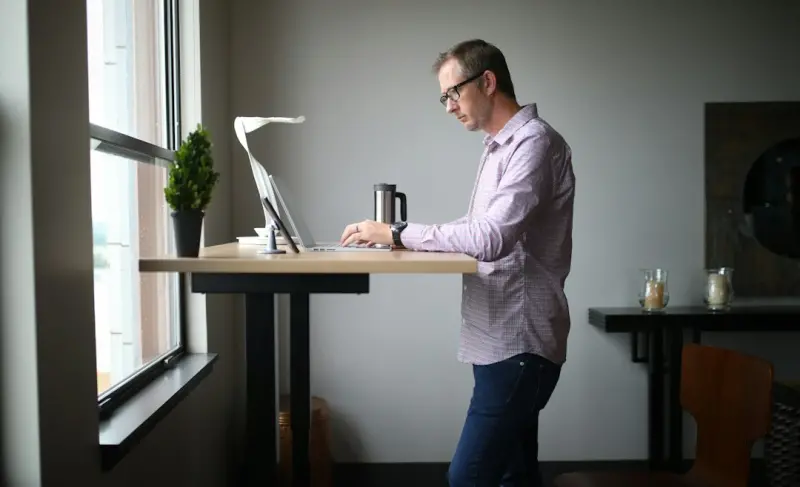
When you spend eight or more hours in front of a screen, the body starts to feel like an over‑cooked noodle—flexible enough to bend, but lacking any real snap. I’ve lived that reality both as a SaaS founder and a reluctant home‑office convert. The breakthrough didn’t come from a new app or a pricey standing desk; it arrived in the form of a handful of intentional, almost imperceptible movements sprinkled throughout the day. I call them Micro‑Movement Moments, and they’ve become my secret weapon for maintaining energy, focus, and a sense of physical agency in a desk‑centric world.
Why the Traditional “Exercise‑Later” Model Fails
Most health advice assumes you have a clean block of time to dedicate to a workout. In reality, the modern workday is fragmented by meetings, deadlines, and an endless stream of notifications. The classic “exercise later” mindset creates a paradox: the more you postpone movement, the more you feel drained, making it even harder to carve out a proper workout session.
Research shows that prolonged sitting reduces muscle activity by up to 90 % compared to standing, and that inactivity can impair insulin sensitivity and lipid metabolism almost as quickly as a high‑fat meal. The problem isn’t just calories burned; it’s the loss of subtle muscular signaling that keeps our nervous system calibrated. When that signaling drops off, we experience the mental fog and lethargy that many of us mistake for “just a busy day.”
The Core Concept: Micro‑Movement Moments
Instead of treating movement as a monolithic event, break it down into micro‑chunks—10‑second bursts that you can embed into any routine. Think of them as the digital equivalent of a “ping” that reminds your body it’s still alive. Over the course of a typical eight‑hour shift, you can accumulate anywhere from 20 to 30 minutes of active time without ever leaving your workstation.
These moments are deliberately short, low‑impact, and require no special equipment. The goal isn’t to replace a cardio session, but to counteract the physiological toll of static postures and keep the mind alert.
Four Categories of Micro‑Movement
- Joint Mobilizers – Simple rotations that lubricate the shoulder, wrist, and hip joints.
- Dynamic Stretches – Light, active stretches that lengthen muscles while maintaining tension.
- Postural Re‑sets – Quick realignments that restore optimal spinal curvature.
- Mini‑Cardio Bursts – Gentle jumps, marching in place, or seated leg lifts that raise the heart rate briefly.
Each category can be triggered by a specific cue—an incoming email, the end of a meeting, or even a reminder on your calendar. By pairing movement with a natural break, you embed the habit without adding friction.
How to Build Your Micro‑Movement Routine
Start with a baseline audit. For the next two days, keep a simple log of when you naturally stand up, stretch, or feel the urge to move. Identify three recurring moments—perhaps the moment you check your inbox, the transition between conference calls, or the lull after a presentation.
Next, assign a micro‑movement to each cue:
- Inbox Check: Perform five shoulder rolls (forward then backward) while you skim new messages.
- Meeting Transition: Stand, hinge at the hips, and do a quick “standing cat‑cow” for ten seconds.
- Post‑Presentation Pause: Sit back down and do three sets of seated leg extensions, holding each for five seconds.
As you become comfortable, layer in additional movements. The beauty of this system is its scalability—if you find yourself with a longer break, simply repeat the sequence or add a mini‑cardio burst like marching in place for 30 seconds.
The Science Behind the Snap
Micro‑movements stimulate muscle spindle fibers, which send rapid feedback to the brain about muscle length and tension. This proprioceptive input refreshes neural pathways that are otherwise dulled by static sitting, enhancing motor coordination and cognitive alertness. A study from the University of Queensland demonstrated that brief, frequent movement breaks improved reaction time and reduced perceived mental fatigue among office workers.
Beyond the neural benefits, these moments encourage micro‑circulatory changes. Even a ten‑second leg lift can promote venous return, decreasing the risk of lower‑leg swelling and deep‑vein thrombosis—common concerns for those who spend long hours seated.
Integrating Micro‑Movements with Your Digital Workflow
As someone who spends a good portion of the day navigating SaaS platforms, I’ve learned to make my software work for my health. For instance, I set up intentional digital disconnection reminders that not only dim the screen but also display a cue to perform a joint mobilizer. The visual cue turns a simple notification into a physical prompt.
Similarly, I’ve linked my task management tool to trigger a productivity powerhouse workflow that automatically inserts a five‑minute “movement block” after every two‑hour sprint. The result? My calendar looks busy, but it also safeguards my physiology.
Micro‑Movement Meets Mental Clarity
While the focus of this post is physical vitality, the mental dividends are undeniable. A quick stretch can reset the reticular activating system, the part of the brain that filters sensory information and keeps us alert. When you break a monotony with a movement cue, you also break the mental loop that fuels stress and burnout.
For those looking for an extra edge, try pairing a micro‑movement with a breathing technique—inhale for three counts, move, exhale for three. This synergistic approach amplifies oxygen flow and encourages a calm yet engaged mental state.
Case Study: From Desk‑Bound to Dynamic
One of my clients, a remote‑first consulting firm, piloted a micro‑movement program across its 120‑person engineering team. Over a six‑week period, they reported a 22 % increase in self‑rated energy levels and a 15 % reduction in reported back pain. The team also logged a modest uptick in project completion speed, which they attributed to sharper focus during coding sprints.
The program’s success hinged on three factors:
- Leadership Modeling: Senior engineers publicly performed the movements during stand‑ups.
- Tool Integration: The company’s internal chat bot sent random movement prompts.
- Feedback Loop: Employees could log how they felt after each micro‑movement, creating data that reinforced the habit.
This example underscores that micro‑movements are not a gimmick; they are a scalable health intervention that aligns with the performance metrics SaaS teams already track.
Designing a Micro‑Movement Friendly Workspace
Even the most thoughtfully arranged desk can become a barrier if it discourages movement. Here are three simple tweaks:
- Adjustable Monitor Arms: Free up desk space for leg extensions and hip hinges.
- Floor Mats with Texture: Encourage standing and light footwork without slipping.
- Visible Reminder Boards: Place a small poster with illustrated micro‑movements at eye level.
When your environment subtly nudges you toward motion, you’re less likely to rely on willpower alone.
Addressing Common Objections
“I don’t have time.” – The premise of micro‑movements is that they require seconds, not minutes. Think of them as the “pulses” of a heart; they’re essential, not optional.
“I’m self‑conscious about moving on camera.” – Start with seated movements that are invisible to the camera, such as ankle rotations or wrist flexes. Over time, you’ll build confidence to incorporate standing moves when you’re alone.
“Will this really make a difference?” – Accumulated evidence from ergonomics and occupational health research confirms that breaking up sedentary time improves both physical markers (e.g., blood glucose) and cognitive performance.
Scaling Micro‑Movements Across Teams
If you’re a manager or leader, consider championing a micro‑movement challenge. Set a weekly target (e.g., 150 total micro‑movement moments per person) and track progress on a shared dashboard. Celebrate milestones with virtual high‑fives or wellness swag. The communal aspect transforms a personal habit into a cultural norm.
Another strategy is to embed movement prompts into existing rituals. For example, during a daily stand‑up, allocate the first 30 seconds to a collective shoulder roll. This not only warms up the body but also signals a transition from passive listening to active engagement.
Future Outlook: The Rise of Bio‑Feedback Integration
Emerging wearables can detect posture drift, heart‑rate variability, and even muscle activation. Imagine a device that vibrates when you’ve been seated for 45 minutes, prompting a micro‑movement. Companies are already prototyping such solutions, which suggests that micro‑movements may soon become an automated facet of workplace health platforms.
Until that technology becomes mainstream, the low‑tech approach—using cues, reminders, and simple movements—remains a powerful, accessible tool for anyone looking to reclaim agency over their body in a screen‑driven environment.
Take the First Step Today
Pick one cue from your day—perhaps the moment you sip your coffee. Pair it with a simple wrist stretch: extend your arm, palm down, and gently pull your fingers back with the other hand for 10 seconds. Repeat this three times. Feel the subtle release? That’s the beginning of a micro‑movement habit.
From there, expand, experiment, and let your body guide you toward the rhythm that feels right. The goal isn’t perfection; it’s momentum. As the small movements accumulate, you’ll notice a steadier flow of energy, sharper focus, and a body that thanks you for the brief, frequent care.

Paul Flynn is a versatile freelance writer equipped with a diverse skillset and a portfolio that reflects his wide-ranging interests and expertise. From crafting compelling website copy and engaging blog posts to delivering in-depth articles and meticulously researched reports, Flynn demonstrates a remarkable ability to adapt his writing style to suit various audiences and purposes.
Related Posts

Embracing the Cold: How Ice Baths and Chill Practices Can Transform Your Health
Cold exposure therapy, from brief cold showers to ice baths, offers a cascade of physiological benef... Read More

Personalized Nutrition: Decoding Your DNA for a Healthier You
Discover how genetic testing can transform your eating habits. Learn to interpret DNA reports, make ... Read More

Cold Water Immersion: Unlocking Natural Resilience and Vitality
Explore the science behind cold water immersion and learn practical steps to safely integrate this a... Read More
Top Posts
The Unseen Power of Intentional Daydreaming for Mental Health
Explore how intentional daydreaming transforms idle mind‑wandering into a therapeutic tool for stress relief, creativity, and emotional resilience....Read More

Micro‑Internships: A Win‑Win for Companies and Emerging Talent
Micro‑internships combine short‑term, project‑focused work with strategic talent development, providing companies immediate value and emerging professiona...Read More

Zero‑Waste Personal Care: Building a Sustainable Routine That Works
Discover practical swaps, DIY recipes, and community tips for building a zero‑waste personal care routine that’s both effective and environmentally friendly...Read More

Zero‑Waste Personal Care: Transform Your Bathroom into a Sustainable Sanctuary
Discover a step‑by‑step blueprint for turning your bathroom into a zero‑waste sanctuary, featuring refillable systems, multi‑purpose products, and habit...Read More
0 Comments
Post Comment
You will need to Login or Register to comment on this post!