
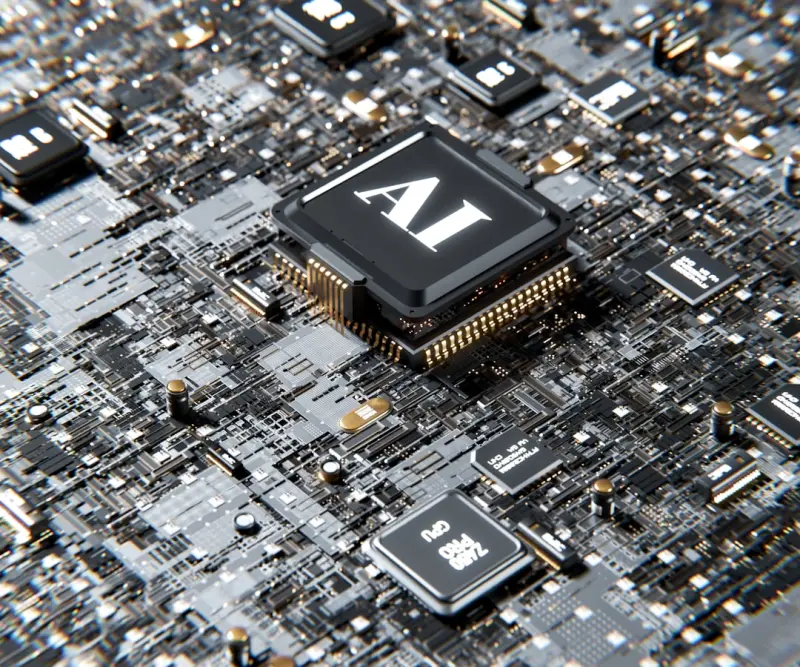
From Automation to Ally: Rethinking AI’s Role in Business Strategy
When I first encountered a chatbot that could draft a contract in under a minute, I felt a thrill that bordered on awe. The promise of speed and efficiency was intoxicating, and for a while, I let that excitement dictate my view of AI: a tool that churns out outputs faster than any human could. But as the novelty faded, a deeper question emerged—what if AI could do more than automate? What if it could partner with us, challenge our assumptions, and co‑create outcomes we hadn’t imagined?
In the bustling corridors of SaaS enterprises, the conversation often stalls at “AI for cost reduction” or “AI for predictive analytics.” Those are valuable, yet they barely scratch the surface of AI’s potential. In this piece, I’ll explore how AI can evolve from a background processor into a strategic ally—one that amplifies human insight, safeguards ethical standards, and fuels a culture of continuous innovation.
AI as a Decision‑Augmentation Engine
Decision‑making in B2B environments is a layered, high‑stakes process. Executives weigh market trends, customer sentiment, regulatory constraints, and internal capacity—all within tight timelines. Traditional analytics give you numbers; they rarely surface the why behind those numbers. That’s where AI can step in as a decision‑augmentation engine, not by replacing the human mind but by extending it.
- Scenario weaving: Generative models can synthesize dozens of plausible market scenarios, each grounded in real‑time data. Rather than choosing a single forecast, leaders can explore a spectrum of outcomes and plan contingencies accordingly.
- Bias detection: By flagging patterns that diverge from historical baselines, AI highlights hidden biases in prior decisions—whether they stem from regional preferences, past vendor relationships, or even subconscious cultural leanings.
- Impact simulation: Before launching a new pricing tier, AI can simulate revenue streams, churn risk, and competitor response, giving teams a sandbox to test ideas without costly real‑world trials.
These capabilities transform the boardroom into a collaborative space where human intuition and algorithmic rigor co‑exist. The result? Faster, more confident choices that are grounded in both data and diverse perspectives.
Embedding Ethical Guardrails Directly Into the Workflow
One of the biggest fears surrounding AI is that it will perpetuate or even exacerbate existing inequities. In practice, ethical considerations often get bolted on at the end of a project, after the model is already trained and deployed. I argue that ethics should be a continuous thread woven through every phase of AI development.
Imagine a workflow where every data ingestion step prompts a brief “ethical impact check.” A simple interface asks: “Could this variable unintentionally disadvantage a demographic group?” If the answer is yes, the system suggests alternative features or weighting strategies. This proactive approach not only mitigates risk but also builds trust among stakeholders who see that ethical stewardship isn’t an afterthought—it’s built into the very fabric of the product.
AI‑Powered Knowledge Management: Turning Data Silos Into Storytelling
Enterprise knowledge is often trapped in PDFs, email threads, and disjointed intranet pages. Conventional search tools return lists of documents, leaving users to piece together context themselves. AI can act as a narrative engine, converting fragmented data into coherent stories.
For example, a sales engineer preparing for a client demo can ask an AI assistant: “Summarize the last three contract negotiations with this prospect, highlighting objections and successful rebuttals.” The AI pulls relevant excerpts, identifies patterns, and crafts a concise briefing that reads like a seasoned colleague’s notes. This not only saves time but also democratizes expertise, allowing junior team members to operate with the confidence of veterans.
Human‑Centric Design: Co‑Creating With AI
Design thinking has long championed empathy and iteration. When AI joins the design loop, it becomes a collaborator that can prototype, test, and refine ideas at unprecedented speed. Consider a product team brainstorming new UI flows for a dashboard. An AI model can instantly generate multiple wireframe variations based on user research data, then predict which version will achieve the highest engagement scores.
This partnership reshapes the creative process:
- Ideation acceleration: AI surfaces a breadth of concepts that humans might never conceive unaided.
- Rapid validation: Predictive metrics give immediate feedback on feasibility and impact.
- Iterative refinement: Teams can tweak parameters, watch the AI adapt in real time, and converge on an optimal solution.
Rather than viewing AI as a replacement for designers, I see it as an amplifier of human imagination—a catalyst that pushes the envelope while keeping the user at the center.
Fostering a Culture of collaborative learning networks
For AI to be a true strategic ally, organizations need a learning culture that embraces experimentation and shared knowledge. Traditional training modules feel static, but when you blend AI‑driven insights with peer‑learning pods, you create a living ecosystem where insights spread organically.
Imagine a cross‑functional pod where a data scientist, a product manager, and a customer success lead meet weekly. The AI curates recent industry case studies, highlights internal experiment results, and surfaces relevant metrics. The pod then discusses implications, decides on next steps, and documents learnings. Over time, this rhythm builds a repository of actionable intelligence that continuously informs product strategy.
Resilience in the Age of AI
Adopting AI at scale can be unsettling. Teams may fear displacement, while leaders worry about ROI volatility. Building resilience practices for tech teams helps navigate these emotional currents. Simple habits—daily reflection, transparent communication about AI milestones, and celebrating incremental wins—create psychological safety. When people feel secure, they’re more willing to experiment, share failures, and iterate quickly.
Resilience isn’t just a personal asset; it’s a strategic one. Organizations that nurture it can pivot faster, absorb setbacks, and maintain momentum during AI‑driven transformation.
Designing AI‑enhanced workspaces for Hybrid Teams
Hybrid work has redefined the physical office. AI can turn each workspace—whether a home office, a coworking desk, or a corporate conference room—into an adaptive productivity hub. Sensors coupled with AI models analyze ambient light, noise levels, and user focus patterns, then subtly adjust environmental variables (like lighting temperature or background sound) to optimize concentration.
Beyond environmental tweaks, AI can surface contextual data during meetings: real‑time agenda progress, participant sentiment analysis, and action‑item extraction. This turns ordinary meetings into data‑rich, outcome‑driven sessions, reducing follow‑up emails and keeping teams aligned.
Measuring Success: New KPIs for an AI‑Centric Organization
If AI is to be treated as a strategic partner, success metrics must evolve. Traditional efficiency KPIs (e.g., cost per transaction) remain relevant, but we also need to track:
- Decision velocity: How much faster are teams reaching consensus when AI augments the process?
- Innovation throughput: Number of new ideas generated, prototyped, and validated per quarter thanks to AI assistance.
- Ethical compliance score: Frequency of bias alerts caught before deployment.
- Learning diffusion index: Rate at which insights from AI‑enhanced pods spread across departments.
These KPIs illuminate the broader impact of AI—its ability to accelerate learning, safeguard values, and unleash creative potential.
Conclusion: Embracing the Partnership
AI is no longer a distant promise; it sits on our desks, in our Slack channels, and whispering suggestions in our product roadmaps. The real opportunity lies not in replacing human work, but in redefining it. By positioning AI as a strategic partner—one that augments decisions, embeds ethics, amplifies creativity, and nurtures resilience—we can steer our organizations toward a future where technology and humanity co‑evolve.
So the next time you hear the buzzword “automation,” pause. Ask yourself: “How can this AI become a teammate, a challenger, a catalyst for growth?” The answer will shape not just your product, but the very culture of your company.

When it comes to the world of blogging and writing, Rose DesRochers is a name that stands out. Her passion for creating quality content and connecting with her audience has made her a trusted voice in the industry. Aside from her skills as a writer and blogger, Rose is also known for her compassionate nature.
Related Posts
AI as the Unseen Mentor: Turning Machines into Talent Spotters
AI can now act as an invisible mentor, using data to spot hidden talent and match employees with men... Read More

When AI Meets Earth: Unexpected Partnerships Shaping Tomorrow
Artificial intelligence is moving beyond buzzwords, partnering with climate scientists, creators, an... Read More

AI as the Invisible Regulator for Ethical Enterprise
AI can become an invisible regulator, embedding ethical guardrails directly into workflows. This pos... Read More
Top Posts
Digital Minimalism for Mental Clarity
Digital minimalism helps you reclaim mental clarity by intentionally pruning tech distractions, setting boundaries, and fostering offline rituals that reduce an...Read More
AI’s Quiet Revolution: Turning Everyday Friction into Creative Fuel
Explore the subtle power of AI as a micro‑assistant that smooths daily friction, fuels creativity, and aligns with personal values, offering practical steps t...Read More

Why Skill Portfolios Are Outpacing Traditional Resumes in Today’s Talent Market
Portfolios now eclipse traditional resumes, offering real evidence of impact. Learn how to build, evaluate, and future‑proof skill portfolios for a faster, mo...Read More

Cultivating Mental Hygiene: A Daily Routine for Clearer Thinking
Discover a practical mental hygiene routine—quick sweeps, brain dumps, and micro‑pauses—that helps clear mental clutter, enhance focus, and foster emotion...Read More
0 Comments
Post Comment
You will need to Login or Register to comment on this post!