
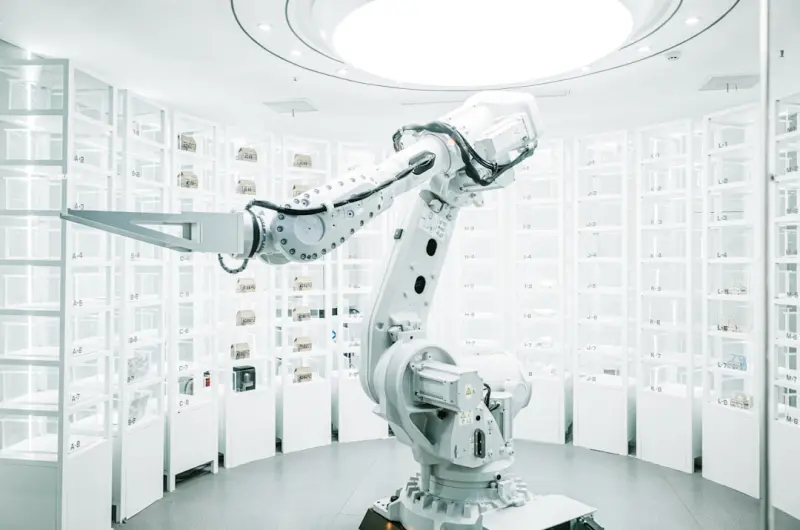
When the buzz around artificial intelligence settles into the background of our daily workflow, the real magic begins: AI stepping out of the “automation” role and into the position of a personal knowledge vault. Imagine a colleague who never sleeps, never forgets, and can surface the exact insight you need—exactly when you need it. This isn’t a futuristic fantasy; it’s a practical reality that’s already reshaping how high‑performing professionals think, decide, and create.
From Data Dump to Insight Engine
Most organizations treat AI as a glorified spreadsheet—feeding it rows of data and hoping it spits out a tidy report. The truth is far richer. AI can ingest the chaotic stream of emails, meeting notes, Slack threads, and research articles that flood our inboxes and transform that noise into a searchable, contextual knowledge graph. In this model, AI becomes your personal librarian, not the one who merely shelves books, but the one who knows which chapter will solve your current problem.
To make this work, the first step is structured capture. Every time you finish a call, jot down three bullet points in a dedicated note‑taking app that syncs with an AI assistant. Over time, the assistant learns the taxonomy of your work—project names, client nicknames, recurring challenges—and begins to tag and interlink those points automatically. The result? A living map of “what we’ve learned” that you can query with natural language: “What did we decide about the pricing model last quarter?” or “Show me all customer feedback on feature X from the past six months.”
The Memory Extension for Decision Fatigue
Decision fatigue is the silent killer of productivity. By the end of a long day, even trivial choices feel exhausting, and the quality of strategic decisions can slip. AI can act as a memory extension that surfaces precedent and patterns before you’re forced to make a call. Consider the following workflow:
- Pre‑meeting prep: Your AI scans previous meeting minutes, extracts relevant metrics, and generates a concise briefing.
- During the meeting: A real‑time transcription service tags action items, and the AI suggests alternatives based on past outcomes.
- Post‑meeting follow‑up: The AI auto‑populates a task list, assigns owners, and sets reminders aligned with your personal productivity rhythm.
This loop reduces the cognitive load of remembering what was said, what was decided, and what still needs attention. Over weeks, the AI builds a “decision ledger” that highlights which strategies have consistently yielded success and which have flopped, giving you a data‑driven compass for future choices.
AI‑Powered Microlearning: The Bite‑Size Knowledge Engine
High‑performing professionals thrive on continuous learning, but the traditional “course‑completion” model is at odds with the fragmented nature of modern work. AI can deliver microlearning tailored to the exact gaps that appear in your day‑to‑day tasks. For example, if you’re drafting a proposal and the AI detects a lack of recent market data, it can surface a 2‑minute briefing with the latest statistics, competitor moves, and relevant case studies—all sourced from your internal repository and trusted external feeds.
This approach transforms learning from a scheduled event into an on‑demand experience. The AI observes your workflow, identifies knowledge gaps in real time, and serves up precisely the information you need without pulling you away from the task at hand. The result is a seamless blend of doing and learning, where each action becomes an opportunity to grow.
Personal Knowledge Vault vs. Traditional Knowledge Management
Traditional knowledge management (KM) systems often feel like dusty filing cabinets: they rely on users to manually tag, store, and retrieve content. An AI‑augmented vault flips that paradigm. Instead of forcing you to remember where you saved something, the AI remembers for you. It also adds a layer of semantic understanding—recognizing that “Q3 revenue dip” and “seasonal sales slowdown” refer to the same phenomenon, even if they’re phrased differently.
Moreover, AI can surface latent connections. Suppose you’re working on a new product feature and the AI notices a similarity to a past project that faced a regulatory hurdle. It will alert you to that history, prompting pre‑emptive risk assessment. These serendipitous insights are the hidden value that traditional KM tools rarely deliver.
Building Trust with Your AI Companion
For an AI assistant to become a trusted extension of your mind, transparency is essential. The assistant should always surface the source of its information—whether it’s a specific document, an email thread, or an external dataset. When you see the provenance, you can quickly assess credibility and make informed decisions.
Another trust‑builder is feedback loops. If the AI surfaces an irrelevant snippet, you can mark it as “off‑topic,” and the model will adjust its future suggestions. Over time, this iterative refinement creates a personalized AI that aligns closely with your preferences and work style.
Practical Steps to Deploy Your AI Knowledge Vault
Ready to turn the concept into reality? Here’s a roadmap you can start today:
- Choose an integration platform: Look for tools that connect your email, calendar, note‑taking app, and document storage via APIs. Solutions like Microsoft Power Automate, Zapier, or native AI assistants in enterprise suites are good starting points.
- Define capture moments: Identify the touchpoints where you’ll feed information into the system—post‑meeting notes, project updates, client calls.
- Set up semantic tagging: Leverage AI services (e.g., Azure Cognitive Services, Google Cloud Natural Language) to auto‑tag content with entities, topics, and sentiment.
- Build a query interface: Deploy a simple chatbot or voice interface that lets you ask natural‑language questions and receive concise answers.
- Establish feedback mechanisms: Enable easy “thumbs up/down” or correction options so the AI learns from your preferences.
Once these foundations are in place, the AI vault will begin to accumulate value, turning every captured note into a node in a larger, intelligent network.
Case Study: Turning Meeting Chaos into Strategic Clarity
Consider a product team that holds weekly sprint retrospectives, each generating a dense block of feedback. Previously, the team archived the minutes in a shared folder, but rarely revisited them. After implementing an AI knowledge vault, the system automatically extracted recurring pain points—like “delay in design handoff” or “unclear acceptance criteria”—and visualized them on a heat map. The team could now see which issues persisted month over month and prioritize process improvements with data‑backed confidence.
The AI also linked these pain points to relevant documentation (design guidelines, definition‑of‑done templates) and suggested actionable steps. Within a quarter, the team reported a 20% reduction in sprint cycle time, directly attributable to the clarity provided by the AI‑driven insights.
Balancing Automation with Human Insight
It’s tempting to let the AI do all the heavy lifting, but the most powerful outcomes arise when AI and human intuition collaborate. AI excels at surfacing patterns, recalling facts, and handling repetitive tasks. Humans, on the other hand, bring contextual judgment, creativity, and empathy.
Use AI as the first draft of analysis. Let it gather data, generate summaries, and propose options. Then, apply your expertise to critique, refine, and inject strategic nuance. This partnership amplifies productivity while preserving the uniquely human elements that drive innovation.
Future‑Proofing Your Knowledge Strategy
As AI models become more capable of reasoning and even generating original content, the line between “knowledge storage” and “knowledge creation” will blur. Early adopters who embed AI into their personal knowledge workflows will find themselves with a competitive edge: they’ll not only retrieve information faster but also synthesize new ideas at a pace that outstrips competitors.
To stay ahead, continuously audit your AI’s performance. Ask questions like: “Is the AI surface‑ing the most relevant insights?” “Are there gaps in the data it can’t access?” “How can we improve the feedback loop?” By treating your AI vault as a living system—one that needs nurturing, updates, and occasional pruning—you’ll keep it aligned with evolving business goals.
Closing Thoughts
Artificial intelligence is no longer just a tool for automating repetitive tasks; it’s evolving into a personal knowledge vault that extends our cognitive bandwidth. By capturing information in real time, turning it into a searchable graph, and surfacing insights exactly when we need them, AI empowers professionals to cut through decision fatigue, learn on the fly, and make smarter, faster choices.
If you’re curious about how AI can serve as an ethical compass or a collaborative partner in product ideation, you might find these posts useful: When AI Becomes Your Ethical Compass and AI as a Collaborative Partner. While those pieces explore different facets of AI’s role, the knowledge vault concept builds on them, offering a practical, day‑to‑day framework for turning AI into your most trusted teammate.

Sanji Patel has dedicated 25 years to the SEO industry. As an expert SEO consultant for news publishers, he emphasizes providing both technical and editorial SEO services to news publishers worldwide. He frequently speaks at conferences and events globally and offers annual guest lectures at local universities.
Related Posts

AI‑Guided Ethical Design: Building Trust from the Ground Up
Explore how AI-driven scenario modeling, bias detection, and value alignment can make ethical consid... Read More

AI‑Powered Personal Knowledge Graphs: Turning Data Chaos into Your Own Intellectual GPS
Discover how to build an AI‑powered personal knowledge graph that stitches together emails, chats,... Read More
AI as the Silent Curator: Unlocking Corporate Memory for Smarter Decisions
AI can transform static knowledge archives into an active, context‑aware assistant, helping teams ... Read More
Top Posts

Unplug to Recharge: A Practical Digital Detox Guide
Digital overload silently erodes mental and physical health. This guide offers step‑by‑step strategies, from micro‑boundaries to creating quiet corners, t...Read More

Redefining Employment: Why Outdoor Workspaces Are the New Standard
Discover how shifting from cubicles to garden desks transforms work culture, enhances mental health, and offers a competitive edge for employers embracing outdo...Read More

Finding Mental Balance by Decluttering Your Digital Life
Learn to tame digital overload, create offline sanctuaries, and reclaim mental clarity with a step‑by‑step guide to digital decluttering....Read More

Quiet Corners: Simple Soundproofing Hacks for Every Room
A practical guide to low‑cost soundproofing techniques that transform any room into a quieter, more focused sanctuary, complete with DIY tips, smart solutions...Read More
0 Comments
Post Comment
You will need to Login or Register to comment on this post!