
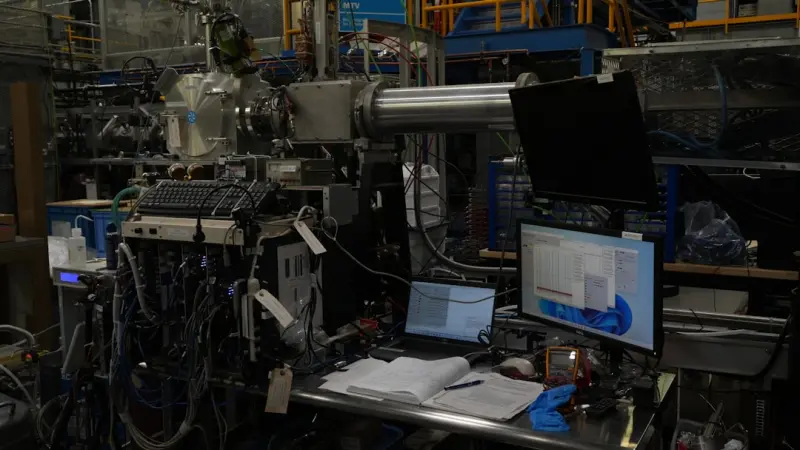
When I first heard the term “AI lab” I imagined a sterile hallway filled with humming servers and a handful of data scientists in white coats. In practice, an AI‑powered experimentation lab is far more lively—a sandbox where product managers, marketers, engineers, and even frontline staff can toss ideas into an algorithmic crucible and watch the sparks fly. It’s not about replacing human intuition; it’s about amplifying it, turning the endless tide of data noise into a steady stream of actionable insight.
Why Traditional Innovation Pipelines Stumble
Most companies still rely on a linear, stage‑gate process: idea generation, feasibility study, prototype, test, launch. The model assumes that each phase can be neatly separated and that decision‑makers have a crystal‑clear view of market demand. In reality, the market shifts daily, customer expectations mutate in real time, and the internal feedback loop is often clogged with silos.
Two symptoms are especially telling:
- Analysis paralysis. Teams drown in dashboards, spreadsheets, and endless A/B test results, never reaching a confident verdict.
- Opportunity decay. By the time an idea clears the gate, the window of relevance may have closed, leaving the organization chasing a phantom.
Enter AI experimentation labs: a kinetic environment where hypotheses are tested, refined, or discarded at the speed of data.
AI as a Rapid‑Prototyping Engine
At its core, an AI lab is a set of reusable components—data pipelines, model libraries, and orchestration tools—that enable continuous, low‑cost experimentation. Think of it as a kitchen stocked with pre‑measured ingredients, where chefs can whip up a new dish in minutes rather than hours.
Key capabilities include:
- Automated feature engineering. The system surfaces hidden patterns in raw data, surfacing variables you never considered.
- Model‑as‑a‑service. Instead of building a model from scratch, you pull a pre‑trained algorithm, fine‑tune it with a few domain‑specific data points, and deploy instantly.
- Real‑time feedback loops. Models ingest live user interactions, allowing you to see the impact of a change within seconds rather than weeks.
- Scalable experimentation. Run dozens of parallel tests across segments, geographies, or product lines without overloading your engineering team.
Designing Your AI Lab: A Blueprint
Building an AI experimentation lab isn’t a plug‑and‑play activity. It requires a deliberate blend of technology, culture, and governance. Below is a practical, step‑by‑step guide.
1. Define the “Experimentation Charter”
Start with a clear, concise mission statement. For example: “Accelerate customer‑centric product innovation by reducing the hypothesis‑to‑validation cycle from weeks to days.” This charter will guide resource allocation and success metrics.
2. Assemble a Cross‑Functional Core Team
Include at least one champion from each of the following domains:
- Product Management – to own the problem space.
- Data Science – to craft and tune models.
- Engineering – to build the data pipelines and integration points.
- Design/User Experience – to ensure the output aligns with real human needs.
- Legal/Compliance – to embed ethical guardrails from day one.
3. Build the Technical Stack
The stack should be modular, allowing you to swap components as technology evolves. A typical architecture looks like this:
- Data Lake: Central repository for raw, semi‑structured, and structured data.
- Feature Store: Curated, versioned features ready for model consumption.
- Model Registry: Catalog of pre‑trained and fine‑tuned models with metadata.
- Orchestration Layer: Workflow engine (e.g., Airflow, Prefect) that schedules experiments.
- Monitoring Dashboard: Real‑time visualizations of experiment performance, drift detection, and compliance alerts.
Many enterprises already have portions of this stack in place. The lab’s job is to weave them together into a seamless, reusable workflow.
4. Embed Ethical Guardrails
AI labs can inadvertently amplify bias if left unchecked. Adopt a “human‑in‑the‑loop” policy where every model output is reviewed for fairness, transparency, and privacy compliance before deployment. This approach mirrors the guidance found in AI's impact on knowledge networks, where oversight is baked into the data lifecycle.
5. Establish a “Rapid‑Fail” Culture
Encourage teams to treat every experiment as a learning opportunity. Celebrate insights from failures just as loudly as successes. When you normalize rapid iteration, you dissolve the fear of “wasting” resources.
Real‑World Use Cases That Illustrate the Power
Below are three scenarios where AI labs have produced tangible, measurable outcomes.
Customer Journey Optimization
A retail SaaS provider wanted to personalize onboarding emails based on a user’s first‑week activity. By feeding interaction logs into an AI lab, the team built a lightweight classification model that segmented users into “explorer,” “power user,” and “stalled” personas. Within 48 hours, they launched three tailored email streams, resulting in a 27 % uplift in activation rates and a 12 % reduction in churn during the first month.
Dynamic Pricing for B2B Services
One enterprise software vendor struggled with a static discount matrix that failed to account for contract length, usage intensity, and macro‑economic signals. The AI lab assembled a time‑series forecasting model that adjusted pricing tiers in near‑real time. The pilot generated a 4.8 % increase in average contract value without alienating existing customers, thanks to transparent, data‑backed price rationales.
Feature Prioritization via Sentiment Mining
A product team was overwhelmed with feature requests from multiple channels—support tickets, social media, and internal sales notes. Using natural language processing (NLP) pipelines within the lab, they extracted sentiment scores and clustered requests by thematic relevance. The resulting heatmap guided the roadmap, focusing development effort on the top three high‑impact features, shaving six weeks off the release cycle.
Integrating the Lab with Existing Decision Frameworks
It’s tempting to let the AI lab become a siloed “black box.” The most sustainable approach is to weave its outputs into the organization’s existing governance structures. For example, align the lab’s experiment review board with the product steering committee, ensuring that every insight receives the same scrutiny and endorsement as traditional business cases.
In practice, this means:
- Presenting experiment results in the same KPI language used by senior leadership.
- Documenting hypothesis, methodology, and outcomes in a shared repository for auditability.
- Linking successful experiments directly to budget allocation processes.
Common Pitfalls and How to Avoid Them
Even a well‑designed AI lab can stumble. Here are the most frequent traps and quick fixes.
Over‑Engineering the Stack
Resist the urge to build a monolithic platform from day one. Start with a Minimum Viable Lab (MVL) that can run a single experiment end‑to‑end. Expand incrementally based on proven need.
Data Silos Persisting
If data remains fragmented across business units, the lab will inherit the same blind spots. Prioritize a unified data governance policy and invest in data catalog tools that make discovery effortless.
Neglecting Change Management
Technical brilliance won’t translate into impact without user adoption. Conduct hands‑on workshops, showcase quick wins, and create “lab champions” in each department who evangelize the process.
Ethical Blind Spots
Unchecked models can perpetuate bias. Follow the safeguards outlined in AI democratization for data intelligence and implement bias detection dashboards that flag anomalous outcomes before they go live.
Getting Started: A Six‑Week Action Plan
Ready to launch your AI experimentation lab? Follow this accelerated timeline.
- Week 1–2: Charter & Team Formation – Draft the charter, secure executive sponsorship, and assemble the cross‑functional core.
- Week 3: Stack Minimal Viable Lab – Deploy a cloud‑based data lake (e.g., Snowflake), a simple feature store (e.g., Feast), and an orchestration tool (e.g., Prefect).
- Week 4: First Pilot – Identify a low‑risk hypothesis (e.g., email subject line optimization), run the experiment, and capture results.
- Week 5: Review & Iterate – Hold a retrospective with stakeholders, refine the workflow, and document lessons learned.
- Week 6: Scale & Institutionalize – Formalize the governance model, integrate the lab’s dashboard into senior leadership reporting, and schedule the next wave of experiments.
By the end of six weeks you’ll have a living, breathing AI lab that’s already delivering value and positioned for continual growth.
Conclusion: From Idea to Insight at Lightning Speed
In an era where market dynamics shift faster than a sprint cycle, the ability to test, learn, and pivot is a competitive moat. AI experimentation labs provide the infrastructure—and the cultural catalyst—to make that ability a reality. They turn data from a static archive into a kinetic engine of hypothesis‑driven discovery. The result? Faster product cycles, reduced risk, and a workforce that feels empowered to innovate rather than waiting for permission.
So, if you’ve been wrestling with stagnant roadmaps or endless analysis paralysis, consider swapping the traditional gate‑keeping model for an AI‑powered lab. Your next breakthrough might just be the experiment you run tomorrow.

Brad Hays is a freelance writer known for his versatile skill set and ability to craft compelling content across a wide range of industries.
Related Posts

When AI Becomes the Quiet Coach in Your Workday
Discover how a quietly integrated AI can become your day‑to‑day decision ally—offering gentle ... Read More

When Machines Learn to Green: AI’s Role in Corporate Sustainability
AI is becoming a silent partner in corporate sustainability, turning raw emissions data into clear i... Read More

AI as a Silent Mentor: Accelerating Professional Growth in the Enterprise
Explore the concept of AI as a silent mentor that provides personalized, just‑in‑time coaching, ... Read More
Top Posts

Why Outdoor Workspaces Are the Future of Employment
Outdoor workspaces aren't a fad—they're a productivity revolution. Discover how a garden desk can transform your career, health, and home life, and why employ...Read More

How My Garden Desk Became the Heart of My Home & Garden
I turned my backyard into a vibrant workspace, merging nature with productivity. Learn how a garden desk can revitalize your home, nurture creativity, and enhan...Read More
Designing a Purpose‑Driven Employee Journey: From First Day to Forever Alumni
A fresh framework turns the employee lifecycle into a purpose‑driven narrative, covering discovery, onboarding, growth, and alumni stages to boost loyalty and...Read More

Why Transparent Employment Contracts Are the Future of Work
A deep dive into why static employment contracts are obsolete and how living, transparent agreements can transform trust, retention, and agility for both employ...Read More
0 Comments
Post Comment
You will need to Login or Register to comment on this post!