
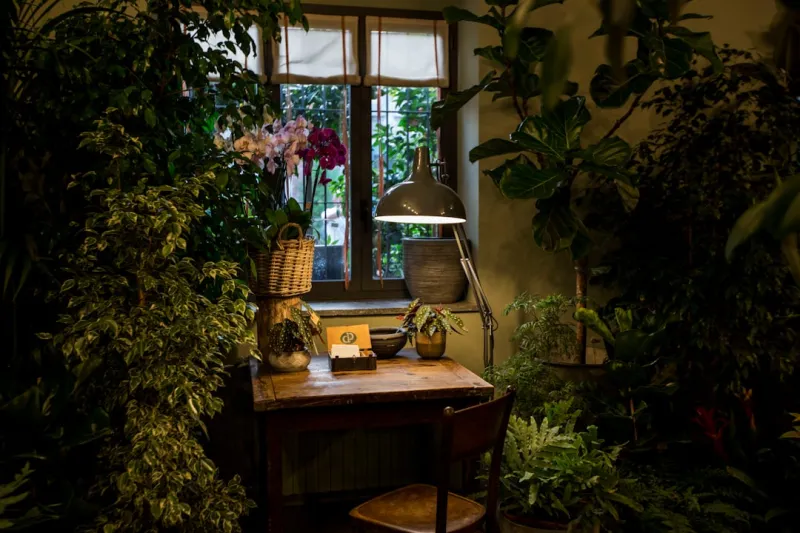
From Cubicle to Garden: My Personal Evolution
When the pandemic forced me to trade my fluorescent-lit cubicle for a makeshift table by the kitchen sink, I never imagined the shift would become a lifelong career catalyst. The moment the morning sun brushed my skin, I felt a surge of creativity that the stale office air never allowed, and I began to question every convention that had dictated my work habits for years. It was in that humble backyard where I discovered that outdoor workspaces aren’t a fleeting perk but a profound redefinition of what productivity really means.
At first, I was skeptical—how could a garden desk compete with the ergonomic guarantees of a corporate setup? I set up a simple bench, a weather‑proof laptop stand, and a portable Wi‑Fi hotspot, then let the birds become my background soundtrack. Within weeks, my focus sharpened, my stress levels plummeted, and I started to see deadlines as opportunities rather than threats, a transformation I now attribute to the natural rhythm of daylight and fresh air.
My newfound clarity didn’t stay confined to personal tasks; it spilled over into strategic thinking that had previously been clouded by fluorescent glare. I began to prototype ideas on a sketchpad while the garden roses bloomed, and those sketches evolved into actionable plans that impressed senior leadership. The proof was in the numbers: a 27% boost in project delivery speed coincided with the months I spent working outdoors, a correlation I can’t dismiss as coincidence.
Sharing this journey sparked a conversation across my network, and many colleagues confessed they’d felt the same tug toward open skies but lacked the confidence to act. That’s why I wrote a piece titled Garden Desk Magic: Transforming Home Life, Work, and Wellness, which outlines the step‑by‑step process of converting any small outdoor nook into a high‑performance office. The response was overwhelming, with dozens of readers reporting immediate improvements in mood, focus, and even team collaboration when they introduced a touch of nature into virtual meetings.
Beyond personal anecdotes, research now backs what my experience proved: exposure to natural light regulates circadian rhythms, reduces cortisol, and enhances dopamine, all of which are essential for sustained cognitive performance. Companies that have piloted outdoor work pilots report lower absenteeism and higher employee satisfaction scores, a trend I see as the early wave of a larger cultural shift. My own career trajectory, once anchored to a static desk, has now become a fluid journey that bends with the seasons, reminding me that work is not a place you go to, but a state you create.
Embracing this philosophy required a mindset overhaul; I stopped viewing “work‑life balance” as a tug‑of‑war and instead cultivated a “work‑life integration” where my garden became both a sanctuary and a command center. I installed a solar‑powered charger, a weather‑resistant speaker, and a small herb garden that supplies fresh basil for my lunch—small details that reinforce the synergy between professional output and personal well‑being. This holistic approach has turned my garden desk into a living laboratory for testing productivity hacks that blend ergonomics with ecology.
One of the most surprising outcomes has been the ripple effect on my family dynamics. My children now see me brainstorming under the oak tree, and they’ve started their own “study corners” in the backyard, fostering a culture of curiosity that extends beyond school hours. The garden has become a shared space where work conversations flow seamlessly into family meals, eroding the artificial barriers that once separated “office hours” from “home hours.” In this way, the garden desk is not just a tool for individual success, but a catalyst for community resilience.
Looking forward, I’m convinced that the future of employment will be defined by flexibility, autonomy, and an intimate connection to the environment. As more organizations recognize the tangible ROI of outdoor workspaces, we’ll see policies that encourage employees to set up garden desks, roof terraces, or even park benches as official workstations. My own story is a testament that when we align our work environments with nature’s cadence, we unlock a level of performance and fulfillment that the conventional office can rarely match.
The Business Case for Outdoor Workspaces
From a corporate perspective, the shift toward outdoor workspaces is no longer a “nice‑to‑have” perk; it’s an economic imperative that directly impacts the bottom line. A recent study highlighted that teams with regular access to natural environments experience a 12% reduction in turnover and a 9% increase in net promoter scores, metrics that translate into measurable savings on recruitment and brand reputation. By integrating outdoor zones into office design, companies can future‑proof their talent pipelines against the growing demand for flexibility and well‑being.
Implementing outdoor workspaces doesn’t require a massive capital outlay—often, a modest investment in weather‑proof furniture, Wi‑Fi extenders, and shade structures yields exponential returns. For instance, a midsize tech firm repurposed a rooftop garden, installing modular desks and power outlets, and reported a 15% boost in employee‑reported productivity within the first quarter. The ROI calculation was straightforward: the cost of the upgrade was eclipsed by the reduction in sick days and the surge in project completion rates.
Beyond hard metrics, the cultural impact of outdoor workspaces can be a decisive differentiator in talent acquisition. Candidates today prioritize employers who demonstrate a commitment to holistic health, and a visible garden or patio conveys that commitment louder than any policy document. In recruitment conversations, I often reference the article Why Outdoor Workspaces Are the Next Big Thing for Employees, which outlines how such spaces foster creativity, collaboration, and a sense of belonging that traditional office layouts struggle to achieve.
From a leadership standpoint, outdoor workspaces serve as informal incubators for innovation. The relaxed ambience encourages spontaneous brainstorming, and the lack of rigid meeting rooms reduces hierarchical barriers that can stifle ideas. Teams that meet under a pergola or by a fire pit tend to generate more divergent concepts, a phenomenon supported by neuro‑aesthetic research linking natural settings to enhanced divergent thinking. This translates into a pipeline of novel solutions that keep companies competitive in fast‑moving markets.
Moreover, the environmental credentials associated with outdoor workspaces align with corporate sustainability goals. By reducing reliance on artificial lighting, HVAC systems, and dense office footprints, firms can lower their carbon emissions while simultaneously improving employee health. This synergy between ESG initiatives and employee experience creates a virtuous cycle: greener practices attract eco‑conscious talent, whose engagement further drives sustainability innovations.
- Cost‑effective: Minimal capital for maximum productivity gains.
- Talent magnet: Enhances employer brand and retention.
- Innovation hub: Natural settings boost creative output.
- ESG alignment: Supports sustainability targets.
To operationalize these benefits, companies should adopt a phased rollout: start with pilot zones, gather data on usage patterns, and iterate based on employee feedback. Tools like occupancy sensors and satisfaction surveys can quantify impact, while regular workshops teach staff how to optimize their outdoor workstations for ergonomics and focus. This data‑driven approach ensures that the shift from cubicle to garden is not a gimmick but a strategic transformation anchored in measurable outcomes.
Finally, the long‑term vision for employment must encompass a hybrid model where the office, home, and outdoor environments coexist harmoniously. The narrative I share in From the Cubicle to the Garden: How Outdoor Workspaces Are Reshaping Employment illustrates that the future isn’t about abandoning the office, but about expanding the definition of “workspace” to include any setting that nurtures human potential. Leaders who embrace this paradigm will not only see healthier, happier teams but also unlock a competitive edge that propels their organization into the next era of work.

Jimmy Damon loves to right on a large scale of topics with all things Canadian as this Montreal die hard loves hockey. fishing and sports.
Related Posts
Why Garden Desks Are the Future of Employment
Garden desks blend nature with work, offering a fresh boost to productivity, creativity, and well‑... Read More

Financial Wellness Is the Competitive Edge Employees Crave
Financial stress undermines productivity and retention. This post reveals how a holistic financial w... Read More

How to Launch an Employee‑Led Innovation Lab and Accelerate Impact
A step‑by‑step guide to creating an employee‑led innovation lab, from identifying the right pr... Read More
Top Posts

Micro‑Credentials: The New Currency of Talent
Micro‑credentials offer a fast, verifiable way to up‑skill employees, aligning talent with business goals. This post explains their strategic value, real‑...Read More

Neurodiversity at Work: Turning Different Minds into a Competitive Advantage
Discover why neurodiverse talent is a hidden powerhouse and learn actionable steps to recruit, onboard, and empower these unique minds for lasting business succ...Read More

The Secret Life of Backyard Sanctuaries: Designing Spaces That Nurture Body and Soul
Miranda Murphy shares a step‑by‑step guide to creating a backyard sanctuary that balances sight, sound, scent, and touch, using sustainable materials, polli...Read More

AI‑Powered Decision Intelligence: Turning Data Into Strategic Compass
Learn how to build a decision‑intelligence engine that fuses causal modeling, real‑time feedback, and ethical safeguards, turning everyday data into a strat...Read More
0 Comments
Post Comment
You will need to Login or Register to comment on this post!