
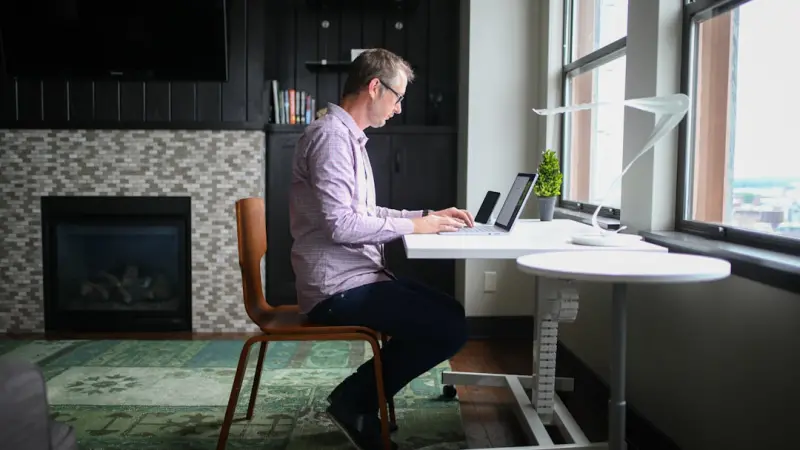
Why Desk Movement Bursts Are the New Wellness Frontier
When I first walked into a glass‑walled conference room and saw a row of colleagues hunched over laptops, I felt a familiar knot in my lower back. It’s a scene that has become the default backdrop of modern professional life—a landscape dotted with screens, ergonomic chairs, and the occasional “quick stretch” that never really stretches. I realized that the silent epidemic of sedentary work isn’t just a posture problem; it’s a systemic health issue that quietly erodes energy, cognition, and even emotional resilience.
Enter the concept of desk movement bursts—short, intentional bouts of activity that can be woven into any workday without sacrificing productivity. Think of them as the “pep talks” your body needs to stay alert, the “reset button” for your nervous system, and the secret ingredient that turns a mundane 9‑to‑5 into a dynamic, health‑forward experience.
The Science Behind Short‑Duration Activity
Research in exercise physiology has long shown that even a few minutes of low‑intensity movement can trigger beneficial hormonal cascades. When you stand, walk, or do a quick set of body‑weight exercises, your muscles release myokines, proteins that act like messengers, reducing inflammation and boosting insulin sensitivity. In contrast, prolonged sitting depresses these signals, leading to the “quiet inflammation” that fuels fatigue, mood swings, and metabolic slowdown.
But there’s more than just the biochemical response. Neurologically, short bursts of movement stimulate brain‑derived neurotrophic factor (BDNF), a protein that supports neural plasticity. In layman’s terms: a quick walk to the kitchen can sharpen your focus, enhance memory retention, and even improve creative problem‑solving. The body’s need for movement is not a luxury; it’s an evolutionary imperative that our modern office environments have largely ignored.
Why Traditional Wellness Programs Miss the Mark
Many corporate wellness initiatives focus on grand gestures—annual health fairs, gym memberships, or yoga sessions that happen once a week. While these are valuable, they often fail to address the continuous nature of sedentary stress. A gym class at 6 p.m. does little to counteract eight straight hours of sitting. The gap lies in the frequency of activity, not just the intensity.
Moreover, the language used in most wellness communications tends to feel prescriptive: “Take a 30‑minute walk during lunch” or “Attend the weekly meditation.” These messages assume you have a block of uninterrupted time, which is a rarity for most knowledge workers juggling meetings, deadlines, and rapid email cycles. Desk movement bursts, by contrast, respect the reality of tight schedules and can be executed in 60‑second increments.
Designing Your Personal Desk Movement Blueprint
Creating a sustainable movement routine starts with a simple audit: notice how often you shift your posture, stand up, or stretch naturally. Most people report that they stand up once in a typical eight‑hour day—far below the recommended 30 minutes of light activity per hour suggested by health agencies.
Here’s a step‑by‑step framework to embed movement into your workflow:
- Identify natural pause points. These are moments when you finish a task, receive an email, or wait for a file to load. Use these micro‑gaps as cues for a movement burst.
- Choose a repertoire of 4‑6 exercises. Pick movements that require minimal space: seated leg lifts, desk push‑ups, calf raises, neck rotations, or a quick “desk squat.”
- Set a timer. Use a phone app, a smartwatch, or a browser extension that nudges you every 45‑60 minutes. The prompt should be gentle—think of it as a friendly reminder rather than an alarm.
- Pair movement with breathing. A few deep inhales and exhales before and after each burst can amplify the neuro‑vascular benefits, akin to the principles highlighted in structured breathwork practices.
- Track and iterate. Keep a simple log—digital or analog—of how many bursts you complete each day. Over time, you’ll see patterns, identify obstacles, and can fine‑tune the routine to better suit your rhythm.
Movement Ideas That Fit Anywhere
Below is a curated list of desk‑friendly movements that take less than a minute each:
- Seated March. While seated, lift one knee high, then the other, as if marching. This engages the hip flexors and promotes circulation.
- Desk Push‑Ups. Place your hands on the edge of your desk, step back, and perform a push‑up. Adjust the angle to suit your strength level.
- Standing Calf Raises. Stand behind your chair, hold the back for balance, and rise onto your toes. This stimulates the posterior chain.
- Neck Release. Gently tilt your head toward each shoulder, hold for a breath, and repeat. This alleviates tension from screen‑time.
- Chair Squats. Stand up from your chair without using your hands, then sit back down slowly. This activates the quadriceps and glutes.
- Wrist Flexor Stretch. Extend your arm, palm down, and gently pull back on the fingers with the opposite hand. This counters repetitive typing strain.
These exercises can be mixed and matched, creating a dynamic routine that never feels stale.
Integrating Technology Without Distraction
One might think that introducing technology to prompt movement contradicts the goal of reducing screen fatigue. However, smart devices can be leveraged to enhance the experience. For example, a smartwatch can detect prolonged stillness and vibrate gently, prompting a movement burst. Some platforms even use AI to analyze your calendar and suggest optimal times for activity, much like the quiet coach concept that nudges you toward healthier habits.
Another emerging trend is the use of personalized hydration data to synchronize water intake with movement. While not a direct replacement for exercise, staying hydrated improves muscle function and reduces fatigue, making your movement bursts more effective. The synergy between personalized hydration and micro‑movement creates a holistic micro‑wellness loop.
Psychological Benefits: From Mood to Motivation
Beyond the physiological perks, desk movement bursts have a profound impact on mental health. Each brief activity triggers the release of endocannabinoids and endorphins, natural mood‑boosters that counteract the stress hormones built up during intense cognitive tasks. The result? A subtle but measurable lift in mood, reduced anxiety, and a clearer sense of focus.
Moreover, the act of taking a short break reinforces a growth mindset. It signals to your brain that you value self‑care, which in turn enhances self‑efficacy—a critical component of sustained motivation. In a culture that often glorifies “hustle,” these micro‑breaks become a quiet rebellion, reminding you that productivity and well‑being are not mutually exclusive.
Real‑World Success Stories
Companies that have piloted desk movement burst programs report impressive outcomes. A mid‑size tech firm introduced a “60‑Second Stretch” policy, encouraging employees to stand up at the top of each hour. Within three months, they observed:
- 15 % reduction in reported back pain.
- 12 % increase in self‑rated energy levels.
- A modest but significant rise in creative output, measured by the number of new product ideas submitted.
Another startup integrated AI‑driven prompts into its collaboration tool, offering context‑aware movement suggestions when a user’s calendar showed back‑to‑back meetings. Employees appreciated the unobtrusive nudges, noting that the brief bursts helped them stay mentally sharp during marathon brainstorming sessions.
Overcoming Common Barriers
Even with a clear plan, obstacles arise:
- Self‑Consciousness. Some fear looking “silly” in front of coworkers. The solution: normalize the practice by leading by example—make a habit of standing up together during meetings.
- Time Pressure. The belief that any pause equals lost work time is pervasive. Counter this myth by tracking the actual impact; many find that the brief pause actually saves time by reducing errors and improving focus.
- Physical Limitations. Not everyone can perform high‑impact moves. Adapt the routine: seated stretches, ankle rotations, or gentle torso twists are still beneficial.
Creating a Culture of Movement
For organizations, fostering a movement‑friendly culture starts at leadership. When managers model the behavior—standing up to stretch before a call or encouraging a “walk‑and‑talk” meeting—the message trickles down. Pair this with visible reminders: posters with illustrated exercises, digital dashboards showcasing collective movement minutes, or gamified challenges where teams compete for the most bursts logged each month.
Remember, the goal isn’t to turn the office into a gym. It’s to embed tiny, sustainable moments of activity that accumulate into a healthier, more resilient workforce.
Future Outlook: From Bursts to Integrated Well‑Being
Looking ahead, we can expect a convergence of AI, wearable tech, and ergonomic design that makes movement an invisible yet integral part of the workday. Imagine desks that subtly vibrate to signal a stretch, AI that predicts optimal movement windows based on your cognitive load, or office layouts that encourage spontaneous walking paths.
Until that day arrives, the power lies in the simple act of choosing to move—one 60‑second burst at a time.

Melanie Wilson, Freelance writer with a flare for everything. I am passionate about topics I write crafting stories and compelling content that connect with audiences. Journeying through the realms of creativity as a freelance creator. #WriterLife #ContentCreator
Related Posts

Unlocking Calm: Breathwork Techniques for the Modern Professional
Learn how three easy breathing exercises can lower stress, enhance focus, and improve emotional resi... Read More

Beyond the Gym: How Nutrigenomics Is Redefining Personal Health
Discover the emerging field of nutrigenomics, learn practical steps to align your diet with your gen... Read More

The Quiet Health Engine: Harnessing Daily Gratitude for Better Well‑Being
A daily gratitude habit may seem modest, but its impact on brain chemistry, hormone balance, and imm... Read More
Top Posts
Reimagining Employment: The Power of Networked Careers
The traditional job ladder is fading. This post explains how building a skill‑centric portfolio, embracing micro‑learning bubbles, and joining cross‑funct...Read More

Reimagining the Front Porch: From Forgotten Step to Neighborhood Hub
Learn how to transform a dull front porch into a vibrant, functional oasis that nurtures personal relaxation and community interaction, with practical steps and...Read More

Beyond the Checklist: Turning Travel Into a Personal Innovation Playground
Explore how treating each journey as an experiment can boost creativity, develop new habits, and turn travel into a powerful engine for personal and professiona...Read More
The Untapped Potential of Peer‑Learning Networks at Work
A peer‑learning network (PLN) is an informal, employee‑driven ecosystem that accelerates problem‑solving, preserves tacit knowledge, and embeds a culture ...Read More
0 Comments
Post Comment
You will need to Login or Register to comment on this post!