
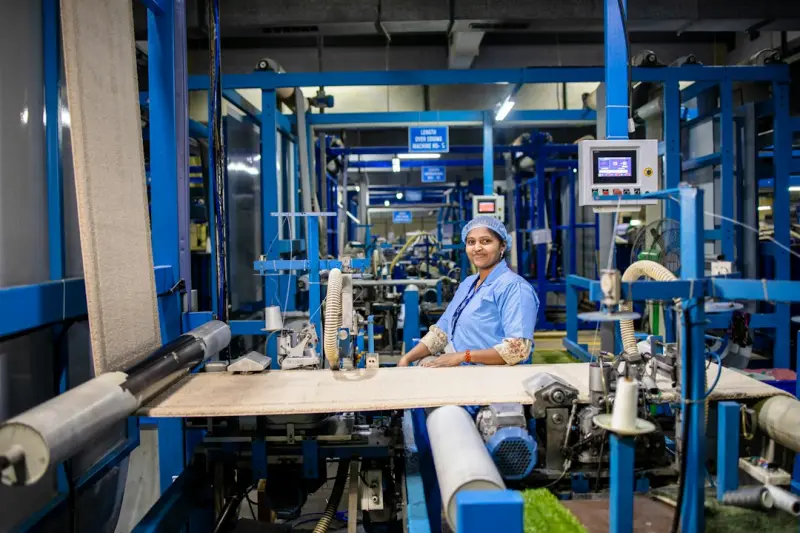
Why AI Isn’t Just About Automation Anymore—it’s About Sustainability
When I first started tinkering with machine‑learning models, I was obsessed with speed. Faster predictions, quicker insights, the usual brag‑worthy metrics that make any data team smile. Over the past few years, however, my lens has shifted. I’ve watched the climate conversation move from a distant concern to a boardroom imperative, and I’ve realized that the most exciting frontier for AI isn’t simply doing things faster—it’s doing them smarter, greener, and more responsibly.
The Missing Link: Circular Thinking Meets Intelligent Systems
Most businesses still think of AI as a tool that sits on top of existing processes—an analytics layer, a chatbot, a recommendation engine. That mindset is useful, but it leaves a huge opportunity on the table: what if the very design of products, services, and supply chains were guided by AI from the moment an idea is born?
Imagine a product designer feeding a brief into a generative model that instantly proposes material blends with a lower carbon footprint, predicts end‑of‑life recyclability, and even suggests manufacturing processes that minimize waste. That’s the kind of end‑to‑end intelligence that can make a circular economy feel less like a lofty ideal and more like an everyday workflow.
From Concept to Reality: Three AI‑Powered Stages of Sustainable Innovation
- Ideation with Data‑Driven Constraints. Traditional brainstorming often ignores the hidden environmental costs of a concept. By integrating life‑cycle assessment (LCA) databases directly into generative design tools, AI can surface alternatives that meet performance goals while staying within carbon budgets.
- Materials Discovery at Scale. Advanced algorithms such as Bayesian optimization and reinforcement learning can explore millions of material permutations in silico, flagging candidates that are abundant, non‑toxic, and recyclable. This dramatically cuts the time and resources spent on trial‑and‑error lab work.
- Supply‑Chain Transparency & Optimization. Real‑time sensor data combined with predictive analytics can highlight bottlenecks, forecast demand spikes, and suggest logistical tweaks that shave miles off transportation routes—directly reducing emissions.
AI as a Strategic Ally for Sustainable Decision‑Making
We’ve already seen how AI can transform high‑level strategy in the AI as a strategic ally article, helping CEOs weigh risk versus reward in complex markets. The same framework applies when evaluating sustainability trade‑offs. By feeding carbon intensity, water usage, and social impact scores into the same decision engine that powers revenue forecasts, leaders can see a holistic picture of “profit + planet” in real time.
Learning Fast, Learning Fair: The Role of Adaptive AI
One of the biggest challenges in sustainable design is the knowledge gap between engineers, environmental scientists, and business stakeholders. Adaptive AI learning offers a way to close that gap on the fly. Imagine an internal platform that monitors each team member’s interaction with sustainability data, then nudges them toward relevant micro‑learning modules—right when they need it. The result is a workforce that can speak the language of both product performance and ecological stewardship, without the steep learning curve that usually stalls progress.
Ethical Audits That Go Beyond Compliance
When we talk about sustainability, compliance is only the floor of the conversation. Companies must also address hidden biases in data—like over‑representing certain regions in carbon accounting or under‑estimating the social impact of raw‑material extraction. The quiet revolution of AI‑powered ethical audits is already showing how automated checks can flag these blind spots before they become public scandals. By embedding ethical lenses into the AI pipelines that drive product design, firms can ensure that sustainability isn’t an afterthought, but a built‑in safeguard.
Case Study: A SaaS Platform Turning Waste Into Value
One of our customers—a mid‑size consumer‑electronics manufacturer—used a combination of AI‑driven material discovery and supply‑chain analytics to redesign a flagship product line. Here’s how the journey unfolded:
- Data Ingestion. They aggregated 3 years of component cost, carbon, and failure‑rate data into a unified warehouse.
- Generative Modeling. An AI engine proposed three alternative casings: a recycled aluminum alloy, a bio‑based polymer, and a hybrid composite. Each option was scored on durability, cost, and carbon intensity.
- Rapid Prototyping. Using additive manufacturing, they printed small batches of each casing for real‑world testing, cutting prototype time from weeks to days.
- Supply‑Chain Simulation. The AI forecasted the impact of each material on logistics, identifying that the bio‑based polymer could be sourced locally, slashing transportation emissions by 27%.
- Decision & Rollout. The company selected the hybrid composite, which delivered a 15% weight reduction (lower shipping emissions) and a 20% drop in overall carbon footprint without sacrificing durability.
The result? A product that earned a green certification, reduced material costs, and opened a new market segment of eco‑conscious consumers—all within a single product cycle.
Building a Culture That Embraces Circular AI
Technology alone won’t change the status quo. Teams need the right mindset to treat AI as a partner in sustainability, not just a cost‑cutting gadget. Here are three cultural levers that have proven effective:
- Cross‑Functional “Green Sprints”. Short, time‑boxed projects where engineers, sustainability experts, and data scientists collaborate on a specific eco‑goal.
- Transparent Metrics Dashboards. Real‑time visualizations of carbon, water, and waste metrics alongside financial KPIs make trade‑offs visible to everyone.
- Recognition Programs. Celebrate teams that achieve measurable sustainability improvements, reinforcing the narrative that green innovation is a core business win.
Overcoming Common Roadblocks
While the promise is alluring, many organizations stumble on a few predictable hurdles:
Data Silos
Environmental data often lives in spreadsheets, ERP modules, or separate ESG platforms. Integrating these sources into a single AI‑ready lake requires both technical expertise and executive sponsorship.
Model Trustworthiness
Stakeholders may distrust AI recommendations if the underlying logic isn’t explainable. Investing in interpretable models—like SHAP values or counterfactual explanations—helps bridge that trust gap.
Regulatory Uncertainty
Regulations around carbon accounting and product disclosures are evolving. Building flexible AI pipelines that can ingest new compliance rules without a full rebuild is essential for long‑term viability.
Practical First Steps for Any Business
- Audit Your Current Data Landscape. Identify where you already capture sustainability metrics and where gaps exist.
- Start Small with a Pilot. Choose a single product line or component and apply AI‑driven material recommendation.
- Partner with ESG Experts. Bring in specialists who can validate AI outputs against industry standards.
- Iterate and Scale. Use lessons learned from the pilot to expand AI‑enabled circular design across your portfolio.
Even modest improvements—like reducing packaging weight by 10%—compound dramatically when applied across thousands of SKUs. The key is to treat every small win as a data point that feeds the next AI model, creating a virtuous cycle of continuous improvement.
Future Outlook: From Reactive to Proactive Sustainability
We are on the cusp of a paradigm shift. In the next decade, AI will move from being a reactive optimizer—telling us where we can cut emissions—to a proactive creator, suggesting entirely new business models that embed circularity from day one. Think subscription‑based product‑as‑a‑service platforms where AI predicts wear‑and‑tear, schedules returns, and orchestrates material recovery—all without human intervention.
When machines can anticipate the end‑of‑life scenario at the moment a product is conceived, the entire value chain becomes a closed loop. That’s not a distant utopia; it’s an emerging reality for companies that start blending sustainability data with AI today.
Conclusion: The Time to Act Is Now
AI’s reputation as the engine of speed and efficiency is well deserved, but its most profound impact may lie in its ability to rewire the very logic of how we create, use, and dispose of products. By embedding circular thinking into AI models—through data, design, and culture—companies can unlock competitive advantage, meet rising ESG expectations, and, most importantly, help preserve the planet for the next generation of innovators.
If you’re curious about how to start this journey, remember that the first step is often the hardest: opening up your data, daring to ask “what if we designed differently?”, and giving AI the permission to be a partner, not just a tool. The future of sustainable business is already being written in code; it’s up to us to make sure the story has a happy ending for both profit and planet.

Armed with a degree in English Literature, Jill’s journey into the digital space wasn't just a career move; it was a natural extension of her lifelong love affair with storytelling. While some writers view search engine optimization (SEO) as a rigid constraint, Jill sees it as a creative puzzle. She understands the delicate art of balancing the algorithmic demands of search engines with the human desire for resonance, emotion, and value. To Jill, keywords aren't just targets to hit; they are the breadcrumbs that lead eager readers straight to the answers they’ve been searching for.
Related Posts

When AI Becomes Your Personal Decision Coach
A decision‑coach AI pairs data aggregation, predictive modeling, and human feedback to turn overlo... Read More

When Ambient AI Becomes the Invisible Hand of Your Workflow
Ambient AI turns everyday workspaces into responsive, low‑friction environments that anticipate ne... Read More

AI as the Invisible Co‑Pilot for Strategic Decision‑Making
AI is evolving from a tool that creates content to a silent partner that filters noise, predicts out... Read More
Top Posts

How Curating Your Everyday Story Keeps Your Mind Balanced
Explore Everyday Narrative Curation—a practice that transforms ordinary items into story elements, helping you organize thoughts, reduce stress, and build men...Read More

Playful Minds: Childlike Curiosity for Mental Wellness
This post explores the power of play and childlike curiosity as essential tools for adult mental health, offering practical strategies—from mini‑quests to m...Read More

The Internal Gig Marketplace: Turning Employees into Agile Project Partners
A deep dive into the internal gig marketplace model, showing how companies can transform static job roles into a dynamic talent pool that drives speed, engageme...Read More

Strategic Sabbaticals: Turning Time Off into Talent Gains
A deep dive into why strategic sabbaticals are becoming essential for modern employers, outlining benefits, implementation steps, and real‑world success stori...Read More
0 Comments
Post Comment
You will need to Login or Register to comment on this post!