

Why the Old Brainstorming Playbook Needs an Upgrade
We’ve all been there: a conference room full of eager faces, a whiteboard that looks like a toddler’s first attempt at abstract art, and a ticking clock that turns good ideas into “meh” in record time. Traditional brainstorming is a beloved ritual, but it’s also a fragile ecosystem—one that can easily collapse under the weight of groupthink, dominant personalities, and the inevitable blank‑page panic. In my decade of guiding product teams through the chaos of ideation, I’ve learned that the biggest risk isn’t a lack of ideas; it’s a lack of catalyzed ideas that keep the human spark alive while tapping into the computational firepower of AI.
The Misconception: AI as a Replacement, Not a Partner
When headlines scream “AI will replace designers, marketers, and strategists,” it’s easy to assume that the moment you bring an algorithm into a brainstorming session, the human element is dead. That’s a false dichotomy. AI excels at generating permutations, surfacing patterns, and surfacing obscure data points at lightning speed. What it can’t do—at least not without us—is interpret nuance, inject empathy, or apply contextual judgment that only lived experience provides. The sweet spot is a partnership where AI serves as a creative catalyst, not a creative crutch.
A Real‑World Lens: From Hybrid Reviews to Human‑First Ideation
Think about the Hybrid performance reviews we’ve been championing lately. Those reviews thrive because they blend data‑driven insights with the soft, relational feedback that only a teammate can give. The same philosophy can be transplanted into brainstorming: let AI provide the data‑rich “what‑if” scenarios, and let the team supply the “why‑does‑it‑matter” narrative. When you align the two, the result is a session that feels both grounded and sky‑high.
Step‑by‑Step Framework for AI‑Augmented Brainstorming
Below is a repeatable, 5‑stage playbook I’ve refined with several Fortune‑500 product orgs. Each stage is designed to preserve the human core while letting AI stretch the idea canvas.
- Stage 1 – Context Curation: Before the AI ever sees the problem, the facilitator gathers raw context—customer interviews, usage metrics, market trends, and even the posture nudging data from office ergonomics studies if relevant. This “human‑first data dump” ensures the AI isn’t hallucinating in a vacuum.
- Stage 2 – Prompt Engineering: The team collaboratively crafts prompts that are specific, bounded, and open‑ended. For example: “Generate three product concepts that reduce onboarding friction for users who spend more than 30 minutes on the first login, leveraging biometric feedback.” Notice the blend of quantitative thresholds and qualitative goals.
- Stage 3 – Divergent Generation: Run the prompts through a generative model (e.g., GPT‑4, Claude, or a domain‑specific LLM). Export the top 10–15 outputs and immediately scatter them across a digital canvas. At this point, the AI has supplied the “raw material” without any judgment.
- Stage 4 – Human Curation & Synthesis: This is where the peer‑powered journaling mindset shines. Each participant votes, annotates, and builds on the AI suggestions, weaving in anecdotes, brand voice, and feasibility constraints. The goal isn’t to pick a “winner” but to co‑create hybrid ideas that are part AI, part human intuition.
- Stage 5 – Convergent Prototyping: The top‑ranked hybrid ideas move into rapid prototyping—sketches, low‑fi mockups, or even a 24‑hour hackathon. The AI stays in the loop, offering instant feedback on design specs, cost estimates, or compliance checks, while the team validates the emotional resonance through quick user tests.
Choosing the Right AI Tool for the Job
Not all LLMs are created equal, and the tool you pick should match the granularity of the brainstorming stage:
- Idea Generation: Large, open‑ended models (GPT‑4, Claude) excel at creative breadth.
- Data‑Driven Scenarios: Smaller, fine‑tuned models can ingest proprietary datasets and output statistically sound projections.
- Compliance & Legal Checks: Domain‑specific AI that integrates with your governance platforms ensures you don’t inadvertently breach regulations.
Remember, the AI is a tool, not a silo. Integrate it with your existing collaboration suite (Slack, Teams, Notion) so that prompts, outputs, and annotations live side‑by‑side with your human artifacts.
Human‑Centric Guardrails: Keeping the Spark Alive
Even the most sophisticated AI can fall into the trap of echo chambers if fed homogeneous prompts. To avoid that, embed these guardrails:
- Diverse Prompt Voices: Rotate facilitators from different departments (product, engineering, sales, design) to ensure varied angles.
- Time‑Boxed AI Interventions: Limit AI output rounds to 5–10 minutes. This forces the team to synthesize quickly and prevents over‑reliance on machine suggestions.
- Emotion Check‑Ins: After each AI round, ask participants to rate how “inspired” or “overwhelmed” they feel. If the numbers dip, pause the algorithm and re‑ground with a human story or user quote.
- Bias Audits: Run a quick bias detection script on AI outputs (e.g., gendered language, cultural assumptions). Highlight any red flags before they seep into the final concept.
Measuring the Impact of AI‑Infused Ideation
To justify the investment, you need data. Here are three KPI buckets you can track:
- Quantity & Diversity: Count the number of unique concepts generated per session and run a lexical diversity analysis. AI‑augmented sessions typically see a 30‑40% lift.
- Speed to Concept: Measure the time from problem statement to a “ready‑to‑prototype” idea. Teams using the framework often cut this timeline in half.
- Outcome Success Rate: Follow the pipeline—how many AI‑enhanced concepts become shipped features, and what’s the post‑launch NPS? Early pilots have reported a 15% increase in feature adoption.
Common Pitfalls and How to Sidestep Them
Even the best playbooks can go awry if you ignore the human factor:
- Over‑Prompting: Dumping a wall of data into a single prompt overwhelms the model and yields noisy results. Keep prompts crisp.
- “AI‑Only” Decision Making: Use AI for ideation, not final decisions. The final go/no‑go should always be a human judgment call.
- Neglecting Documentation: Record the AI prompts and outputs alongside the human annotations. This audit trail becomes invaluable for learning and compliance.
- Tool Fatigue: Don’t force the whole team onto a new platform in one session. Introduce AI gradually—perhaps as a “sandbox” during the divergence phase.
Case Study: Turning a Stagnant Product Line into a Growth Engine
One of our clients—a mid‑size SaaS platform for remote team collaboration—was stuck with a feature set that hadn’t seen major innovation in three years. By applying the AI‑augmented framework, they achieved the following:
- Generated 48 distinct “future‑state” concepts in a single 90‑minute session, compared to the usual 12.
- Identified a high‑impact idea: an AI‑driven “meeting sentiment analyzer” that flagged moments of disengagement in real time.
- Prototyped the sentiment feature within two weeks, ran a beta with 200 users, and saw a 22% increase in weekly active users.
The key takeaway? The AI didn’t invent the sentiment analyzer; it surfaced the pattern from a trove of user feedback that humans had missed. The team then layered on empathy, UI/UX polish, and a brand‑aligned narrative, turning a raw insight into a market‑ready product.
Future‑Proofing Your Ideation Engine
AI is evolving faster than any single organization can keep up with. The best defense against obsolescence is a culture that treats AI as a continuous co‑creator. Encourage your teams to:
- Experiment with prompt remixing—take a successful prompt, tweak one variable, and see what new pathways emerge.
- Build AI‑idea libraries that catalog past prompts, outputs, and outcomes. Over time, you’ll develop a “prompt DNA” that accelerates future sessions.
- Cross‑pollinate with other departments. A finance analyst’s risk model can become a fertile prompt for product designers.
When you embed these habits, the AI becomes less of a novelty and more of a strategic asset—one that amplifies the collective intelligence of your organization.
Wrapping Up: The Human‑AI Dance
Brainstorming has always been a dance between chaos and order. By inviting AI onto the floor, you’re not replacing the lead; you’re adding a new partner who can spin, lift, and pivot in ways a human alone can’t. The result is a choreography that’s richer, faster, and more resilient. So, the next time you schedule a ideation session, remember to set the stage for both human curiosity and machine imagination. When they move in sync, the ideas that emerge can truly change the game.

Shawn DesRochers is a certified Microsoft technician and Programmer with 30+ year's experience. He has written many reviews on computer related products, software, and SEO related topics. When he's not writing reviews he can be found at one of the Oldest Directories Online Blogging Fusion Business Directory which he is the CEO of.
Related Posts
AI‑Powered Storycraft: How Machines Amplify Your Everyday Voice
Explore the rise of AI‑enhanced storytelling that turns daily experiences into shareable narrative... Read More
Beyond Automation: How AI is Crafting Adaptive User Experiences in Enterprise SaaS
Adaptive AI transforms static SaaS tools into responsive teammates, learning from real‑time user s... Read More
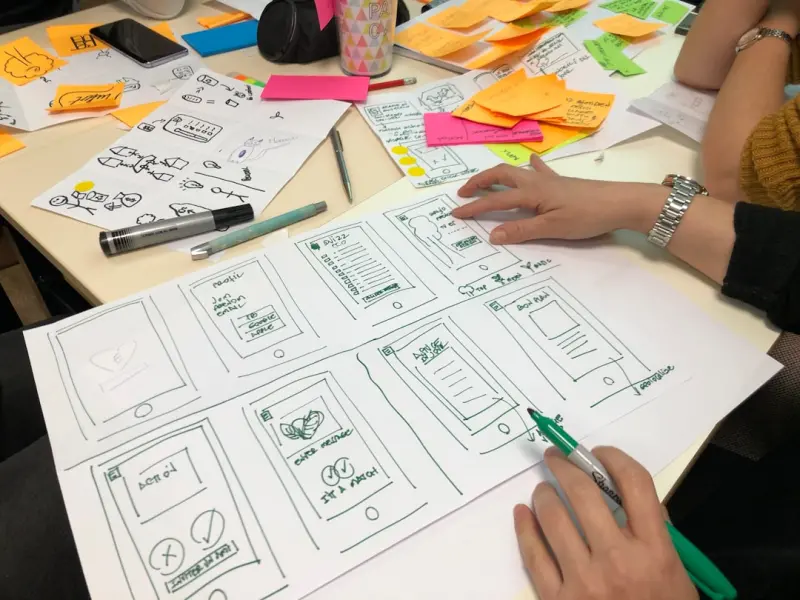
From Code to Canvas: How Generative AI is Redefining Creative Collaboration in the Enterprise
Generative AI is shifting from a tool to a collaborative partner, enabling faster ideation, cross‑... Read More
Top Posts

Cultivating Success: How My Green Workspace Transforms Home & Garden Living
Rose DesRochers reveals how a garden‑filled desk can revolutionize work‑life balance, offering design ideas, science‑backed benefits, and links to a thriv...Read More

Seasonal Home Refresh: A Holistic Checklist for a Healthier, Brighter Space
A step‑by‑step seasonal checklist that covers air quality, natural lighting, storage, textiles, energy efficiency, and a dedicated reset zone, helping you m...Read More

The Rise of Garden Desks: Redefining Home Life and Work
Explore the garden desk revolution—how this outdoor workspace blends productivity, health benefits, and style, reshaping modern home living....Read More
The Layover Playbook: Turning Transit Time into a Personal Innovation Sprint
Discover a practical 4‑step framework to turn airport layovers into micro‑innovation sprints, boosting creativity and productivity during travel....Read More
0 Comments
Post Comment
You will need to Login or Register to comment on this post!