

Why Every Company Should Turn Its Office Into an Employee‑Driven Innovation Lab
When I first stepped into a coworking space in downtown Seattle, I was struck not by the sleek furniture or the high‑speed Wi‑Fi, but by the buzzing conversations happening in the hallway. Teams that usually lived in different silos were swapping ideas over coffee, sketching prototypes on whiteboards, and, most importantly, feeling a sense of ownership over the problems they were tackling. That moment sparked a question I’ve been exploring ever since: What if every workplace could function like that space—a permanent, employee‑driven innovation lab?
The Shift From Projects to Labs
Traditional corporate projects are often top‑down: senior leadership defines a goal, assembles a team, and expects delivery within a fixed timeline. While that model has delivered countless successes, it can also stifle the spontaneous, cross‑functional creativity that fuels breakthrough ideas. An innovation lab flips this script. Instead of a single, isolated project, you create a continuous environment where anyone can pitch, prototype, and iterate on ideas that matter to them and to the business.
Here’s how the lab model differs from the classic project approach:
- Open‑ended timelines: Labs operate on a rolling cycle, allowing ideas to mature without the pressure of a hard deadline.
- Cross‑functional participation: Engineers, marketers, HR, finance—all are welcome to contribute, breaking down departmental walls.
- Resource autonomy: Teams receive a modest budget and access to tools, encouraging frugality and rapid experimentation.
- Outcome‑focused, not output‑focused: Success is measured by learning, customer impact, or internal process improvements, not just by deliverable counts.
Why Employees Crave Lab‑Style Work
Research shows that psychological safety and autonomy are two of the most powerful drivers of employee engagement. In a lab setting, staff can experiment without fear of failure because the culture celebrates “fast failures” as learning opportunities. This environment also aligns with the growing desire for meaningful work. When people see how their tinkering directly influences product strategy or operational efficiency, they experience a deeper sense of purpose.
Take the story of Maya, a senior analyst in our finance department. She joined an internal lab to explore a predictive model for churn based on payment behavior—something that historically lived in a black‑box algorithm owned by the data science team. Within three months, Maya’s prototype reduced churn projections by 12% and sparked a company‑wide rollout. Maya now leads a cross‑functional “Revenue Health” squad, and her journey is a textbook example of how labs unlock hidden talent.
Designing the Lab: Core Ingredients
Creating an effective employee‑driven innovation lab doesn’t require a massive budget or a new building. Think of it as a mindset shift paired with a few practical elements:
1. A Dedicated Physical or Virtual Space
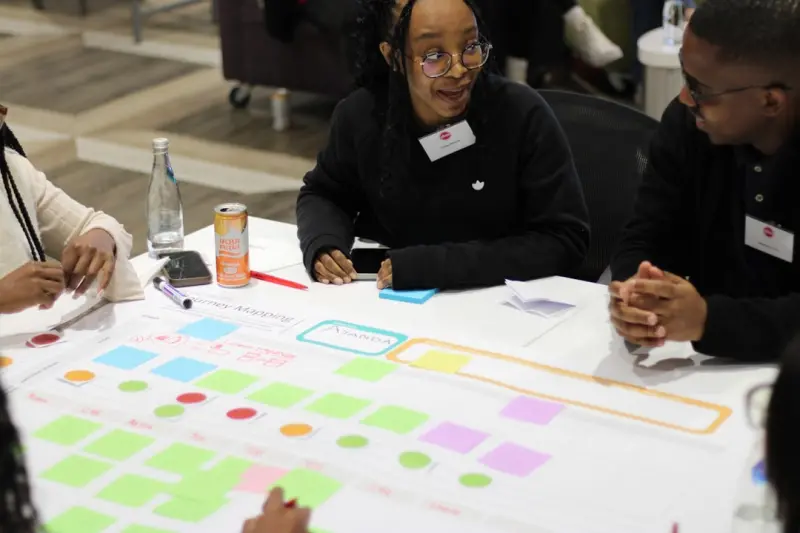
Even a modest corner of the office fitted with whiteboards, sticky notes, and a few prototype kits can become a hub for collaboration. For remote‑first teams, a virtual “lab channel” on your communication platform, equipped with shared digital canvases, serves the same purpose.
2. A Simple Governance Model
Establish a lightweight framework: an Innovation Council (comprising senior leaders and rotating staff) meets monthly to review proposals, allocate budget, and remove roadblocks. The key is to keep bureaucracy minimal—think “fast‑track” rather than “approval maze.”
3. Time Allocation
Allocate a fixed percentage of work hours (often 10‑15%) for lab activities. This mirrors the famous “20% time” model popularized by tech giants, but it’s adaptable to any industry. Employees can choose whether to spend those hours on their own projects or collaborate with others.
4. Access to Tools & Expertise
Provide sandbox environments, low‑code development platforms, design thinking toolkits, and, increasingly important, AI‑driven assistants. In fact, leveraging AI as a Thought Partner can accelerate prototype creation, data analysis, and even user research—all without needing a full‑time data scientist on every team.
5. Celebration & Knowledge Sharing
Host monthly demo days where lab teams showcase their progress. Recognize not just “wins” but also insightful failures. This public sharing fuels a culture of curiosity and encourages others to join the lab.
Measuring Success Without Killing the Spirit
Traditional KPIs—like project completion rates—can clash with the experimental nature of a lab. Instead, consider these metrics:
- Learning Velocity: Number of validated hypotheses per quarter.
- Cross‑Team Collaboration Index: Frequency of employees from different departments working together.
- Idea Conversion Rate: Prototypes that move from lab to production or influence strategic decisions.
- Employee Net Promoter Score (eNPS) for Innovation: How likely staff are to recommend the lab experience to a colleague.
These measurements keep the focus on growth and culture, rather than rigid deliverable counts.
Addressing Common Concerns
“We don’t have the budget for extra projects.” Innovation labs are deliberately lean. The budget typically covers modest supplies, software licenses, or occasional external mentorship. The ROI often appears in cost savings from process improvements or new revenue streams—paying for itself over time.
“Our compliance team will object to unsupervised experimentation.” By integrating a governance council that includes compliance representatives, labs can embed necessary checks without stifling creativity. Think of compliance as a partner that helps shape safe experimentation pathways.
“What about employees who prefer clear, structured work?” Participation is voluntary. Those who thrive on routine continue with their core responsibilities, while curious contributors dive into the lab. Over time, many discover a blended approach that satisfies both structure and creativity.
Case Study: From Lab to Market – A Real‑World Example
One of our client firms, a mid‑size SaaS provider, launched an internal lab two years ago. The first project tackled a pain point: onboarding friction for new customers. A small, cross‑functional team built an AI‑powered interactive guide that cut onboarding time by 30%. The lab’s success earned executive buy‑in, and the product was later spun off as a premium add‑on, generating an additional $5M ARR in its first year.
Crucially, the lab’s culture of rapid iteration allowed the team to test dozens of UI variations in weeks—something that would have taken months in a conventional development pipeline. Their secret? Pairing the lab’s prototype work with Remote Team Retreats that provided focused, distraction‑free sprint weeks in inspiring locations.
Integrating Well‑Being: The Lab as a Sanctuary
Innovation work can be mentally demanding. To sustain energy, labs should embed well‑being practices. One low‑effort habit is scheduling regular Digital Sabbaths—designated days where the team disconnects from email and notifications, focusing on deep work or creative reflection. This not only prevents burnout but also mirrors the focused, “flow” states that drive breakthrough thinking.
Getting Started: A 30‑Day Playbook
Ready to seed an innovation lab in your organization? Follow this quick roadmap:
- Secure Executive Sponsorship: Identify a champion at the C‑suite level who can allocate budget and champion the lab’s mission.
- Define the Lab Charter: Outline purpose, scope, and governance. Keep it concise—one page is enough.
- Pick a Pilot Space: Choose a physical corner or a virtual channel. Furnish it with whiteboards, sticky notes, and a shared digital canvas.
- Launch a Call for Ideas: Invite all employees to submit problem statements or opportunity sketches.
- Select the First Cohort: Pick 3‑5 diverse teams based on idea relevance and cross‑functional mix.
- Allocate Time & Budget: Grant each team 10% of their work hours and a modest budget (e.g., $2,000 for supplies).
- Kickoff with a Lab Sprint: Run a two‑week sprint focused on rapid prototyping and user testing.
- Demo Day & Feedback Loop: Showcase results, gather feedback, and decide on next steps (scale, iterate, or sunset).
Repeat the cycle, iterating on the charter and governance as you learn. Over time, the lab becomes a self‑sustaining engine for innovation and employee empowerment.
Future Outlook: Labs as Talent Magnets
In an era where talent chooses employers based on growth opportunities and culture, labs become a differentiator. Prospective hires are increasingly asking: “Will I have space to experiment?” Companies that can answer “yes” with a thriving lab will attract top performers eager to make a tangible impact.
Moreover, labs support the future of work—a hybrid, flexible environment where collaboration isn’t limited by geography. By embedding AI tools, remote sprint weeks, and intentional well‑being practices, labs become a blueprint for how work will evolve.
Final Thoughts
Transforming the everyday workspace into an employee‑driven innovation lab is less about building a new department and more about reimagining how we view work itself. It’s about giving people the autonomy, resources, and psychological safety to pursue curiosity, solve real problems, and grow alongside the organization. When done right, labs not only generate breakthrough ideas—they create a thriving, engaged workforce that feels truly invested in the company’s success.
If you’re curious about taking the first step, start small, celebrate early wins, and let the culture of experimentation ripple through every corner of your business. The lab isn’t a fad; it’s the next evolution of meaningful employment.

Lauren Miller is a true outdoors enthusiast who has found her passion in the trades. When she's not working hard on the job, you can find her writing, camping, fishing, and exploring all that nature has to offer. A dedicated partner to her wife Beth, Lauren loves nothing more than spending quality time together and experiencing the great outdoors side by side.
Related Posts
Portfolio Careers: A Flexible Framework for Employment
Portfolio careers combine core roles, project work, consulting, and personal ventures into a single ... Read More

Why Internal Mobility Is the Secret Engine Driving Modern Employment
Internal mobility is reshaping employment by turning career progression into a dynamic journey. Lear... Read More

Structured Sabbaticals: The Secret Weapon for Talent Retention and Innovation
A strategic sabbatical program not only reduces turnover but also fuels creativity and leadership gr... Read More
Top Posts
Internal Talent Marketplaces: Unlocking Hidden Potential Within Your Organization
An internal talent marketplace transforms static job roles into a fluid ecosystem, giving employees agency over their careers while providing leaders with realâ...Read More

Turning Your Home into a Sensory Sanctuary: Small Tweaks, Big Comfort
Explore how subtle changes in texture, aroma, lighting, and sound can turn any space into a soothing retreat, boosting comfort and well‑being....Read More

Why Light Is the Missing Piece in Remote‑Work Health
A deep dive into how proper light exposure reshapes circadian rhythms, improves gut health, and elevates productivity for remote professionals—complete with a...Read More

Travel as a Sensory Storytelling Canvas
A guide to enriching your travels by deliberately engaging sight, sound, smell, taste, and touch, turning each trip into a memorable story....Read More
0 Comments
Post Comment
You will need to Login or Register to comment on this post!