

Why Structured Sabbaticals Are the Secret Weapon Modern Companies Need
When I first walked into a startup’s glass‑walled office three years ago, the buzz was all about “flexible work,” “remote‑first,” and “skill‑based hiring.” Those ideas were exciting, sure, but they left a critical question hanging in the air: what do we do when the day‑to‑day grind finally runs out of steam? I found my answer in a surprisingly old concept—sabbaticals—but with a 21st‑century twist.
The Traditional Sabbatical: A Brief History
Academia has long offered faculty a chance to step away for research, writing, or simply recharging. The corporate world, however, treated sabbaticals as a luxury reserved for C‑suite executives or as a perk for tenured employees. The result? A workforce that was either perpetually “on” or forced to burn out in silence.
Today, the line between “career” and “life” is blurring. People no longer view their job as a single, linear trajectory. They want meaningful pauses that let them explore, reflect, and return with fresh perspectives. This shift is not a fad; it’s a response to the relentless pace of modern work and the growing evidence that purposeful downtime fuels creativity and productivity.
What a Structured Sabbatical Looks Like in Practice
Think of a sabbatical as a project rather than a vacation. It has a clear objective, a timeline, deliverables, and a feedback loop. Below is a framework I’ve used with my own teams, and it can be adapted to any organization:
- Eligibility & Timing: Employees become eligible after a set tenure (e.g., five years). Sabbaticals can be taken once every three to five years, lasting anywhere from four weeks to six months.
- Purpose Definition: The employee drafts a brief proposal outlining the sabbatical’s focus—be it research, community service, personal development, or a passion project.
- Alignment Check: Managers and HR review the proposal to ensure it aligns with the company’s strategic goals, cultural values, or talent development pathways.
- Resource Planning: Teams map out coverage plans, knowledge‑transfer sessions, and any budgetary considerations.
- Execution & Documentation: While on sabbatical, the employee maintains a light touch—monthly check‑ins, a shared journal, or a short presentation deck that captures insights.
- Re‑integration: Upon return, the employee hosts a “sabbatical showcase” to share outcomes, lessons learned, and actionable ideas for the business.
This structure prevents the sabbatical from becoming a “black hole” of productivity loss and turns it into a catalyst for innovation.
The Business Case: ROI That Goes Beyond the Balance Sheet
Critics often ask, “What’s the financial upside?” The answer is multifaceted:
- Talent Retention: A 2023 study by the Workforce Institute found that companies offering sabbaticals saw a 22% reduction in voluntary turnover. Employees perceive the benefit as a long‑term investment in their personal growth.
- Innovation Spurts: When employees step outside their daily routines, they encounter new problems and solutions. Google’s famed “20% time” is a micro‑sabbatical that birthed Gmail and AdSense.
- Leadership Pipeline: Sabbaticals can be a proving ground for future leaders. By tackling a self‑selected challenge, employees demonstrate initiative, strategic thinking, and resilience.
- Brand Reputation: Companies that champion holistic employee well‑being attract top talent, especially millennials and Gen Z, who prioritize purpose and work‑life harmony.
Designing Sabbaticals for Ethical Impact and Curiosity‑Driven Growth
Two concepts have profoundly shaped my approach to structuring sabbaticals: ethical AI decision‑making and the curiosity habit. While they originate from different domains, they converge on a single principle—intentional exploration.
When employees design a sabbatical, encouraging them to embed ethical considerations into their projects ensures that personal growth aligns with corporate responsibility. For example, a data scientist might spend three months researching bias mitigation techniques for predictive models. The outcome not only enriches the employee’s expertise but also directly benefits the organization’s AI governance framework.
Similarly, fostering the curiosity habit—daily questions, small experiments, and reflective journaling—helps sabbatical participants stay mentally agile. They return with a toolbox of how they learned, not just what they learned, which accelerates knowledge transfer across teams.
Case Study: From Burnout to Breakthrough at a Mid‑Size Tech Firm
One of our clients, a SaaS company with 800 employees, piloted a structured sabbatical program last year. Here’s a snapshot of the journey:
- Employee Profile: Maya, a senior product manager with seven years of tenure.
- Sabbatical Goal: Explore sustainable design practices and prototype a carbon‑footprint calculator for their platform.
- Outcome: Maya returned after eight weeks with a working prototype, a set of vendor partnerships, and a presentation that inspired the product roadmap’s “green” initiative. The company filed two patents within six months and reported a 12% increase in customer satisfaction among environmentally conscious users.
- Financial Impact: Although Maya’s salary was partially covered by a sabbatical fund, the resulting product features contributed to a $2.4 million revenue uplift in the following fiscal quarter.
This example underscores how a well‑designed sabbatical can convert personal passion into measurable business value.
Potential Pitfalls and How to Avoid Them
Implementing sabbaticals isn’t a plug‑and‑play solution. Companies often stumble on these common traps:
- Unclear Objectives: Without a defined purpose, the sabbatical can drift, leading to wasted time. Remedy: Require a concise proposal and align it with strategic priorities.
- Insufficient Coverage: Teams may feel stretched thin. Remedy: Build a “sabbatical buddy” system where peers shadow responsibilities well before the leave begins.
- Lack of Reintegration: Employees may feel isolated after returning. Remedy: Schedule a showcase and embed the outcomes into existing project pipelines.
- Equity Concerns: If only senior staff can take sabbaticals, morale suffers. Remedy: Offer tiered versions—short “micro‑sabbaticals” for junior staff and longer options for senior talent.
Step‑by‑Step Guide to Launching Your First Sabbatical Program
Ready to try it out? Follow this roadmap:
- Stakeholder Buy‑In: Present the business case to leadership. Highlight retention data, innovation potential, and competitor benchmarking.
- Policy Drafting: Define eligibility, duration ranges, compensation models (full pay, partial pay, or stipend), and approval workflow.
- Pilot Phase: Select a small cohort (2–3 employees) to test the process. Gather feedback on logistics, coverage, and outcomes.
- Tooling: Use project‑management software to map handover tasks. Create a “sabbatical tracker” dashboard for visibility.
- Communication: Roll out a company‑wide announcement. Emphasize that the program is a strategic investment, not a perk.
- Evaluation Metrics: Track retention, employee satisfaction (via pulse surveys), and concrete deliverables (e.g., patents, product improvements).
- Iterate: Refine the policy based on pilot learnings. Expand eligibility gradually.
Beyond the Individual: How Sabbaticals Shape Organizational Culture
When a company normalizes intentional time away, the cultural ripple effect is profound:
- Normalization of Learning: Employees see continuous development as an expectation, not an afterthought.
- Trust Amplification: Granting extended autonomy signals confidence in staff, which in turn boosts discretionary effort.
- Cross‑Pollination: Sabbatical projects often intersect with external networks—non‑profits, academia, or industry groups—bringing fresh ideas into the firm.
- Resilience Building: Employees who have practiced stepping back return better equipped to handle crises, reducing burnout cycles.
Future Outlook: Sabbaticals as a Standard Employment Contract Clause
Imagine a world where every employment contract includes a “sabbatical clause”—a guaranteed period for personal or professional exploration. As remote work normalizes and the gig economy expands, such clauses could become a differentiator for talent acquisition. Companies that embed this foresight into their DNA will likely see a virtuous cycle: attract high‑caliber talent, foster innovation, and retain employees longer.
Takeaway: Turn Time Off Into a Strategic Asset
If you’ve ever felt that the relentless pace of modern work is eroding creativity, consider the structured sabbatical as a lever. By aligning personal curiosity with organizational goals, you unlock a powerful engine for innovation, retention, and purpose‑driven growth. The next time you sit down to design your talent strategy, ask yourself: What would happen if we gave our people a runway to fly—then brought them back with fresh fuel for the journey?

David Moore is a freelance writer specializing in two dynamic and ever-evolving fields: gambling and the tech industry. With a keen eye for detail and a knack for unraveling complex topics, David delivers insightful and engaging content that keeps readers informed and entertained.
Related Posts

Cultivating Psychological Safety in Hybrid Workplaces: A Playbook for Modern Leaders
A practical guide for leaders on creating psychological safety within hybrid teams, offering transpa... Read More
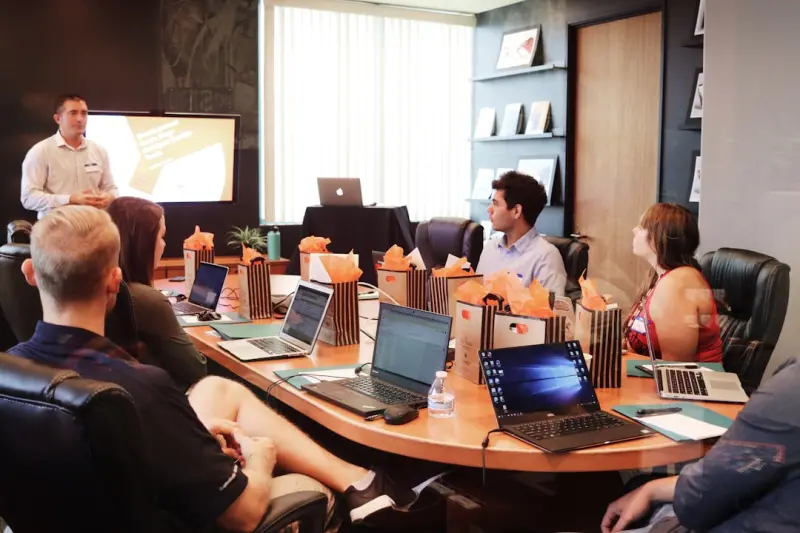
Reimagining the Office: How Flexible Spaces Are Redefining Employee Engagement
Flexible workspaces replace static cubicles with activity‑based zones, empowering employees to cho... Read More

From Cubicle to Garden Desk: How Outdoor Workspaces Are Redefining Career Success
Explore why swapping a cubicle for a garden desk can skyrocket productivity, spark creativity, and f... Read More
Top Posts

Why My Garden Desk Became the Soul of My Home
A garden desk isn’t just a workspace—it’s a sanctuary where home life, productivity, and nature converge, sparking creativity and well‑being....Read More

Micro‑Internships: The New Fast‑Track to Career Mastery
Explore the rise of micro‑internships, a flexible way to gain real‑world experience, showcase results, and fast‑track your professional growth....Read More

Balcony Forests: Turning Tiny Outdoor Tiles into Lush Sanctuaries
Discover a step‑by‑step guide to turning a modest balcony into a thriving mini‑forest, complete with reclaimed‑material planters, low‑tech irrigation,...Read More
AI‑Powered Innovation Sprints: From Idea to Impact in Hours
An AI‑powered innovation sprint condenses weeks of brainstorming into a single, high‑energy session, using prompt engineering, real‑time data scoring, and...Read More
0 Comments
Post Comment
You will need to Login or Register to comment on this post!