
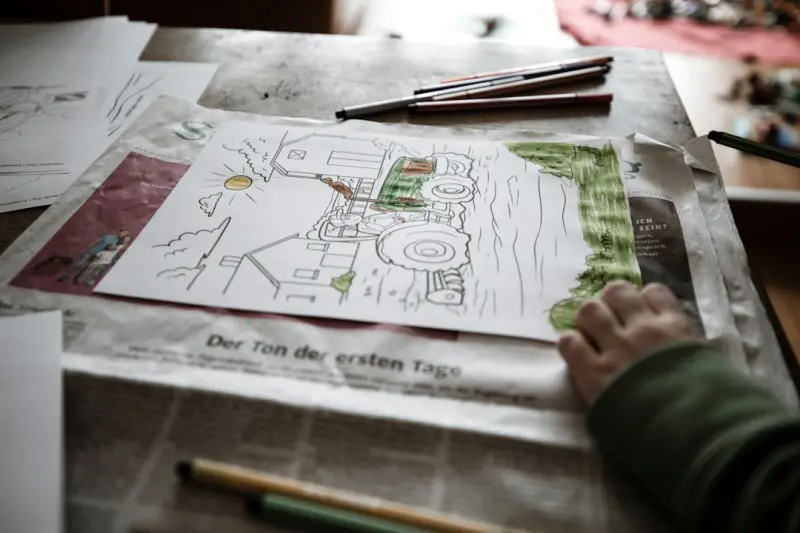
Why Doodling Matters in the Modern Workplace
When you think of “mental health tools” at work, the mind often jumps straight to meditation apps, therapy sessions, or even the latest AI‑driven well‑being platform. Yet, there’s a surprisingly low‑tech, universally accessible practice that’s been quietly humming in the background of boardrooms, co‑working spaces, and home offices: doodling. The humble act of letting a pen wander across paper (or a tablet) can act as a reset button for the brain, a catalyst for creativity, and a subtle shield against the chronic stress that plagues many professionals today.
The Neuroscience Behind the Scribble
Neuroscientists have long studied the default mode network (DMN) — the brain’s “idle” mode that lights up when we’re not focused on a task. When the DMN is overactive, we can feel scattered, anxious, or stuck in rumination. Engaging in a low‑stakes, rhythmic activity like doodling temporarily shifts the brain’s activity from the DMN to the task‑positive network, allowing a gentle mental transition that eases anxiety without demanding full concentration.
Furthermore, the motor activity involved in drawing triggers the release of dopamine, the “feel‑good” neurotransmitter, fostering a sense of reward and satisfaction. This biochemical boost can be especially valuable during long stretches of analytical work or during moments when the inbox feels endless.
From Child’s Play to Professional Power‑Tool
Most of us remember a time in elementary school when a blank page was an invitation to fill it with spirals, stick figures, and abstract shapes. That freedom was never about artistic mastery; it was about unleashing imagination without judgment. In the corporate world, we’ve built a culture that often penalizes “goofing off,” but the science tells us that a brief, judgment‑free creative break can increase focus, problem‑solving ability, and emotional resilience.
Companies that have embraced this insight are seeing measurable benefits. Teams report higher engagement scores, fewer burnout symptoms, and a more collaborative atmosphere. The key is not to turn doodling into a forced productivity hack but to let it remain a voluntary, low‑pressure outlet.
How to Integrate Doodling into Your Daily Rhythm
- Start with a micro‑break. Set a timer for every 90 minutes of focused work. When it goes off, grab a pen and a piece of paper for a two‑minute doodle. The brevity ensures you won’t feel guilty about “wasting” time.
- Create a dedicated doodle kit. Keep a small notebook, a few colored pens, and perhaps a set of stickers on your desk. The tactile presence of these tools invites spontaneous creativity.
- Make it communal. Encourage teammates to share their sketches during stand‑ups or virtual coffee chats. This builds a culture of openness and shows that mental health practices are valued.
- Link it to larger well‑being initiatives. Pair doodling sessions with other mental health resources, such as mindfulness workshops or the digital information diet strategies you already have in place.
Designing a Doodle‑Friendly Environment
Physical space influences how likely we are to engage in spontaneous sketching. A few simple tweaks can make a big difference:
- Open‑ended whiteboards. Install a few standing whiteboards in communal areas. Encourage people to “draw out” their thoughts, not just write bullet points.
- Quiet corners. Designate a small nook with soft lighting and a small table where employees can retreat for a quick sketch break.
- Digital doodle tools. For remote teams, platforms like Miro or even simple shared Google Docs with a drawing function can replicate the tactile experience.
The Ripple Effect: From Individual Calm to Team Cohesion
When one person takes a moment to doodle, the effect can spread. A study from the University of Cambridge found that when individuals engage in a brief creative activity, they become more empathetic and better listeners in subsequent conversations. In a workplace context, this translates to smoother meetings, more inclusive brainstorming sessions, and a reduced likelihood of misunderstandings that can lead to stress.
Moreover, sharing doodles—no matter how abstract—creates a safe space for vulnerability. It tells teammates, “I’m human, I need a breather, and that’s okay.” This can be especially powerful for employees who may feel isolated in high‑pressure roles.
Measuring the Impact: Beyond the Feel‑Good Factor
While the immediate mood lift from doodling is evident, you can also track longer‑term benefits:
- Stress surveys. Conduct quarterly anonymous surveys asking employees about perceived stress levels and whether they use doodling as a coping mechanism.
- Productivity metrics. Compare task completion rates before and after implementing doodle breaks. Many teams notice a modest uptick in output due to the mental reset.
- Retention data. Reduced burnout often correlates with higher employee retention. Over time, you may see a positive trend in tenure.
Integrating Doodling with Other Mental Health Practices
Don’t view doodling as a stand‑alone solution. It works best when paired with a broader well‑being strategy. For instance:
- Combine doodle breaks with short AI‑driven personal growth guides that suggest reflective prompts after each sketch.
- Use doodles as visual anchors during distributed leadership sessions, allowing frontline leaders to map out challenges in a non‑linear way.
- Encourage employees to document their doodles in a personal journal that tracks mood changes over weeks, providing data for individualized well‑being plans.
Overcoming Common Objections
“I’m not an artist.” The value lies in the process, not the product. Even simple shapes or repetitive patterns fulfill the brain‑reset function.
“It’s a waste of time.” Micro‑breaks of two minutes have been shown to increase overall focus, meaning you actually get more done in the long run.
“It looks unprofessional.” Normalizing doodling as a mental health practice can shift cultural expectations. Leaders modeling the behavior set the tone for acceptance.
Success Stories: Real‑World Examples
Tech startup “Nimbus” introduced a “Sketch‑It‑Out” hour every Friday. Employees reported a 27% reduction in self‑reported stress and a noticeable rise in creative idea generation during the following week’s sprint planning.
Design agency “Canvas & Co.” replaced traditional meeting agendas with “visual agendas,” where each participant quickly sketched what they hoped to achieve. The result was faster decision‑making and higher meeting satisfaction scores.
Getting Started: A 30‑Day Doodling Challenge
To help teams adopt this habit, try a structured challenge:
- Day 1‑7: 2‑minute doodle after every major task.
- Day 8‑14: Share a favorite doodle in a Slack channel.
- Day 15‑21: Pair doodling with a reflective question (e.g., “What am I grateful for today?”).
- Day 22‑30: Create a short visual story of a recent project’s journey.
At the end of the month, gather feedback, celebrate the collective artwork, and decide on the next steps—perhaps making doodle breaks a permanent fixture.
Conclusion: Embrace the Scribble, Strengthen the Mind
In a world saturated with data‑driven productivity tools and high‑stakes performance metrics, the simplest acts often hold the greatest power. Doodling is not a gimmick; it’s a scientifically backed, low‑cost, and deeply human practice that can quietly transform mental health outcomes across an organization. By normalizing the pen‑in‑hand moment, we give employees permission to pause, reset, and return to their work with renewed clarity and calm.

Margaret Thomson is a seasoned freelance writer specializing in the dynamic worlds of marketing and advertising. With a career deeply rooted in the marketing field, Margaret brings a wealth of practical experience and insightful knowledge to her writing.
Related Posts

Micro-Reflection: Tiny Check-Ins for Big Mental Gains
A five‑minute micro‑reflection habit can transform your mental health by providing quick emotion... Read More

Playful Minds: Childlike Curiosity for Mental Wellness
This post explores the power of play and childlike curiosity as essential tools for adult mental hea... Read More
Digital Reset: Crafting Cognitive Buffers for a Clearer Mind
Discover practical strategies to combat information overload by building cognitive buffers, setting ... Read More
Top Posts

AI as a Strategic Co‑Creator: Rethinking Innovation Beyond Automation
Discover a fresh perspective on AI: not just a tool, but a strategic partner that drives ethical, rapid, and deep innovation in B2B SaaS. Learn practical steps ...Read More

Designing a Year‑Round Outdoor Living Room: Comfort, Style, and Sustainability
Transform your backyard into a year‑round living room with strategic zoning, durable furnishings, smart heating, ambient lighting, seasonal plants, edible gar...Read More
Beyond the Screen: Crafting a Mental Health Routine for the Hyper‑Connected Age
A practical guide to safeguarding mental health in our always‑online lives, blending micro‑pauses, gentle movement, social micro‑rituals, and reflective f...Read More

Building a Portfolio Career Inside Your Company
Learn to create a dynamic portfolio career inside your company, balancing varied projects, visibility, and well‑being for lasting professional success....Read More
0 Comments
Post Comment
You will need to Login or Register to comment on this post!