
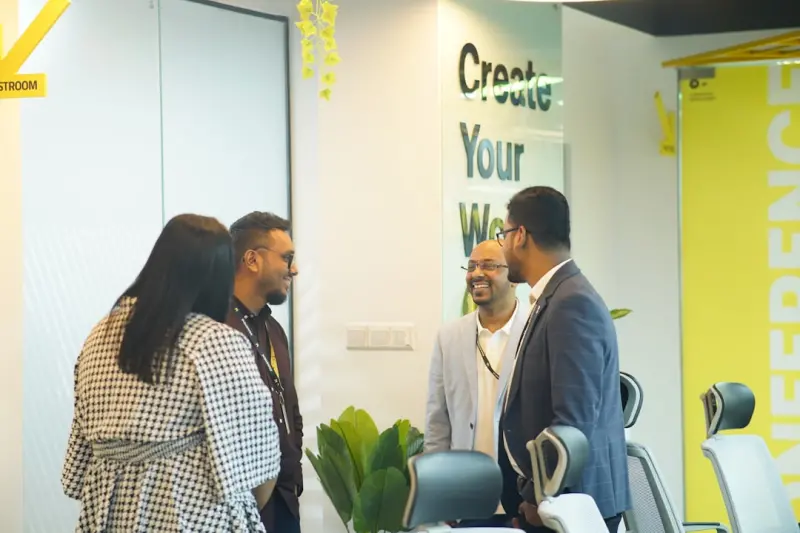
Reimagining Employment as a Continuous Growth Engine
When I first stepped into HR leadership a decade ago, the word “career” meant a linear ladder—entry, middle, senior, then perhaps a boardroom view. Today, that ladder is more a dynamic scaffold that can be rearranged, extended, or even collapsed in response to the rapid pace of change. Companies that treat employment as a static contract are watching talent slip through the cracks. Those that see each employee as a living, learning organism are building a growth engine that fuels innovation, retention, and market resilience.
The Core Shift: From Job Descriptions to Skill Ecosystems
Traditional job descriptions are fossil records. They capture a snapshot of what a role looked like when the posting went live, but they rarely reflect the evolving reality of work. In a skill ecosystem, every employee’s capabilities are mapped, tracked, and matched to emerging business needs in real time.
- Transparency. Employees can see which skills are in high demand across the organization, empowering them to steer their own development.
- Fluidity. Teams can pull talent from anywhere in the company for short‑term projects, reducing the friction of internal transfers.
- Data‑driven decisions. Managers rely on analytics—not gut feel—to allocate people where they’ll create the most impact.
Implementing a skill ecosystem isn’t a “nice‑to‑have” HR add‑on; it’s a strategic imperative. The skill‑first pay model is a perfect illustration. When compensation is tied to demonstrable ability rather than a static title, the whole organization becomes more agile. Employees are motivated to acquire high‑impact skills, and managers can reward outcomes rather than tenure.
Internal Marketplaces: The New Talent Exchange
Imagine an internal platform that looks like a freelance marketplace, but the talent never leaves the company. Employees list their current skill sets, upcoming availability, and project interests. Project leads post brief “gigs”—from data‑analysis sprints to design hacks. The marketplace algorithm surfaces the best fit, and both parties can accept, negotiate, or decline with a few clicks.
These marketplaces do three things simultaneously:
- Accelerate innovation. Cross‑functional teams can be assembled in days, not months.
- Boost employee engagement. People feel a sense of ownership when they choose projects that align with their passions.
- Reduce turnover. When growth opportunities are abundant internally, the lure of external offers weakens.
Many forward‑thinking firms have already piloted internal marketplaces, but the technology stack is still maturing. AI‑driven recommendation engines, integrated learning pathways, and real‑time capacity planning are the next wave of enhancements.
Learning as a Two‑Way Street: Peer‑Coaching and Micro‑Learning
One of the biggest blind spots in traditional L&D is the assumption that knowledge flows only from “experts” to “novices.” In reality, expertise is distributed, and peer interactions are a goldmine for rapid skill transfer. Peer‑coaching programs that pair senior staff with emerging talent create a virtuous cycle: mentors sharpen their coaching chops while mentees gain real‑world insight.
Combine peer‑coaching with micro‑learning—short, bite‑sized modules that can be consumed on the fly—and you have a learning ecosystem that fits into the flow of work. Employees can watch a two‑minute video on a new data visualization technique right before a client presentation, then discuss its application in a quick coaching session. The result? Immediate, measurable performance uplift.
From Project‑Based Stints to “Micro‑Internships” Inside the Company
We’ve all heard the buzz around Micro‑Internships as a talent‑acquisition tool for external candidates. The concept works just as powerfully in reverse: internal micro‑internships let employees dip their toes into new domains without the risk of a full departmental move.
How it works:
- Identify a short‑term, high‑visibility project that needs additional bandwidth.
- Open the role to interested employees across the organization, regardless of their current function.
- Provide a clear learning outcome and a mentor from the host team.
- After the stint, conduct a rapid debrief to capture new skills and potential longer‑term placements.
This approach fuels a culture of curiosity and reduces silos. Employees discover hidden talents—perhaps a finance analyst who excels at UX design—while the company uncovers new internal resource pools.
Embedding Well‑Being into the Employment Blueprint
While skill development and internal mobility dominate the conversation, the human element must not be sidelined. Well‑being is no longer a perk; it’s a performance driver. Companies that embed mental‑health resources, flexible work structures, and purpose‑driven missions into their employment model see tangible ROI: lower absenteeism, higher engagement scores, and stronger employer branding.
Key tactics include:
- Personalized well‑being dashboards. Employees can track stress levels, sleep, and exercise, and receive AI‑curated suggestions for improvement.
- Flexible “work‑as‑you‑need” policies. Instead of a one‑size‑fits‑all four‑day week, teams can negotiate work‑hours that align with project cycles and personal rhythms.
- Purpose alignment workshops. By connecting daily tasks to the broader company mission, employees experience a deeper sense of meaning.
The Role of Leadership: Cultivating an “Employment‑First” Mindset
All the technology and programs in the world won’t succeed without leadership buy‑in. Executives must model the behavior they want to see: taking on micro‑internships, participating in peer‑coaching, and openly discussing skill gaps.
Three leadership habits to adopt:
- Data transparency. Share skill‑map dashboards with the entire organization, showing where gaps exist and where growth opportunities lie.
- Continuous feedback loops. Replace annual reviews with quarterly check‑ins focused on learning objectives and project outcomes.
- Celebrate lateral moves. Publicly recognize employees who transition into new roles or domains, reinforcing that career growth isn’t only vertical.
Measuring Success: Metrics That Matter
To prove the value of a growth‑centric employment model, you need more than anecdotal stories. Here are the key metrics to track:
- Skill acquisition velocity. Number of new skills logged per employee per quarter.
- Internal project fill rate. Percentage of project‑based roles filled from within the talent marketplace.
- Employee Net Promoter Score (eNPS). A direct proxy for engagement and advocacy.
- Turnover cost avoidance. Savings realized by retaining employees through internal mobility.
- Time‑to‑competence. Average days it takes a new hire or internal mover to reach productivity.
When these metrics trend upward, you have concrete evidence that your employment engine is humming.
Future Outlook: The Convergence of AI, Skills, and Human Touch
Artificial intelligence will soon become the silent conductor of the skill ecosystem, continuously aligning talent with opportunity. Yet the human touch—coaching, mentorship, and purpose—will remain the heart of the system. The future isn’t about AI replacing HR; it’s about AI empowering HR to focus on the relational work that truly drives performance.
In practice, this means:
- AI curating personalized learning pathways based on project demand.
- Chatbots handling routine matching, freeing talent partners to coach and strategize.
- Human leaders interpreting AI insights to shape culture and vision.
By embracing this symbiosis, organizations can transform employment from a contractual obligation into a dynamic, self‑reinforcing growth engine.
Take Action Today
Ready to turn your workforce into a living growth engine? Start small:
- Map existing employee skills using a simple spreadsheet or low‑cost tool.
- Launch a pilot internal marketplace for one business unit.
- Introduce a peer‑coaching circle with clear, measurable goals.
- Set up a quarterly “skill sprint” where teams commit to learning a new capability.
Iterate, measure, and scale. The journey from static job descriptions to a vibrant skill ecosystem is continuous, but each step you take builds a more resilient, innovative, and engaged organization.

Dale Peterson is a freelance writer with a passion for technology, travel, law and personal finance. With 10 years of experience crafting compelling and informative content, he's dedicated to delivering high-quality writing for Blogging Fusion that engages audiences and achieves specific goals.
Related Posts

Why Skill Badges Are the New Resume: Navigating the Shift to Competency‑First Hiring
Skill badges are emerging as verified micro‑credentials that bridge the gap between traditional rÃ... Read More
Crafting a Narrative‑Driven Job Hunt in the Modern Marketplace
A fresh look at turning your professional story into a job‑search advantage, using portfolios, dig... Read More

How Garden Desks Are Transforming Employment in 2026
Garden desks are redefining the modern workplace, merging wellness with productivity and offering a ... Read More
Top Posts

Travel Light, Think Deep: Building a Minimalist Toolkit for Global Problem‑Solving
A minimalist travel toolkit, combined with micro‑habits, turns ordinary trips into powerful innovation labs, enhancing productivity and creativity while keepi...Read More
AI as a Strategic Co‑Creator: Re‑Defining Decision‑Making in the Enterprise
This article reveals how AI can transition from a backstage assistant to a strategic co‑creator, outlining practical steps for leaders to embed AI into decisi...Read More

Unlocking Health: The Transformative Power of Simple Breathwork
Explore practical breathing methods that lower cortisol, support gut health, and enhance immune function—simple tools for daily resilience and lasting wellnes...Read More

The AI Whisperer: Quiet Coaching for Modern Leaders
An AI whisperer acts as a silent coach, offering real‑time insights, ethical guardrails, and narrative framing to help leaders make faster, deeper decisions w...Read More
0 Comments
Post Comment
You will need to Login or Register to comment on this post!