
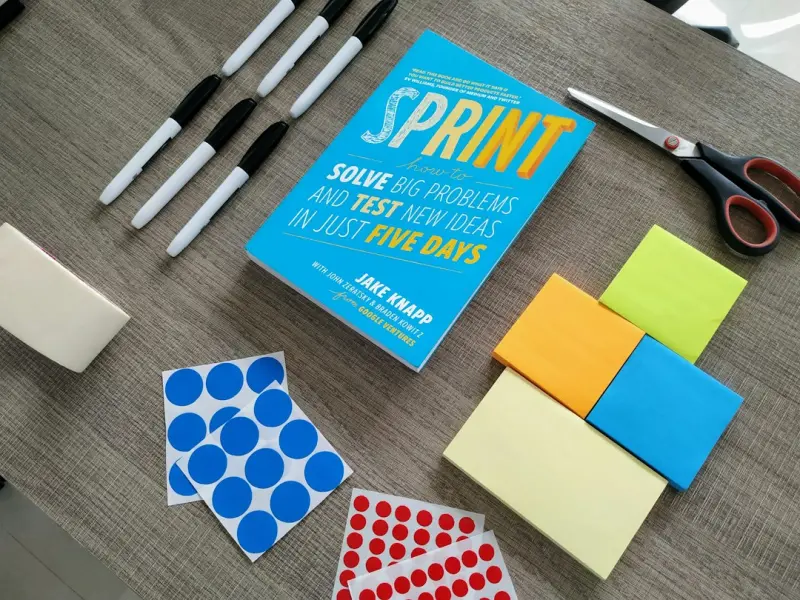
Reimagining the Workweek: Project‑Based Sprints as a Blueprint for Sustainable Growth
When I first stepped into a mid‑size tech firm five years ago, the calendar looked like a relentless march of meetings, deliverables, and endless email threads. The rhythm was predictable, but it felt more like a treadmill than a runway for innovation. Over time, I watched teams experiment with quiet AI partners, adopt micro‑rituals, and even redesign their office entryways. Each of those experiments taught me one undeniable truth: people thrive when work respects their natural cycles of focus, rest, and creative play.
That insight sparked a question that still fuels my curiosity today: What if the traditional five‑day, 40‑hour workweek were replaced by a series of short, intensive project sprints that give employees the autonomy to choose when—and how—they contribute? In this post, I’ll walk you through a concrete framework for a sprint‑centric workweek, illustrate how it can boost both employee wellbeing and organizational agility, and share practical steps to pilot the model in any company willing to experiment.
The Problem with the Conventional Calendar
The classic workweek was designed for an era when manufacturing floors needed a steady, predictable labor supply. In the knowledge economy, however, value is generated by deep focus, rapid iteration, and cross‑functional collaboration—activities that rarely fit neatly into a nine‑to‑five slot. The consequences of clinging to the old schedule are clear:
- Attention fragmentation: Frequent interruptions erode the “flow” state essential for complex problem‑solving.
- Burnout acceleration: Continuous pressure without built‑in recovery periods leads to mental fatigue and turnover.
- Innovation bottlenecks: Rigid timelines stifle the experimental mindset needed for breakthrough ideas.
While many organizations have responded with flexible hours or remote work policies, those measures often address only the surface symptoms. What we need is a deeper structural shift—one that aligns the cadence of work with the natural ebb and flow of human cognition.
Enter Project‑Based Sprints
A sprint, borrowed from agile development, is a short, time‑boxed period—typically one to two weeks—during which a team focuses on a clearly defined set of outcomes. The sprint model is already familiar to software teams, but its principles can be extended to any function: marketing, HR, finance, even executive leadership.
Imagine a week organized not around “Monday through Friday” but around “Sprint 1, Sprint 2, Sprint 3…” Each sprint follows a lightweight plan‑execute‑review loop:
- Plan (Day 1): Teams set a bold yet achievable objective, break it into bite‑size tasks, and allocate resources.
- Execute (Days 2‑4): Everyone works in focused bursts, using techniques like the Pomodoro method or personal “deep‑work windows.” Non‑essential meetings are parked, and communication shifts to async updates whenever possible.
- Review (Day 5): A brief showcase highlights achievements, captures learnings, and informs the next sprint’s priorities.
By compressing the work cycle into a five‑day sprint, you create a natural rhythm that balances intensity with recovery. The day after a sprint becomes an unstructured buffer—a perfect moment for reflection, skill‑building, or the micro‑escapes that keep creative energy flowing.
Why This Model Works for People
Human cognition thrives on cycles of focus and rest. Research on ultradian rhythms shows that we naturally enter peaks of high alertness roughly every 90 minutes, followed by a dip that calls for a short break. Project sprints respect that biology by:
- Providing clear start‑and‑stop signals: Knowing a sprint ends on Friday reduces the anxiety of “unfinished work.”
- Encouraging purposeful downtime: The buffer day validates rest as a strategic component, not a luxury.
- Facilitating personal rhythm: Individuals can schedule deep‑work blocks when they feel most alert, rather than being forced into a one‑size‑fits‑all schedule.
When employees feel their natural work patterns are honored, they report higher engagement, lower stress, and a stronger sense of ownership. In my own experience, teams that adopted sprint weeks began using personal audio cues—a practice I explored in the soundtrack strategy—to signal the start of deep work, creating a shared rhythm that reinforced focus without added meetings.
Business Benefits That Extend Beyond the Team
From a leadership perspective, the sprint model offers tangible advantages:
- Predictable delivery cadence: Stakeholders receive regular, demo‑ready outputs, reducing the “never‑finished” feeling that plagues long‑term projects.
- Accelerated feedback loops: Early detection of misaligned assumptions allows course correction before resources are heavily invested.
- Enhanced cross‑functional collaboration: Because each sprint’s goal is transparent, teams from product, design, and sales can align quickly and contribute where needed.
- Data‑driven performance insights: Sprint metrics (velocity, cycle time, defect rate) give managers a granular view of team health, enabling smarter resource allocation.
Moreover, the sprint structure dovetails neatly with emerging AI tools that serve as “quiet partners” in decision‑making. When AI can surface relevant data during the planning phase, teams spend less time hunting for information and more time iterating on value‑adding work.
Steps to Pilot a Sprint‑Based Workweek
Transitioning to a sprint‑centric calendar is a cultural shift, not a tech implementation. Here’s a step‑by‑step guide to get started without causing disruption:
1. Identify a Pilot Squad
Select a cross‑functional team that is already comfortable with agile practices. A small, motivated group reduces risk and provides a showcase for success.
2. Co‑Create the Sprint Cadence
Work with the pilot squad to decide sprint length (one or two weeks) and the day for the review. Keep the first iteration simple: a single objective, limited scope, and a clear definition of “done.”
3. Set Up Communication Norms
Introduce async status updates (e.g., a shared Kanban board or a brief Slack thread) and define “focus hours” where meetings are discouraged. Encourage the use of personal audio cues or ambient playlists to signal deep‑work periods.
4. Reserve a Buffer Day
After each sprint, give the team a day for knowledge sharing, skill development, or micro‑escapes that replenish creative energy. This day can also serve as a low‑stress period for administrative tasks.
5. Measure, Reflect, Iterate
At the end of the first sprint, collect quantitative data (velocity, cycle time) and qualitative feedback (team morale, perceived autonomy). Use that information to tweak the cadence, communication tools, or scope for the next cycle.
6. Scale Thoughtfully
Once the pilot demonstrates consistent delivery and improved wellbeing, roll the model out department by department. Provide a “sprint playbook” that captures best practices and lessons learned.
Addressing Common Concerns
“We need to be available to clients every day.” – The sprint model doesn’t eliminate availability; it clarifies when deep work happens and when you’re most reachable. Client‑facing roles can allocate “office hours” on buffer days, ensuring responsiveness while preserving focused time.
“Our work is too unpredictable for fixed sprints.” – Even ad‑hoc tasks can be slotted into a sprint’s “capacity buffer.” The key is to treat emergent work as a variable, not an exception, and to adjust sprint commitments accordingly.
“Will this increase management overhead?” – On the contrary, the sprint review replaces lengthy status meetings with a concise showcase. Managers spend less time gathering updates and more time coaching on outcomes.
Future‑Proofing Your Workforce
As the talent market continues to evolve, employees are gravitating toward roles that honor their autonomy and growth aspirations. A sprint‑based workweek signals that your organization values flexibility, continuous learning, and outcome‑driven performance. It also aligns with broader trends like internal gig economies and AI‑augmented decision‑making, creating a cohesive ecosystem where people, processes, and technology reinforce each other.
In my own journey, I’ve seen how small changes—like introducing a personal soundtrack for focus or encouraging a quick nature walk during a buffer day—can ripple into larger cultural transformations. The sprint model is simply the next logical step: a structured yet adaptable framework that respects human rhythms while delivering rapid business value.
Closing Thoughts
Redesigning the workweek isn’t about discarding tradition; it’s about evolving it to match the tempo of modern knowledge work. By embracing project‑based sprints, you give employees the freedom to dive deep, recharge, and emerge with fresh insights—while giving your organization the predictability and speed needed to stay competitive. The experiment starts with a single team, a clear objective, and a commitment to learn from each cycle. If you’re ready to break free from the monotony of the five‑day grind, give the sprint model a try. You may find that the most powerful innovation comes not from a new tool, but from a new way of structuring time.

Melanie Wilson, Freelance writer with a flare for everything. I am passionate about topics I write crafting stories and compelling content that connect with audiences. Journeying through the realms of creativity as a freelance creator. #WriterLife #ContentCreator
Related Posts

Reimagining Onboarding for Remote‑First Teams: A Blueprint for Success
Traditional onboarding falls short for distributed teams. This guide outlines a four‑pillar, dataâ... Read More

Why Employee Sabbaticals Are the Secret Weapon for Modern Companies
Explore why extended, purposeful breaks are becoming essential for companies seeking higher innovati... Read More

Skill Stacking: Building a Career Mosaic for the AI‑Driven Workplace
Skill stacking turns careers into dynamic mosaics, blending technical, business, and soft skills to ... Read More
Top Posts

Crafting a Cozy Indoor Green Oasis for Small Spaces
Discover how to turn limited square footage into a vibrant indoor sanctuary using low‑light plants, vertical gardens, DIY hydroponics, and sustainable rainwat...Read More
The Quiet Power of Passive Home Design: Boost Comfort Without Major Renovations
Learn how small, intentional tweaks—like optimizing natural light, improving airflow, creating acoustic calm zones, and adopting micro‑movement habits—can...Read More
How AI is Redesigning Sustainable Product Development
AI is reshaping sustainable product development by enabling data‑driven material choices, live lifecycle assessments, and circular‑economy networks, giving ...Read More

Transform Your Entryway into a Calm, Functional Welcome Zone
A well‑designed entryway can reduce stress and improve daily efficiency. Learn how to zone, light, store, scent, and personalize your hallway for a calm, func...Read More
0 Comments
Post Comment
You will need to Login or Register to comment on this post!