
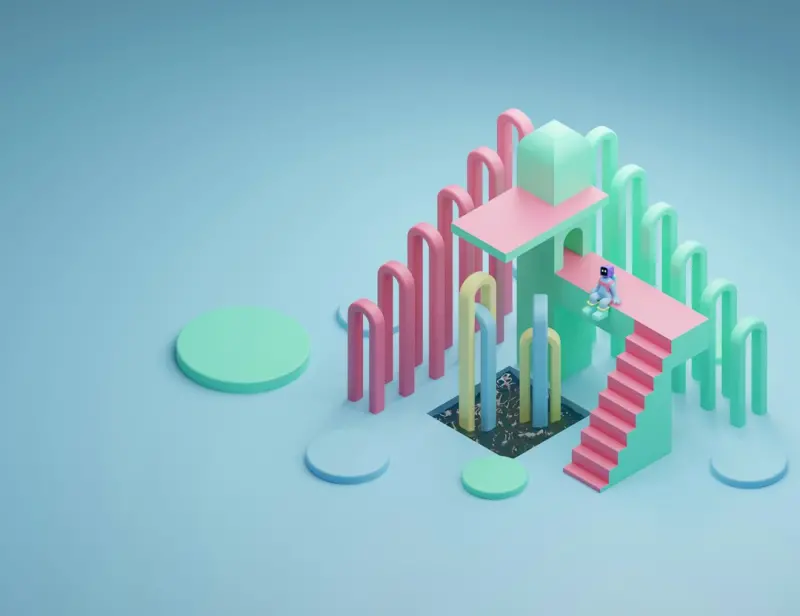
Why Playful Digital Spaces Are the Unsung Heroes of Modern Mental Health
When I first walked into a coworking lounge that resembled a giant LEGO playground, I thought it was a marketing stunt. Little did I know that the colorful walls, interactive light panels, and gamified task boards were quietly reshaping how we cope with stress. In an era where the line between work and home has blurred into a perpetual notification feed, the need for intentional mental relief has never been louder. Yet, the solutions we gravitate toward often feel either too clinical or too fleeting. Enter the playful digital space—a hybrid environment that blends purposeful design, subtle interactivity, and a sprinkle of humor to create a mental sanctuary that feels both safe and energizing.
The Science Behind Play and the Brain
Decades of neuroscience tell us that play isn’t just child’s play. It triggers dopamine release, strengthens the prefrontal cortex, and can even rewire neural pathways associated with anxiety. When you engage in a low‑stakes, intrinsically rewarding activity—think a quick puzzle on a wall‑mounted tablet or a collaborative doodle board—your brain shifts from the default mode network (where rumination lives) to the task‑positive network, which is associated with focus and creativity. This shift reduces cortisol levels within minutes, providing a rapid, tangible boost to mood.
What’s fascinating is how digital platforms can amplify this effect. Unlike traditional “break rooms” that rely on static furniture, modern playful spaces embed sensors, adaptive lighting, and responsive soundscapes that adjust to the collective energy of the room. The result is a dynamic feedback loop where the environment responds to you, and you, in turn, respond to the environment—creating a subtle but powerful mental reset.
Designing Playful Spaces That Aren’t “Just Fun”
Designers often wrestle with the balance between whimsy and purpose. The most effective environments start with a clear mental health objective: reduce cognitive overload, foster micro‑breaks, and encourage social connection. From there, they layer in elements that serve those goals:
- Interactive Zones: Touch‑sensitive panels that invite users to solve a quick visual riddle or contribute to a shared mural. These zones are strategically placed near high‑focus workstations to prompt spontaneous breaks.
- Adaptive Lighting: Soft, tunable LEDs that shift hue based on time of day and ambient noise levels, gently guiding the circadian rhythm without the harshness of fluorescent bulbs.
- Soundscapes with Choice: A library of ambient sounds—rain, distant coffee shop chatter, soft synth tones—allowing individuals to curate their auditory backdrop. Importantly, these are optional, respecting introverted preferences.
- Gamified Wellness Challenges: Leaderboards that celebrate collective steps taken toward mindfulness, not competition. Think “team meditation minutes” or “daily gratitude doodles.”
When these components are woven together, the space becomes a living, breathing entity that supports mental health without demanding explicit “therapy time.” It’s a subtle nudge toward healthier habits.
From Solo Screens to Shared Experiences
One of the biggest pitfalls of remote work is the isolation that comes from spending eight hours in front of a personal screen. While video calls and chat apps try to bridge the gap, they often feel transactional. Playful digital spaces reintroduce the concept of “shared experience” without the pressure of performance.
Imagine a virtual hallway where colleagues can drop a quick sketch, leave a sticky note, or spin a digital wheel that suggests a 30‑second breathing exercise. This is not a formal meditation session; it’s a spontaneous, low‑commitment interaction that humanizes the digital workplace. By embedding these moments into the workflow, teams can collectively lower stress levels without adding extra meetings to the calendar.
Real‑World Success: A Case Study in Playful Resilience
At a mid‑size fintech firm, the leadership team introduced a “Creativity Cove”—a corner of the office equipped with a large touch‑screen canvas, mood‑responsive lighting, and a sound palette curated by the staff. Within three months, employee‑reported stress scores dropped by 18%, and the average time spent on focused tasks increased by 12%.
The secret? The space wasn’t marketed as a “mental health tool.” It was framed as an “innovation hub,” allowing employees to engage on their own terms. The subtlety of the design meant that participation felt natural, not obligatory. This mirrors the findings of a recent study on narrative breathing technique where low‑effort, high‑impact interventions yielded outsized benefits for anxiety reduction.
Integrating Play Into Existing Digital Workflows
If you’re wondering how to sprinkle playful elements into a fully remote or hybrid environment, start small. Here are three actionable steps:
- Micro‑Interactive Widgets: Add a “fun fact of the day” widget on your intranet homepage that also includes a quick poll. The data collected can be visualized on a communal board, fostering a sense of participation.
- Virtual Break Rooms: Use video platforms that support shared whiteboards and quick games (e.g., collaborative doodling or trivia). Schedule them as optional 10‑minute “break‑out” sessions after long meetings.
- Gamified Wellness Metrics: Introduce a badge system for completing short, playful challenges—like a daily “mindful stretch” or “random act of kindness” logged in a shared channel.
These interventions can be layered onto existing tools without massive overhauls, making them accessible for companies at any stage of digital maturity. For inspiration on how to embed creativity into daily workflows, take a look at creative collaboration in the enterprise, where AI‑driven canvases enable teams to co‑create in real time, breaking down silos and boosting morale.
The Role of Leadership in Normalizing Play
Culture change starts at the top. When leaders openly participate in playful moments—whether it’s joining a quick sketch session or sharing a funny meme in a dedicated channel—they signal that mental well‑being isn’t a “nice‑to‑have” but a core performance driver. It also reduces the stigma that can surround more traditional mental health initiatives.
Effective leaders practice what I call “visible vulnerability.” By openly acknowledging a moment of stress and then stepping into a playful activity, they model a healthy coping mechanism. This creates a ripple effect: team members feel empowered to take micro‑breaks, leading to a collective uplift in resilience.
Looking Ahead: The Future of Playful Mental Health Tech
The next wave of mental health technology will likely blend AI, biofeedback, and gamification. Imagine a desk lamp that senses your heart rate variability and subtly shifts color to prompt a micro‑pause when stress spikes. Or an AI‑driven “play companion” that suggests a brief creative task based on your calendar load.
These innovations will push the envelope from reactive to proactive mental health support. Rather than waiting for a crisis, the environment will continuously nudge you toward balance, making mental wellness an integral part of the workday rather than an afterthought.
Take the First Step Today
Start by auditing your current workspace—physical or virtual. Identify one area where a playful element could be introduced without disrupting productivity. Maybe it’s a digital “idea wall,” a shared playlist, or a quick puzzle embedded in your project management tool. Implement, observe the impact, and iterate. The goal isn’t to overhaul your entire office overnight but to plant seeds of playful resilience that, over time, grow into a culture where mental health thrives alongside performance.

Brad Hays is a freelance writer known for his versatile skill set and ability to craft compelling content across a wide range of industries.
Related Posts
Digital Declutter: Rewiring Your Mind for Calm in a Hyper‑Connected World
Learn how intentional screen‑free pauses, storytelling, and playful creativity can transform chron... Read More
Embracing Controlled Boredom: A Counterintuitive Path to Mental Clarity
Learn why deliberately stepping into low‑stimulus moments can reset your brain, improve emotional ... Read More
Unplug to Recharge: How Deliberate Digital Breaks Boost Mental Health
Explore practical strategies for incorporating purposeful digital breaks into daily life, backed by ... Read More
Top Posts
From My Garden Desk: Jimmy Damon’s Blueprint for the New Era of Employment
Jimmy Damon reveals the secrets behind turning a garden into a high‑productivity, cozy home office—perfect for the modern remote worker seeking balance and ...Read More
Microbreak Mastery: Tiny Pauses for Big Mental Gains
Learn how tiny, intentional pauses—microbreaks—can reset your brain, improve focus, and reduce stress at work. Practical tips, tools, and ways to embed them...Read More

Why Outdoor Desks Are the Secret Weapon for Modern Employees
Outdoor desks are reshaping work—boosting focus, health, and culture. Learn how a garden setup can become your secret weapon for modern employment success....Read More

Peer Learning Pods: The Secret Weapon for Modern Career Growth
Peer learning pods—small, voluntary groups focused on shared curiosity—are redefining career growth. This article explores why traditional L&D falls short, ...Read More
0 Comments
Post Comment
You will need to Login or Register to comment on this post!