
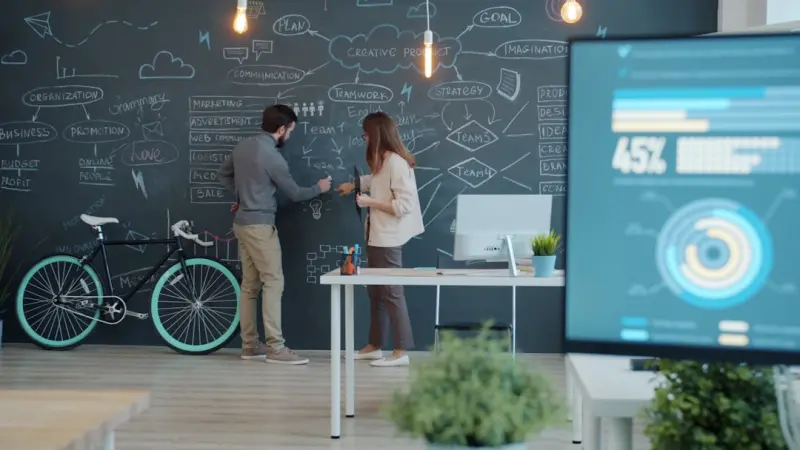
AI as Your Idea Partner: Rethinking Innovation in the Workplace
When I first heard someone describe an artificial‑intelligence system as a “co‑pilot,” I laughed. I’d spent the better part of a decade watching buzzwords bounce around conference rooms, from “machine learning” to “deep neural networks,” and I’d learned to treat every new term with a healthy dose of skepticism. Yet, as I sit in a cramped meeting pod, watching a chat‑bot spin a rough outline of a product roadmap in real time, I’m forced to admit something uncomfortable: AI isn’t just a shiny gadget; it’s becoming a genuine brainstorming buddy.
In the past, the word “collaboration” conjured images of humans huddled around whiteboards, sticky notes flying, coffee cups emptying. Today, the collaborative canvas has expanded to include code, data, and—yes—algorithms that can riff off our ideas faster than any human can. The shift isn’t about AI replacing creativity; it’s about AI amplifying the human spark we already have.
The Myth of the Lone Genius
Hollywood loves the lone‑genius narrative: a solitary inventor locked away, emerging with a world‑changing breakthrough. In reality, breakthroughs are messy, iterative, and social. The same holds true for AI‑augmented work. By treating AI as a teammate rather than a tool, we sidestep the “AI does it all” trap and open up a space where ideas can be tossed, tested, and refined in seconds.
Think of it like an improv class. In improv, you never say “no” to a suggestion; you build on it. An AI partner does exactly that: it takes a fragment of a concept—maybe “personalized onboarding for SaaS clients”—and instantly suggests three alternative angles, three data‑driven personas, even a mock‑up of a UI flow. It’s not the final answer, but it’s a catalyst that keeps the conversation moving.
From Prompt to Prototype: A Real‑World Walkthrough
Let me walk you through a recent session with our product team. The challenge: design a new feature that helps enterprise users forecast churn risk without drowning them in dashboards.
- Prompt the AI. I typed, “Give me three ways a SaaS platform could surface churn risk in a single glance.” Instantly, the model spat out:
- A heat‑map overlay on the user list that colors accounts by risk tier.
- An AI‑generated narrative summary that reads like “Your top three at‑risk accounts are X, Y, Z, driven by declining usage and support tickets.”
- A “what‑if” simulation button that predicts churn probability if a customer’s usage drops by 10% next month.
- Iterate on the suggestions. The team loved the narrative idea but worried about “AI‑generated text” feeling impersonal. I asked the model to re‑phrase the narrative in a friendly, conversational tone. Within seconds, we had three variations, each with a different brand voice.
- Validate with data. Next, I fed the AI our last six months of churn data (anonymized, of course). It returned a quick AI‑built knowledge graph that linked usage patterns, support interactions, and billing events to churn outcomes. The graph highlighted a previously unnoticed correlation: a spike in “feature‑request tickets” preceded churn by two weeks.
- Prototype in minutes. Using a low‑code canvas, I dragged the heat‑map component onto a mock UI, pasted the narrative, and wired the “what‑if” button to a simple regression model. In under ten minutes, we had a clickable prototype to show the exec team.
The result? The executive board approved a sprint to flesh out the feature, not because the idea was “perfect,” but because we could demonstrate a credible, data‑backed vision today, not “next quarter.”
Why AI‑Enhanced Brainstorms Work
- Speed. Traditional brainstorming can stall when participants hit a mental block. AI can fill the silence with a fresh angle, keeping momentum alive.
- Depth. The model can tap into massive corpora—industry reports, academic papers, internal knowledge bases—delivering insights that would take a human days to research.
- Objectivity. AI doesn’t bring personal biases to the table (though it inherits data biases, which we must monitor). It can surface ideas that a homogenous team might overlook.
- Scalability. You can run parallel idea‑generation sessions with multiple AI instances, each exploring a different hypothesis.
Guardrails: Keeping the Human in the Loop
As exciting as AI co‑creation sounds, it’s not a free‑for‑all. Here are the guardrails we’ve put in place:
1. Define the Prompt Scope
Vague prompts yield vague results. The more precise you are—include the target audience, the desired outcome, any constraints—you get output that’s immediately actionable. A prompt like “Suggest ways to improve onboarding” is too broad; “Suggest three data‑driven micro‑learning snippets for new SaaS admins within a 5‑minute window” narrows the field and yields richer ideas.
2. Vet the Data Sources
AI models are only as good as the data they consume. We maintain a curated “trusted corpus” that excludes marketing fluff, outdated research, and anything that could introduce compliance risk. When we need external insights, we cross‑reference the AI’s suggestions with reputable industry reports.
3. Human Review Loop
Every AI‑generated concept passes through a human reviewer who checks for feasibility, brand alignment, and ethical considerations. This step also prevents the model from reinforcing hidden biases—something we learned the hard way when an early prototype suggested “target low‑income markets” without contextual nuance.
4. Transparency with Stakeholders
When presenting AI‑augmented ideas, we always disclose the role of the model. Transparency builds trust and avoids the “black box” stigma that can make executives wary of AI‑driven decisions.
Beyond Ideation: AI as a Continuous Coach
Idea generation is just the tip of the iceberg. The real power of an AI partner lies in its ability to coach you throughout the product lifecycle. Here are three ways we’re using AI beyond the whiteboard:
Performance Forecasting
Once a feature ships, we feed real‑time usage metrics into a predictive model that flags anomalies—say, a sudden drop in adoption that mirrors patterns from a past failed launch. The AI then suggests mitigation tactics, such as targeted in‑app messaging or a quick A/B test.
Customer Journey Personalization
By integrating smart personal care devices data streams into our CRM, we can infer a user’s context (e.g., “working out at 6 am”) and tailor in‑product nudges accordingly. The AI surfaces the optimal moment to surface a tutorial or a upsell, turning generic push notifications into highly relevant conversations.
Skill‑Gap Detection for Teams
Our AI monitors the language used in design docs, code reviews, and meeting notes. When it detects recurring gaps—say, “lack of data‑privacy considerations”—it recommends micro‑learning modules, paired‑programming sessions, or a quick consult with a privacy specialist. In this way, the AI becomes a living mentor, nudging teams toward continuous improvement.
Culture Shock or Evolution?
It’s natural to feel a cultural jolt when you start treating a machine as a teammate. Some team members fear that their creative voice will be drowned out; others worry about job security. The answer lies in framing AI not as a replacement but as an amplifier. When you position the technology as a “creative partner” that handles the grunt work—data synthesis, rapid prototyping, pattern spotting—human talent is free to focus on the parts that truly require empathy, strategy, and vision.
In practice, we’ve seen a shift in our own organization: meetings that used to drag for an hour now finish in thirty minutes because the AI has already done the heavy lifting of research. Team members report higher satisfaction because they spend less time on repetitive tasks and more time on high‑impact, high‑energy work.
Getting Started: A Simple Playbook
- Pick a low‑stakes use case. Start with a task that’s repetitive but creative, like drafting product copy or generating user personas.
- Set up a prompt library. Document effective prompts and the outcomes they produced. This becomes your internal “prompt playbook.”
- Run a pilot with a cross‑functional team. Involve designers, engineers, marketers, and product managers to see how each role benefits.
- Measure impact. Track time saved, idea count, and stakeholder satisfaction. Use these metrics to justify broader adoption.
- Iterate the workflow. Refine prompts, expand data sources, and tighten the human‑review loop based on feedback.
Remember, the goal isn’t to replace the creative spark—it’s to keep that spark alive, glowing brighter, and moving faster.
Looking Ahead: The Future of AI‑Human Collaboration
We’re only scratching the surface of what’s possible. Imagine a future where AI not only drafts ideas but also simulates market reactions in real time, runs virtual focus groups, and even negotiates pricing scenarios based on competitor data. In such a world, the role of the human shifts from “idea generator” to “strategic curator.”
That future is already on the horizon. The key takeaway for any B2B SaaS leader is simple: embrace AI as a partner now, experiment boldly, and set the cultural tone that celebrates collaboration—human and machine alike. When you do, you’ll find that the most innovative ideas aren’t just born from a single mind; they’re co‑created in the shared space where imagination meets algorithmic horsepower.

Jimmy Damon loves to right on a large scale of topics with all things Canadian as this Montreal die hard loves hockey. fishing and sports.
Related Posts

From Reactive to Proactive: How AI is Redefining B2B SaaS Customer Journeys
AI is moving beyond reactive fixes to become a proactive, trustworthy partner in B2B SaaS, deliverin... Read More
When AI Becomes the Quiet Companion in Your Workday
Explore the concept of ambient AI—a subtle, context‑aware technology that quietly enhances focus... Read More

When Your AI Becomes a Silent Co‑Pilot for Decision‑Making
Explore the concept of AI as a discreet co‑pilot that offers timely insights, ethical safeguards, ... Read More
Top Posts
Personalized Hydration: Turning Data into Daily Water Wisdom
Explore a data‑driven approach to hydration, using wearables and smart bottles to tailor daily water intake for improved focus, health, and longevity....Read More

Playful Pause: How Analog Games Rewire Your Brain for Better Mental Health
A fresh look at mental wellness: using tactile, screen‑free games to reset the brain, foster connection, and strengthen emotional agility....Read More

Pet‑Friendly Home Design: Style Meets Function
Discover how to create a beautiful, functional home that accommodates pets without sacrificing style, featuring flooring, furniture, storage, safety zones, and ...Read More

Why My Garden Desk Is the Ultimate Home & Garden Upgrade for 2026
Explore the rise of garden desks in 2026, blending productivity with nature. Get design tips, tech essentials, and sustainability insights to create your perfec...Read More
0 Comments
Post Comment
You will need to Login or Register to comment on this post!