

Why Employee Sabbaticals Are the Secret Weapon for Long-Term Success
When I first walked into a midsize tech firm as a junior analyst, I was dazzled by the buzzwords plastered across the office walls: “agile,” “growth mindset,” “continuous learning.” Yet, beneath the glossy slogans, a quieter, more insidious current was at play—burnout. It wasn’t that the work was meaningless; it was the relentless pressure to keep sprinting without a true pause.
Fast‑forward a few years, and I’ve seen the same pattern repeat in startups, nonprofits, and even traditional manufacturing. Companies pour resources into fancy wellness programs, meditation apps, and occasional “mental health days,” but they rarely ask the fundamental question: What happens when employees need a real, sustained break? This is where the concept of a structured sabbatical steps in, not as an indulgence, but as a strategic lever that can reshape talent retention, innovation pipelines, and bottom‑line performance.
Understanding the Sabbatical: Not a Vacation, Not a Leave of Absence
A sabbatical is a pre‑planned, paid period—typically ranging from four weeks to six months—where an employee steps away from day‑to‑day responsibilities to pursue personal growth, research, volunteer work, or simply recharge. Unlike standard vacation time, sabbaticals are woven into an employee’s career trajectory, often granted after a set tenure (e.g., five years of service). The key distinction lies in intentionality: the employee returns with new skills, fresh perspectives, or renewed energy that directly benefits the organization.
In practice, sabbaticals can look like:
- Skill deep‑dives: An engineer enrolls in an advanced data‑science bootcamp.
- Purpose projects: A marketing manager volunteers with a nonprofit, sharpening storytelling chops.
- Creative retreats: A designer spends time in a remote cabin to explore new aesthetics.
- Personal resets: An executive takes a month to travel, read, and reflect on leadership philosophy.
The Business Case: Numbers Don’t Lie
Research from the Harvard Business Review shows that organizations offering sabbaticals see a 15‑20% reduction in turnover and a measurable uptick in employee engagement scores. The math is simple: when employees know they have a safety valve for burnout, they’re more likely to stay for the long haul.
Moreover, the return on investment (ROI) is striking. Companies that have piloted sabbatical programs report:
- Higher rates of internal promotions, as returning employees often step into more senior roles armed with fresh expertise.
- Increased patent filings and product innovations, driven by the “cross‑pollination” of ideas gathered during the break.
- Cost savings on recruitment—replacing a senior employee can cost up to 200% of their annual salary, while a sabbatical can extend that employee’s tenure by several years.
These metrics counter the lingering myth that time off is simply a cost center. In reality, it’s a talent accelerator.
Designing a Sabbatical Program That Works
Implementing a sabbatical policy isn’t about writing a vague promise in the employee handbook. It requires a thoughtful framework that aligns with both business objectives and personal aspirations.
- Eligibility Criteria: Define clear service milestones (e.g., after 5 or 10 years) and performance thresholds. This ensures the program rewards commitment without compromising operational continuity.
- Duration & Compensation: Offer flexible lengths—4 weeks, 8 weeks, or up to 6 months—paired with either full pay, partial pay, or a “pay‑as‑you‑go” stipend. A tiered approach accommodates diverse financial realities.
- Application Process: Require a brief proposal outlining goals, expected outcomes, and a re‑integration plan. This keeps the sabbatical purpose‑driven and measurable.
- Knowledge Transfer: Prior to departure, employees must document critical processes and train a backup. A “handover checklist” safeguards workflow continuity.
- Re‑entry Strategy: Upon return, schedule a debrief session, update career development plans, and celebrate achievements. Recognizing the sabbatical’s impact reinforces its value.
Case Study: From Burnout to Breakthrough
Consider the story of Maya, a senior product manager at a mid‑size SaaS company. After seven years of intense release cycles, she felt her creative spark dimming. The firm’s newly launched sabbatical program allowed her to take a three‑month “innovation immersion” in Scandinavia, where she collaborated with a local AI research lab.
When Maya returned, she introduced a predictive‑analytics feature that cut churn by 12% within six months. Her sabbatical not only revitalized her personal motivation but also delivered a tangible revenue boost. The company publicly credited the program for the breakthrough, sparking a surge in internal interest and a 30% increase in sabbatical applications the following year.
Addressing Common Concerns
Implementing sabbaticals inevitably raises eyebrows among leadership. Below are the most frequent objections—and why they miss the bigger picture.
- “We can’t afford the lost productivity.” In reality, the short‑term dip is offset by long‑term gains in retention and innovation. Moreover, strategic coverage planning (e.g., temporary hires or cross‑training) can mitigate gaps.
- “Employees will abuse the system.” A transparent, merit‑based eligibility framework, coupled with a proposal requirement, weeds out frivolous requests.
- “It’s only for senior staff.” While senior roles benefit greatly, offering tiered sabbaticals (shorter, less‑paid versions) to junior staff cultivates a culture of trust early on.
Integrating Sabbaticals with Broader Talent Strategies
Sabbaticals are most powerful when they dovetail with other employee‑experience initiatives. For instance, pairing a sabbatical with robust financial wellness strategies ensures employees can comfortably afford a pay‑partial sabbatical without financial stress.
Similarly, leveraging AI empathy tools can help managers gauge employee readiness for a sabbatical. Predictive analytics can spot early signs of disengagement, prompting timely conversations about extended breaks before burnout fully manifests.
By weaving sabbaticals into the fabric of performance reviews, learning & development roadmaps, and succession planning, organizations turn a single policy into a multi‑dimensional talent engine.
Measuring Impact: The KPI Dashboard
To justify and refine the program, track these key performance indicators:
- Retention Rate: Compare turnover of sabbatical‑eligible employees versus a control group.
- Innovation Metrics: Count patents filed, new product features launched, or process improvements attributed to returning employees.
- Engagement Scores: Use pulse surveys to assess morale before and after sabbaticals.
- Productivity Index: Measure output variance during sabbatical periods to identify any workflow bottlenecks.
- Cost Savings: Calculate recruitment costs avoided through extended tenure.
Building a Culture That Celebrates Time Off
Policy alone isn’t enough. Leadership must model the behavior they wish to see. When CEOs publicly share their own sabbatical experiences, it normalizes the practice and reduces stigma. Peer‑to‑peer storytelling—like Maya’s case study—creates a repository of tangible benefits that inspire others to apply.
Encouraging cross‑departmental “sabbatical circles” where alumni share insights can also turn individual experiences into collective knowledge, fostering a learning ecosystem that thrives on curiosity.
Future Outlook: Sabbaticals as a Competitive Differentiator
As the war for talent intensifies, companies that merely offer flexible hours or remote work will struggle to stand out. Sabbaticals, by contrast, signal a deep commitment to employee wellbeing and lifelong growth. They transform the employment contract from a transactional agreement into a partnership for personal and professional evolution.
In the next decade, expect to see sabbaticals become a standard clause in employment contracts, much like health benefits or 401(k) matching. Forward‑thinking firms that adopt them today will not only retain top talent—they’ll cultivate a workforce capable of driving sustained, innovative breakthroughs.

Armed with a degree in English Literature, Jill’s journey into the digital space wasn't just a career move; it was a natural extension of her lifelong love affair with storytelling. While some writers view search engine optimization (SEO) as a rigid constraint, Jill sees it as a creative puzzle. She understands the delicate art of balancing the algorithmic demands of search engines with the human desire for resonance, emotion, and value. To Jill, keywords aren't just targets to hit; they are the breadcrumbs that lead eager readers straight to the answers they’ve been searching for.
Related Posts

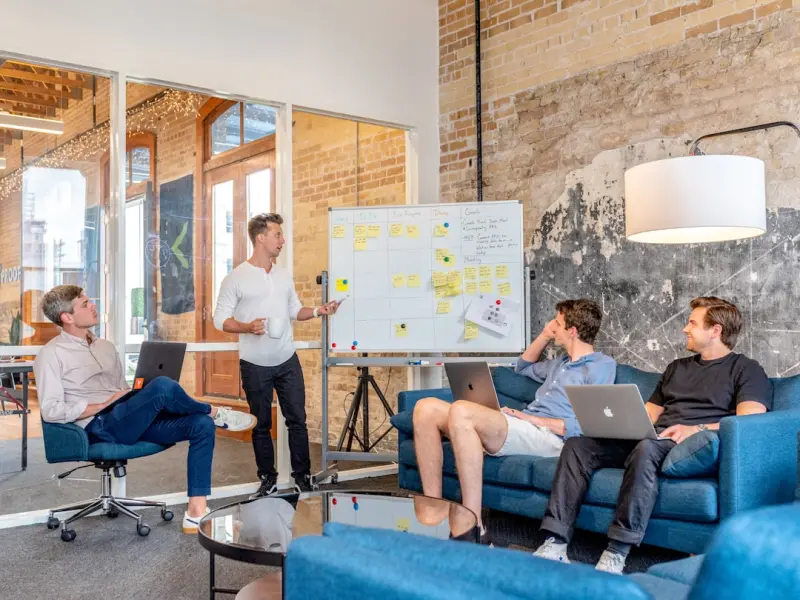
The Quiet Power of Employee Advocacy: Turning Your Workforce Into a Growth Engine
Employee advocacy goes beyond simple social sharing; it aligns purpose, empowers staff with the righ... Read More
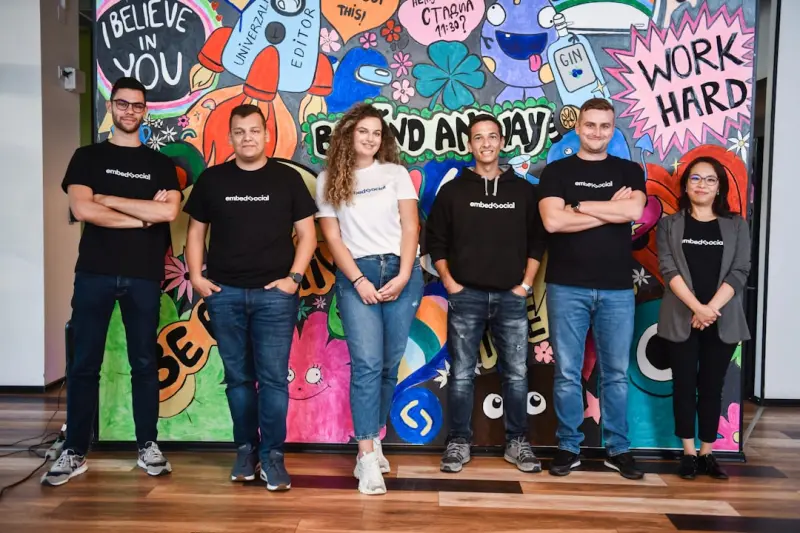
Reimagining Internal Mobility: The Marketplace Model That Keeps Talent Thriving
A fresh look at career development replaces the traditional ladder with an open internal marketplace... Read More
Why Skill Marketplaces Are the Next Employment Revolution
Skill marketplaces turn expertise into tokenized offerings, enabling flexible, AI‑driven work rela... Read More
Top Posts

Scent, Sound, and Sensation: Rewiring Your Brain for Calm
Learn to harness scent and sound as everyday anchors, pairing them with breathwork to rewire stress responses and cultivate lasting calm....Read More

AI as a Creative Partner: Redefining Collaboration in the Enterprise
Artificial intelligence is evolving from a mere tool to a genuine creative partner. This post reveals how treating AI as a collaborator can accelerate ideation,...Read More

Micro‑Movement Magic: Tiny Actions, Big Health Gains
Learn how micro‑movements—quick, purposeful actions—can transform your health, boost metabolism, and improve mood, all while fitting seamlessly into a hec...Read More

Garden Alchemy: Turning Everyday Spaces into Lush Retreats
Learn how to transform neglected corners of your home into vibrant garden retreats using DIY vertical gardens, seasonal edible borders, rainwater harvest, and p...Read More
0 Comments
Post Comment
You will need to Login or Register to comment on this post!