

Imagine walking into a virtual hallway where the only walls are the shared values, the common goals, and the seamless flow of information. No longer do we measure success by the square footage of a cubicle or the distance from the coffee machine to the manager’s desk. The new frontier of employment is a distributed talent community—a dynamic, border‑less ecosystem where professionals collaborate, learn, and advance their careers as if they were all sitting side‑by‑side, even though they may be oceans apart.
Why Distributed Talent Communities Matter
Traditional employment models were built around static hierarchies and fixed office locations. Those structures made sense when the majority of work required physical presence. Today, the proliferation of high‑speed internet, collaborative platforms, and AI‑driven knowledge tools has shattered that premise. Companies that cling to a single‑site mentality risk missing out on three critical advantages:
- Diverse perspective pools: By tapping into talent across geographies, teams gain cultural insights and problem‑solving approaches that would never emerge in a homogeneous office.
- Agility in scaling: Distributed communities can expand or contract on demand, matching the ebb and flow of project needs without the overhead of real‑estate leases.
- Employee empowerment: Workers choose where, when, and how they contribute, which drives higher engagement and lower turnover.
These benefits aren’t theoretical. They’re already reshaping industries from software development to marketing, and the ripple effects are reaching every corner of the employment landscape.
Designing the Community Fabric
Creating a thriving distributed talent network isn’t as simple as opening a Slack channel and calling it a day. It requires intentional design on three fronts: social architecture, knowledge flow, and career scaffolding. Below is a step‑by‑step blueprint to get you started.
1. Social Architecture: Building Trust at Scale
Trust is the glue that holds any community together. In a physical office, trust often grows organically through water‑cooler chats and shared lunches. In a virtual setting, you must engineer those moments.
- Virtual “coffee rooms”: Schedule informal video hangouts where team members discuss non‑work topics. Random pairings keep the mix fresh.
- Peer‑led interest groups: Encourage employees to form groups around hobbies, professional certifications, or emerging technologies. These groups act as micro‑communities that foster belonging.
- Transparent metrics: Share progress dashboards openly so that contributions are visible and celebrated across the network.
When employees feel known and recognized, they are more likely to invest their best work in the collective mission.
2. Knowledge Flow: Turning Information Into Actionable Insight
One of the biggest pitfalls of remote work is the “information silo” problem. To combat this, embed AI‑enhanced knowledge hubs that act as living repositories of organizational memory. For example, the insights from AI‑powered memory illustrate how machines can surface relevant context instantly, reducing the time spent hunting for answers.
Key practices include:
- Unified tagging systems: Use consistent tags for projects, skills, and outcomes so that search results surface the most relevant assets.
- Micro‑learning bursts: Deliver bite‑sized learning modules directly within the workflow, allowing employees to upskill without stepping away from their tasks.
- Cross‑functional knowledge swaps: Rotate members through short stints on other teams to seed ideas and prevent knowledge hoarding.
3. Career Scaffolding: Mapping Growth in a Fluid Environment
Without a clear career ladder, remote talent may feel adrift. Instead, think of career progression as a lattice rather than a linear track. Offer multiple pathways—technical mastery, product ownership, community leadership, or entrepreneurial intrapreneurship.
One proven method is to blend elements of career path redesign with flexible contracts that let employees pivot between roles as market demands shift. This approach respects the autonomy of the worker while ensuring the organization can redeploy expertise where it’s needed most.
Case Study: A Global Marketing Agency’s Shift
A mid‑size agency with offices in New York, London, and Singapore decided to dismantle its traditional office hierarchy in favor of a distributed talent community. Here’s what they did and what happened:
- Implemented a “skill marketplace”: Employees listed their competencies and availability, allowing project managers to assemble cross‑border squads in under 48 hours.
- Launched “learning pods”: Small groups met weekly to explore emerging trends, drawing on the success of learning pods to keep the community intellectually vibrant.
- Adopted AI‑curated briefs: Using an AI engine, the agency matched client briefs with the most suitable talent mix, boosting win rates by 22%.
Within six months, employee satisfaction scores rose 18 points, and the agency reported a 30% reduction in project turnaround time. The data proved that a well‑orchestrated community can outperform a traditional office model on both human and business metrics.
Tools and Technologies to Empower the Community
While culture is the heart of any community, technology provides the circulatory system. Below are essential tool categories and examples that can accelerate your transition.
- Collaboration platforms: Slack, Microsoft Teams, or Discord for real‑time conversation, paired with project boards like Trello or Asana for visual workflow tracking.
- Knowledge bases: Notion, Confluence, or Slab integrated with AI search layers to surface relevant documents on demand.
- Skill marketplaces: Internal talent marketplaces such as Gloat or Fuel50 that let employees showcase expertise and explore opportunities.
- Well‑being suites: Tools that monitor work‑life balance, offering nudges for breaks, ergonomic advice, and mental‑health resources.
The key is to choose platforms that speak the same language—open APIs, easy integration, and user‑centric design. When the tech stack is frictionless, community members spend more time creating value and less time wrestling with software.
Measuring Success: Metrics That Matter
To prove the ROI of a distributed talent community, track both quantitative and qualitative indicators.
- Engagement velocity: Time taken from idea generation to prototype delivery across distributed teams.
- Skill diffusion index: The spread of newly acquired competencies throughout the network, measured via internal skill surveys.
- Retention delta: Comparison of turnover rates before and after community implementation.
- Sentiment analysis: Automated scanning of chat and survey data to gauge morale trends.
Regularly review these metrics in community retrospectives to iterate on processes, celebrate wins, and address friction points.
Overcoming Common Challenges
Transitioning to a distributed talent community isn’t without obstacles. Below are three frequent hurdles and practical ways to navigate them.
- Time‑zone fatigue: Rotate meeting times so no single region bears the burden. Use asynchronous communication for deep‑work discussions.
- Visibility gaps: Implement “work‑log highlights” where each member posts a brief daily summary, ensuring contributions are recognized.
- Culture dilution: Anchor community rituals—annual virtual retreats, shared celebrations of milestones, and collective volunteering projects—to keep the shared identity strong.
Future Outlook: The Community as a Strategic Asset
As AI continues to augment human capabilities, the competitive advantage will shift from the size of the workforce to the elasticity of its collective intelligence. Distributed talent communities become the vessel for that elasticity, allowing organizations to tap into a global pool of ideas, adapt quickly to market disruptions, and nurture a workforce that feels genuinely owned by the community—not just employed by a corporation.
In practice, this means that HR leaders will evolve into community architects, technology teams will become enablers of knowledge flow, and every employee will be both a contributor and a beneficiary of the shared success. The office, if it exists at all, will become a hub for occasional face‑to‑face synergy, while the true engine of work lives in the digital connective tissue we build today.
Getting Started: Your First 30‑Day Playbook
Ready to pilot a distributed talent community? Here’s a concise 30‑day action plan.
- Day 1‑5: Assemble a cross‑functional steering committee to define community goals and success metrics.
- Day 6‑10: Select and configure a collaboration platform with AI‑enhanced search capabilities.
- Day 11‑15: Launch a pilot “learning pod” focusing on a high‑impact skill area (e.g., data storytelling).
- Day 16‑20: Introduce a skill marketplace where participants list expertise and availability.
- Day 21‑25: Host the first virtual “coffee room” and collect feedback on interaction quality.
- Day 26‑30: Review early metrics, refine processes, and scale the pilot to additional teams.
Remember, the goal isn’t to achieve perfection in a month but to lay a resilient foundation that can evolve. Treat each experiment as a learning opportunity, and let the community’s own feedback guide the next iteration.
By embracing distributed talent communities, you’re not merely adapting to a remote‑first world—you’re redefining what it means to belong to a workplace. The office becomes optional, the hierarchy becomes fluid, and every employee gains a passport to limitless growth. The future of employment is already here; it just needs the right network to bring it to life.

Sanji Patel has dedicated 25 years to the SEO industry. As an expert SEO consultant for news publishers, he emphasizes providing both technical and editorial SEO services to news publishers worldwide. He frequently speaks at conferences and events globally and offers annual guest lectures at local universities.
Related Posts
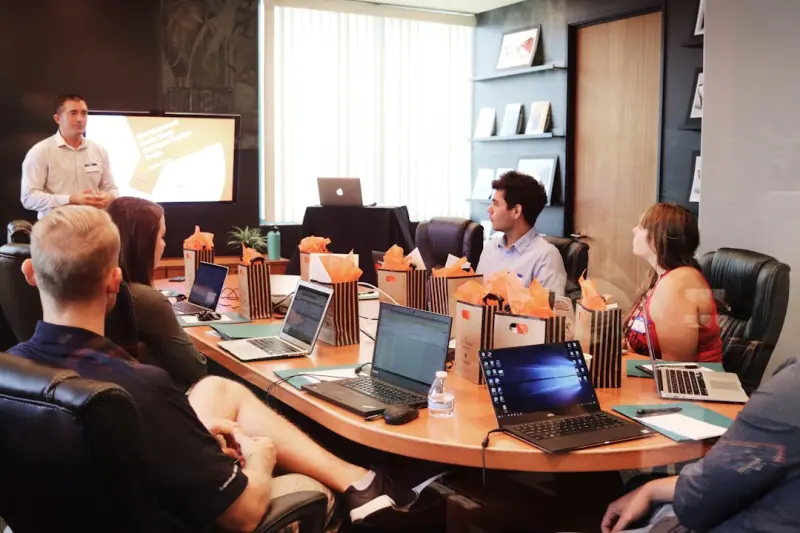
Why a Structured Role Marketplace Boosts Employee Agency
A role marketplace transforms static org charts into fluid talent ecosystems, giving employees agenc... Read More
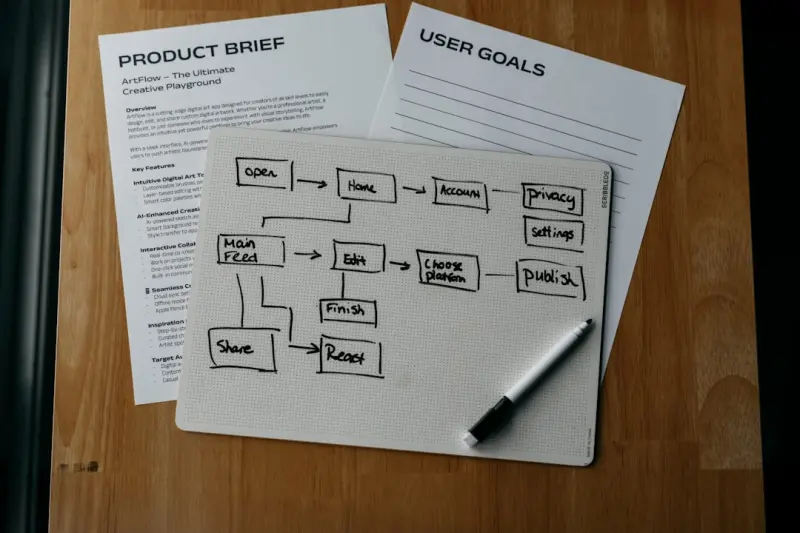
From Side Hustle to Sustainable Career: A Strategic Blueprint
Learn how to leverage skills, build a client pipeline, and use smart tools to turn a side hustle int... Read More

Why My Garden Desk Is the Secret Weapon for Modern Employment
A personal journey shows how swapping a cubicle for a garden desk transforms productivity, well‑be... Read More
Top Posts
Why Employee Experience Platforms Are the New Competitive Edge
Employee experience platforms have evolved from simple benefits portals into holistic, AI‑driven systems that anticipate employee needs, boost retention, and ...Read More

Wanderlust with Purpose: Turning Vacation Days into Community Impact
Explore practical ways to turn your vacation into a force for good, from micro‑volunteering and local collaborations to mindful travel habits that leave a pos...Read More

Cultivating Portfolio Careers: A New Blueprint for Modern Employment
Discover the rise of portfolio careers, why traditional ladders are outdated, and actionable steps for organizations to support flexible, skill‑based growth p...Read More
Micro‑Internships: Fast‑Track Your Career Without Leaving Your Job
Micro‑internships compress real‑world projects into short assignments, giving employees fast skill growth, broader networks, and a rapid path to promotion w...Read More
0 Comments
Post Comment
You will need to Login or Register to comment on this post!